Connect with us

Business

Roman Reigns Wears Ghanaian Collective Free The Youth’s Jordan Collaboration on WWE Raw

Published

on

From documenting Ghanaian street style to collaborating with Jordan Brand, Free The Youth has taken its creative identity into one of the world’s biggest sneaker markets.

A Ghanaian creative collective has found its way onto one of wrestling’s biggest stages.

Roman Reigns, one of WWE’s most recognizable superstars, was reported wearing the Free The Youth × Air Jordan 16 sneakers during Monday Night Raw on November 2, 2026. The sighting connects a Ghanaian streetwear movement with a global audience that extends far beyond fashion.

But the more interesting story begins long before the sneakers reached the wrestling ring.

From Ghanaian streets to global sneaker culture

Free The Youth was founded by Jonathan Coffie, Kelly Foli, Winfred Mensah and Richard Kweku Ormano. The collective began by documenting and promoting African art and Ghanaian street style on social media before expanding into fashion and creative work.

Its partnership with Jordan Brand represents a significant development in that journey.

The Air Jordan 16 collaboration moved beyond a limited, friends-and-family Air Jordan 1 project to become a commercially released sneaker. The new design combines the model’s metallic silver and black exterior with orange accents, prominent Free The Youth branding and a removable cover that reveals a different visual treatment beneath it.

The accompanying campaign draws on Ghanaian architecture and design. Its handmade, hand-painted and sculpted sets place local creative references at the centre of an international product campaign.

The result is not simply a Ghanaian name attached to a globally recognised shoe. It is a collaboration in which the collective’s identity forms part of the product and the world built around it.

Why the collaboration matters

The global fashion industry has long drawn inspiration from cultures around the world. Yet there is a meaningful difference between a culture being used as inspiration and the creatives behind it participating in the design and commercial development of a product.

Free The Youth’s collaboration with Jordan offers an example of the latter.

It brings a collective rooted in Ghanaian youth culture into an established international sneaker business, giving its creative identity exposure through a product distributed beyond its home market.

Roman Reigns’ reported appearance adds another layer of visibility. WWE reaches audiences well outside the sneaker community, potentially introducing the collective to people unfamiliar with Ghana’s streetwear scene.

That visibility is worth noting, although a celebrity wearing a product does not, by itself, establish a formal endorsement or demonstrate a commercial impact.

For Ghana, Free The Youth is an example of how a locally rooted creative movement can develop into a brand capable of participating in international collaborations.

Its journey also raises a broader question for Africa’s creative industries: how can designers, artists and cultural entrepreneurs turn international attention into lasting commercial opportunities?

A moment on WWE television cannot answer that question on its own. Nor does one collaboration represent the entire African fashion industry.

But it does offer a concrete example of African creatives participating in the creation of products for a global market, rather than remaining on the margins of the conversation.

The sneakers may have caught attention because Roman Reigns wore them. Their significance lies in the creative journey that brought them there.

For African brands seeking global reach, the challenge is not simply to be seen. It is to build the creative capacity, commercial partnerships and ownership that allow visibility to become something lasting.

Continue Reading
Click to comment

Leave a Reply

Your email address will not be published. Required fields are marked *

Business

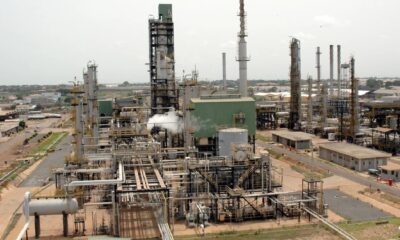
Ghana wants a 300,000-barrel refinery. But where will the oil come from?

Published

on

By

President John Mahama is pursuing a $28 billion petroleum hub designed to make Ghana a major refining and petrochemical centre in West Africa. Yet one question sits at the heart of the ambition: can the country secure enough crude to sustain the industry it wants to build?

Ghana is making plans to become one of West Africa’s major petroleum processing centres. There is, however, a fundamental question that its latest announcements have brought into focus: where will the oil come from?

On November 10, President John Dramani Mahama announced a new offshore hydrocarbon discovery at the Nya Gyidie-1X exploration well in Ghana’s Deepwater Cape Three Points area. It is the country’s first successful test of a carbonate reservoir system, opening a new geological target for future exploration.

The discovery is significant, but its commercial size and production potential are still being evaluated.

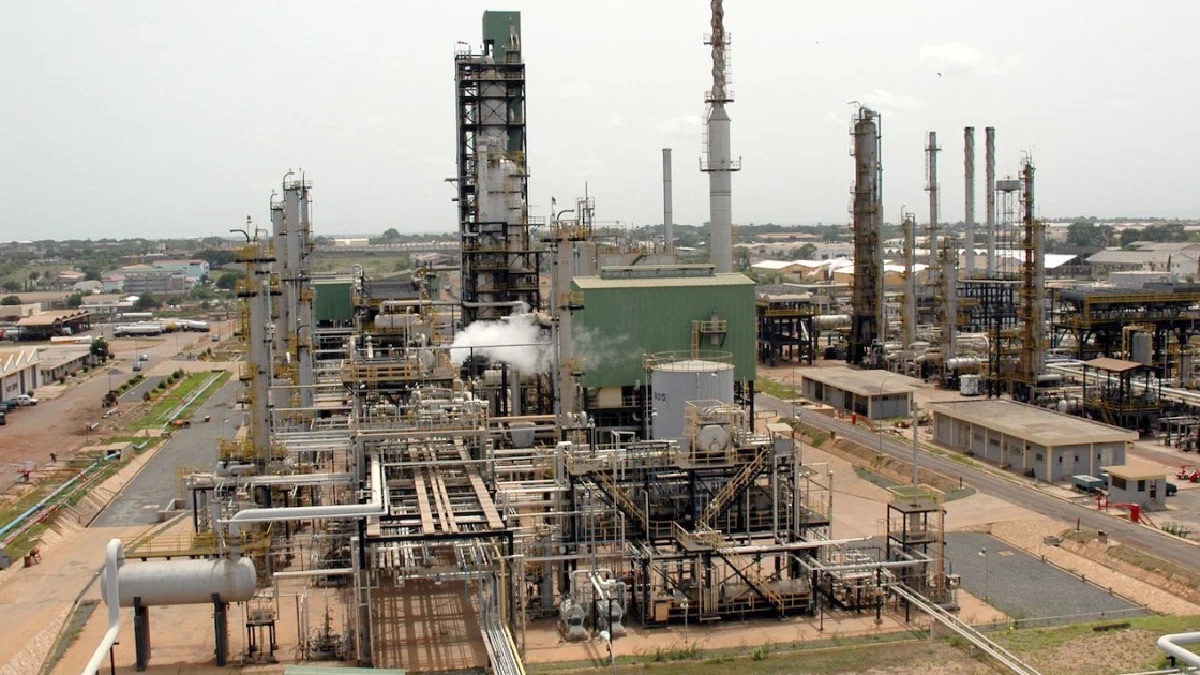
At almost the same time, Ghana is advancing a much larger industrial ambition. A $28 billion agreement signed by the Petroleum Hub Development Corporation and an international consortium led by Global Sphere proposes a 300,000-barrel-per-day refinery, two petrochemical plants, storage infrastructure and a multi-berth jetty in Jomoro, in the Western Region.

The ambition is to move Ghana further along the petroleum value chain: from extracting crude to refining it, manufacturing products from it and supplying regional markets.

But the numbers invite scrutiny.

Mahama says Ghana’s crude production has recovered to more than 120,000 barrels per day, following a decline from approximately 195,000 barrels per day in 2019 to around 88,000 barrels per day.

The proposed refinery alone would have the capacity to process 300,000 barrels daily.

The difference does not make the project impossible. Ghana could source crude from other producers, including through regional and international supply arrangements. But it makes feedstock availability one of the most important questions surrounding the project.

And Mahama appears to recognise that.

On November 10, he directed the Petroleum Commission and other relevant agencies to work with the Petroleum Hub Development Corporation and upstream operators to establish reliable crude and gas supplies for the proposed facilities.

In other words, building the refinery is only one part of the challenge. Keeping it supplied is another.

Ghana is not simply trying to build a refinery. It is trying to build an industrial economy around petroleum.

That distinction matters because refining is only the beginning of what the government hopes to achieve.

The proposed petrochemical plants could create opportunities to manufacture products used in agriculture, construction, packaging and other industries. Storage and port infrastructure could also strengthen Ghana’s position in regional energy distribution.

If successfully implemented, the project could create demand for engineers, technicians, logistics companies, manufacturers and domestic suppliers.

But these benefits will not automatically follow from the construction of industrial facilities.

Ghana must also establish whether the proposed investment can secure financing, obtain competitive feedstock, attract customers and operate profitably. The $28 billion agreement is not evidence that the full amount has already been financed or invested.

The consortium has described the project as a build-own-operate development, with initial construction-related activities expected in the first quarter of 2027, subject to outstanding conditions and preparations.

There is another question Mahama’s government will have to confront: how much of this industrial transformation will actually belong to Ghanaians?

The president has repeatedly called for greater local participation in the petroleum industry, including technology transfer, training and access to contracts for qualified Ghanaian companies.

That will be an important measure of whether the project builds domestic industrial capacity or primarily creates another platform for international investment.

For the wider African continent, Ghana’s plans raise a question that extends beyond petroleum.

Africa has long supplied the resources that power industries elsewhere. Yet the ability to extract natural resources has not always translated into the ability to process them, manufacture finished products and retain a greater share of the resulting economic value.

Ghana wants to change that relationship.

Its Petroleum Hub is being positioned as a regional project, with ambitions that extend beyond the domestic market. Its success will therefore depend not only on Ghana’s ability to attract investors, but also on whether the wider West African market can support a competitive refining and petrochemical industry.

The Nya Gyidie discovery gives Ghana another reason to pursue exploration. The Petroleum Hub offers a vision of what it hopes to do with its resources.

But discoveries are not production, agreements are not completed investments, and industrial capacity is not the same as industrial competitiveness.

The question for Ghana is no longer simply how much oil it can find. It is whether it can build an industry capable of turning those resources into lasting economic value.

And that is a question the rest of Africa should be watching.

Continue Reading

Business

Who Gets to Produce Knowledge About Africa?

Published

on

By

Research shapes how countries are understood, which problems receive funding and what solutions reach policymakers. But across Africa, questions remain about who leads the research, who finances it and whose priorities ultimately determine what gets studied.

Africa is the subject of an enormous amount of research. Its economies are analysed by international financial institutions, its health systems examined by global research partnerships, and its agricultural challenges studied by universities, development agencies and scientific organisations around the world.

Yet an important question sits behind this activity: how much control do African institutions have over the production of knowledge that informs decisions about their own continent?

The question is not whether international researchers should study Africa. Collaboration across borders has contributed to scientific discoveries, improved research capacity and generated evidence that individual institutions might struggle to produce alone.

The issue is whether African researchers and institutions have the funding, infrastructure and authority to set research priorities, lead major studies and translate findings into policies that respond to local needs.

Recent research suggests that these questions deserve closer attention.

The funding gap

According to UNESCO’s 2026 research and development statistics release, sub-Saharan Africa spent approximately 0.38% of its gross domestic product on research and development in 2023, compared with a global average of 1.92%.

The gap matters because research requires sustained investment. Universities need laboratories, equipment, trained personnel and reliable funding. Researchers need time to conduct studies, access scientific publications and develop projects that may take years to produce results.

Where domestic investment is limited, universities and research institutions often depend on international grants and partnerships to support their work.

External funding can make valuable research possible. But it can also raise questions about sustainability and agenda-setting: which projects attract funding, who determines their objectives, and whether local institutions can maintain research programmes after grants end.

The funding figures alone do not prove that external donors dictate African research priorities. Establishing that requires examining specific grants, funding agreements and the decisions made by the institutions involved.

Nevertheless, the imbalance in research investment provides an important starting point for understanding the conditions under which African knowledge is produced.

Who leads the research?

Funding is only one part of the question. Authorship and institutional leadership also determine who receives recognition for research and who gains experience directing major scientific projects.

A study published in BMJ Global Health in March 2026 examined research capacity and scientific collaboration in sub-Saharan Africa. The researchers found that the region accounted for approximately 15% of the global population and 21% of the global disease burden, but received only 2.7% of global citations in 2021.

The study also found an association between greater international collaboration and higher research impact. At the same time, these collaborations were associated with a greater proportion of publications in which researchers from sub-Saharan Africa did not occupy key authorship positions.

The findings point to a complicated relationship. International partnerships can help African research reach wider audiences, but participation does not automatically translate into leadership.

The study’s findings concern patterns across research publications; they do not establish that every international partnership operates this way. Nor do citation figures, by themselves, measure the quality or practical value of research.

The more important question is whether African institutions are increasingly able to lead the studies, establish the research questions and retain the expertise needed to continue the work.

Whose problems receive attention?

Research priorities have consequences beyond universities.

Evidence can influence how governments allocate public funds, how development organisations design programmes, where pharmaceutical companies invest and which agricultural technologies receive support.

When research is aligned with local priorities, it can help institutions address problems that might otherwise receive insufficient attention. When priorities are shaped by external funding opportunities, there is a risk that some locally important questions receive less investment.

This is not a uniquely African problem, nor does it mean that externally funded research is necessarily inappropriate. It is a question of how research priorities are negotiated and whether the institutions closest to the problems have a meaningful role in deciding what gets investigated.

A 2026 scoping review examining research on gender and sexual and reproductive health across Africa found disparities in authorship, geographic coverage and funding sources across the 45 publications it examined. The authors called for stronger local ownership and leadership of research.

The findings are specific to that field and sample. They should not be generalised to every discipline. However, they demonstrate how researchers can examine the distribution of leadership and funding empirically rather than relying on assumptions about who controls African research.

Rwanda offers a practical test

Rwanda provides a useful case for examining the relationship between research, national priorities and practical outcomes.

The country’s research system spans universities, public institutions, private-sector partners and international collaborations. In agriculture, health, technology and economic development, research can contribute to policy decisions and the development of new products and services.

UNESCO-derived data reported by the UN Economic Commission for Africa put Rwanda’s research and development expenditure at approximately 0.73% of GDP in 2023, placing it among the continent’s relatively higher-investing countries in the available comparison.

That is a useful indicator of research investment, but it does not establish how much of the funding originates domestically, which institutions control it or how effectively it translates into results.

Those questions require closer examination of Rwanda’s research budgets, grant recipients, institutional partnerships and the use of research findings in government and business decisions.

The same investigation could establish whether Rwandan institutions are leading international projects, what happens when externally funded programmes end, and whether research conducted in the country is producing solutions that can be adopted locally.

Rwanda would therefore be a case study, not proof of a continent-wide conclusion.

Beyond publication

Producing a scientific paper is not the end of the research process.

For research to have practical value, findings must reach the people and institutions capable of acting on them. That may mean informing government policy, changing agricultural practices, improving healthcare, guiding investment or helping businesses develop new products.

The distance between publication and implementation is an important part of the investigation. A country may produce valuable research while struggling to finance its application. Equally, research that receives international recognition may have little immediate impact on the communities whose circumstances it examines.

Measuring that gap requires looking beyond publication counts and citations to examine research uptake, institutional capacity, commercialisation and policy outcomes.

It also requires recognising that not every valuable discovery produces immediate results. Some research builds the knowledge and technical capacity on which future advances depend.

The question Africa must answer

Africa does not need to isolate its research institutions from international collaboration. Scientific progress often depends on partnerships that bring together different forms of expertise, funding and infrastructure.

What matters is whether those partnerships strengthen African institutions over time — enabling them to set priorities, lead projects, develop talent and retain the capacity to conduct research independently.

The evidence points to a significant imbalance in research investment and persistent questions about authorship and leadership. It does not justify treating every international partnership as exploitative or every externally funded study as an expression of outside control.

The next step is to examine the institutions, funding arrangements and research outcomes that determine how knowledge about Africa is produced and used.

Because the question is not simply who studies Africa. It is whether African institutions have the resources and influence to shape the knowledge that informs their own future.

Continue Reading

Business

Botswana Is Importing 600 Cows to Fight Its Dependence on Imported Milk

Published

on

By

Botswana is bringing in Brazilian dairy cattle to produce milk at home. The irony is that getting more cows is only one part of a much bigger problem.

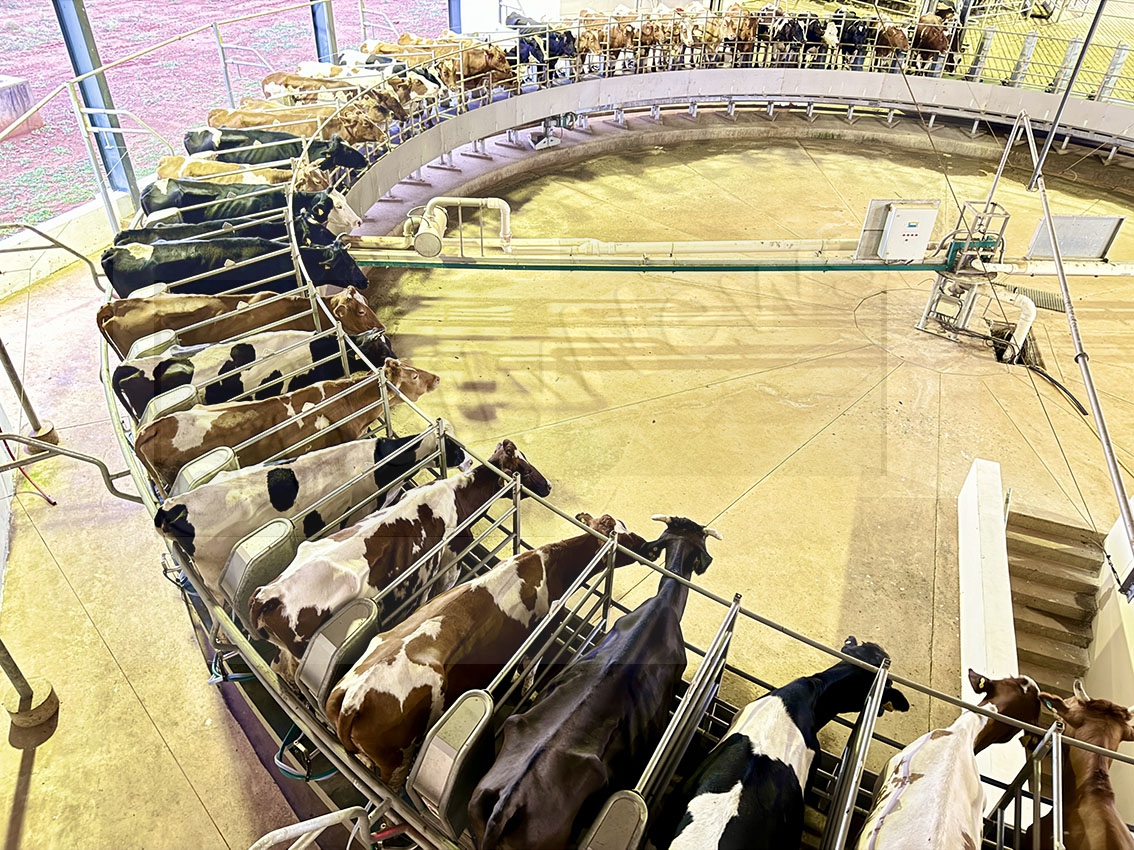
At the centre of the country’s push is Milk Valley Farm in Lobatse, a government-backed dairy operation being expanded into a major domestic milk producer. By November 2026, the farm had received 600 Girolando cattle from Brazil, recorded 123 births since August and started selling milk.

The ambition is considerable: build a herd of approximately 3,000 cattle and eventually produce 15 million liters of milk annually.

But Botswana is not simply trying to build a bigger farm. It is trying to change the economics of a dairy industry that has struggled to supply enough milk for its own market.

The country has historically depended heavily on imported dairy products to bridge the gap between domestic production and consumption. That dependence leaves local supply vulnerable to external markets, while also raising questions about how much value the country is losing by importing products it wants to produce locally.

Yet Milk Valley’s expansion is taking place against a difficult backdrop.

In May 2026, foot-and-mouth disease disrupted the farm’s expansion plans, illustrating how quickly animal-health challenges can affect production and trade. Feed availability and operating costs present another test. Keeping thousands of dairy cattle productive requires a reliable supply of feed, water, veterinary care and processing infrastructure.

Even the farm’s own financial targets reveal the scale of the challenge. Management says it needs 400 milking cows to cover daily operating expenses. That means expanding the herd is not just about producing more milk; it is also about reaching a level of production that makes the operation financially viable.

And there is a question that goes beyond the farm: will this investment make milk more accessible to Botswana’s consumers and create opportunities for the country’s wider dairy sector?

For now, the arrival of the cattle and the beginning of milk sales represent progress. But 15 million litres remains an ambition, not an achievement.

Botswana is attempting to produce its way out of dairy import dependence. Whether it succeeds will depend on what happens after the cows arrive: the cost of production, the resilience of the supply chain and the ability to compete with imported dairy.

The real measure of this investment will not be how many cows Botswana imports, but how much milk it eventually stops needing to import.

Continue Reading

Trending

Copyright © 2026 Africadigitmedia.net. Website powered by ProDigit.