Connect with us

Entertainment

RAYE TURNED THE ROYAL ALBERT HALL INTO A FAMILY AFFAIR

Published

on

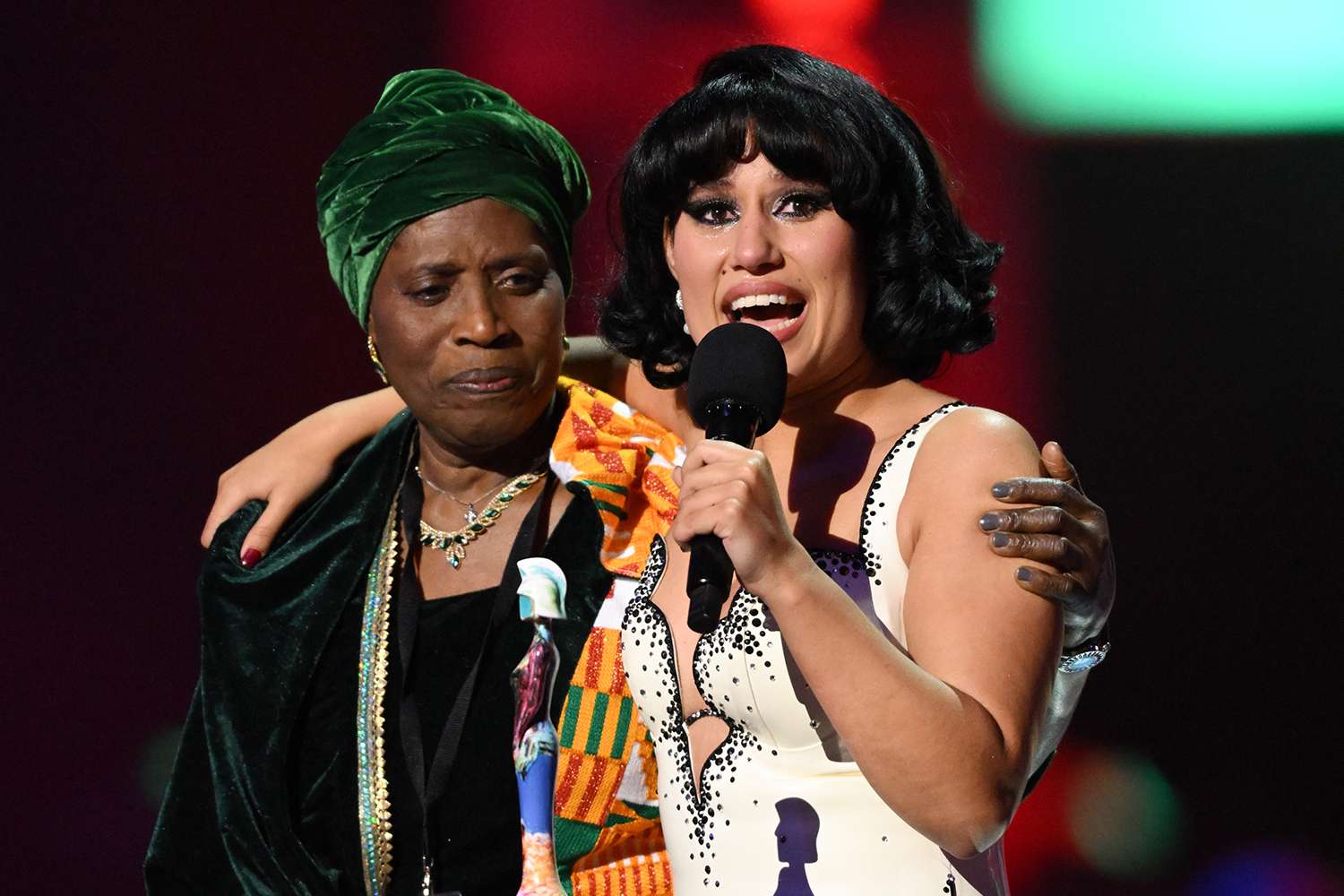
A live orchestra, a choir, thousands of fans and one very important grandmother who had rehearsed her line.

RAYE’s Royal Albert Hall concert on 23 October was a major musical production, but some of its most memorable moments belonged to the people who knew her long before the world did.

The British singer brought her Ghanaian grandmother, Agatha Dawson-Amoah, onto the stage during Where Is My Husband! Agatha arrived in a Ghanaian kente-inspired outfit, ready to perform the spoken line that has become part of the song’s identity.

“Ladies and gentlemen, I need you to erupt in this place. She’s been rehearsing her part,” RAYE announced.

The audience cheered.

“Are you nervous?” RAYE asked.

“I’m fine,” Grandma replied.

Then came the familiar line: “Your husband is coming.”

The crowd responded, but the confetti failed to go off at the right moment.

“Oh s***, girl, quickly, say it again!” RAYE called out.

Grandma delivered it again, giving the audience another chance to celebrate her.

But Agatha was not the only member of the family invited into the spotlight.

RAYE’s grandfather Michael joined her for Fields, while her sisters Absolutely and Amma performed Joy alongside her. Rather than keeping the concert’s biggest moments for herself, RAYE made room for the people who share her life away from the stage.

At one point, she explained the thinking behind the family appearances with a simple statement: “Hope is family.”

It was particularly fitting for a show built around her album This Music May Contain Hope, with its orchestral arrangements and theatrical journey through the seasons.

And the family connection runs deep. RAYE grew up in south London in a musical household. Her father is English, while her mother has Ghanaian and Swiss heritage. Her grandmother Agatha is Ghanaian, and RAYE’s middle name honors her.

Agatha’s voice was already part of Where Is My Husband! before she stepped onto the Royal Albert Hall stage. RAYE previously explained that her grandmother had wanted to redo the recording because she was caught in her “morning voice.” RAYE reassured her that she sounded great, and the recording stayed.

Now, the woman behind that voice was standing in front of thousands of fans, wearing an outfit that reflected her heritage and delivering the line in person.

The concert came just after RAYE won the 2026 Mercury Prize for This Music May Contain Hope. Yet amid the orchestral spectacle and career milestones, the family appearances gave the evening a more personal dimension.

The audience came to see RAYE perform. They also got to see her grandfather share her stage, her sisters share her music and her grandmother turn a familiar recording into a live moment of her own.

RAYE may have been the headliner, but that night, the whole family had a part to play.

Continue Reading
Click to comment

Leave a Reply

Your email address will not be published. Required fields are marked *

Entertainment

Africa Was in the Room at the Ballon d’Or. The Question Is What the World Saw.

Published

on

By

From a Nigerian musician’s ambitions for football to a Rwandan boy’s restored eyesight, the 2026 Ballon d’Or offered several ways to understand Africa’s place in the global game.

Africa’s presence at the 2026 Ballon d’Or ceremony in London was visible in several forms: through Burna Boy’s cultural influence, Bukayo Saka’s humanitarian work, the story of a Rwandan child who regained his eyesight and the African players included among the nominees.

These moments were connected by the ceremony, but they represented different realities. Together, they showed both the reach of African talent and the distance between visibility and influence in global football.

A Nigerian ambition on a European stage

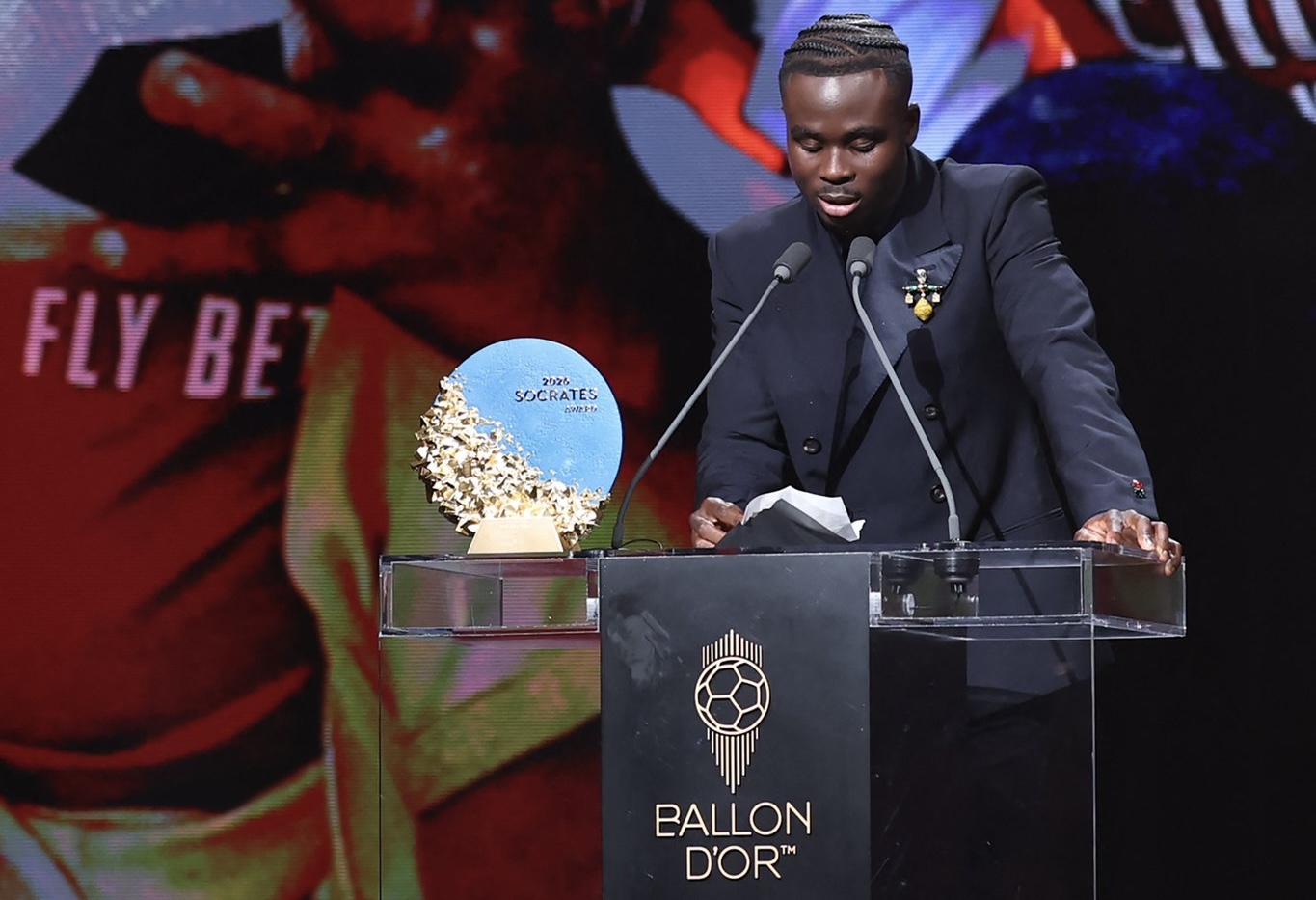
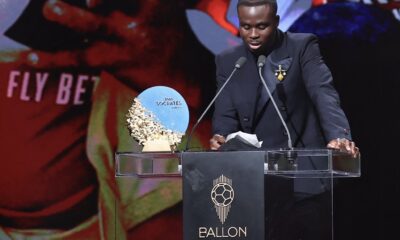
Before presenting the Socrates Award, Burna Boy spoke about the football academy he established in Nigeria. He said he hoped to return to the Ballon d’Or one day and see a player from his country receive the sport’s most coveted individual prize.

That ambition points to a longstanding reality. Africa has produced players who have shaped European football, won major competitions and become global stars. Yet Liberia’s George Weah remains the only African winner of the men’s Ballon d’Or, having received the award in 1995.

The gap between Africa’s supply of talent and its representation among football’s highest individual honours remains difficult to ignore. Burna Boy’s remarks focused attention on the work required to close it, particularly through investment in youth development and stronger football structures at home.

His presence also reflected the global reach of African culture. A Nigerian musician stood at a ceremony centred on European football and spoke not only as an entertainer, but as someone investing in the sport’s future in Nigeria.

A boy in Rwanda enters the conversation

Saka’s acceptance speech brought the ceremony’s humanitarian dimension into sharper focus. He read a letter from Byiringiro, a boy from Rwanda who had begun losing his eyesight at the age of 12.

Byiringiro described living in a village without electricity and struggling as his vision deteriorated. In the classroom, he could no longer read the blackboard clearly.

Medical care facilitated by BigShoe helped restore his eyesight. He could read again, play with his friends and pursue his ambition of becoming an English teacher.

The significance of that story lies in its ordinariness. Byiringiro wanted to learn, play and choose a profession. Medical treatment helped return those possibilities to him.

Saka’s humanitarian work has supported medical treatment for children in Africa, including operations for 120 children in Kano, Nigeria, in 2022 and support for another 100 children in Rwanda, Kenya and Tanzania in 2023. The Socrates Award recognised that work, while Biringiro’s letter showed its impact through one child’s experience.

His story also raises a broader issue. International attention can bring visibility to a child’s circumstances, but it does not resolve the wider shortage of accessible healthcare. Many other children still face preventable conditions without the treatment they need.

Byiringiro’s recovery is hopeful. It also shows how access to healthcare can determine the future a child is able to imagine.

The players whose names carried African flags

Africa’s presence extended across the ceremony’s football categories.

Morocco’s Achraf Hakimi and Senegal’s Sadio Mané were nominated for the men’s Ballon d’Or. Zambia’s Barbra Banda and Malawi’s Temwa Chawinga featured in the women’s race. Morocco’s Ayyoub Bouaddi, Côte d’Ivoire’s Yan Diomandé and Algeria’s Ibrahim Maza were nominated for the men’s young-player award. Morocco’s Yassine Bounou, Senegal’s Édouard Mendy and Cape Verde’s Vozinha were among the goalkeeper nominees.

Their inclusion reflected different aspects of African football. Hakimi and Mané represent established careers at the highest level. Banda and Chawinga brought African women’s football into a global conversation that has historically focused more heavily on men. The young-player nominees represented a generation whose careers will develop across national, continental and international competitions.

Nominations, however, are not victories, and representation is not the same as equal recognition. Harry Kane won the men’s Ballon d’Or, while the African players competed in their respective categories.

The significance of these nominations does not depend on presenting them as proof that African football has finally arrived. African football has long been part of the global game. The more important questions concern how its achievements are recognised and whether the structures supporting its next generation are strong enough.

The ceremony brought together several distinct stories: Burna Boy’s vision for Nigerian football, Saka’s support for children needing medical care, Byiringiro’s recovery in Rwanda and the presence of African players across the nominees’ lists.

Together, they showed Africa’s place in global football as more than a single narrative. The continent appeared through cultural influence, sporting ambition, humanitarian work and the lives affected by that work.

But visibility does not automatically create influence. African music has achieved global reach, and African players compete at the highest levels. African children can also benefit from international charitable partnerships. Sustaining those achievements requires long-term investment in local football, stronger opportunities for young players, wider access to healthcare and recognition that reflects the quality of African talent.

The Ballon d’Or cannot resolve those issues. It can make them visible.

For one evening in London, Africa was represented by a Nigerian musician, a footballer with Nigerian roots, nominees from across the continent and a Rwandan schoolboy whose eyesight had been restored.

Byiringiro wants to become an English teacher. He does not need to become famous for that ambition to matter. He needed medical care, received it and can now see the blackboard again.

That may be one of the clearest measures of football’s influence: not only the trophies won on stage, but the opportunities made possible for people who will never stand there.

Continue Reading

Entertainment

Cynthia Erivo Brings Her Nigerian Roots Into a Nollywood-Inspired ‘Wicked’

Published

on

By

Glinda wants a Birkin bag. Elphaba wants a BBL that defies gravity. And the Wizard of Oz? His Rolex is fake.

In Nigerian Wicked, even the journey to the Emerald City comes with a Nigerian twist. The fictional destination is LagOz, the city is green, white and green, and the witches’ magical ambitions quickly turn into a comedy of money, beauty and dramatic confrontations.

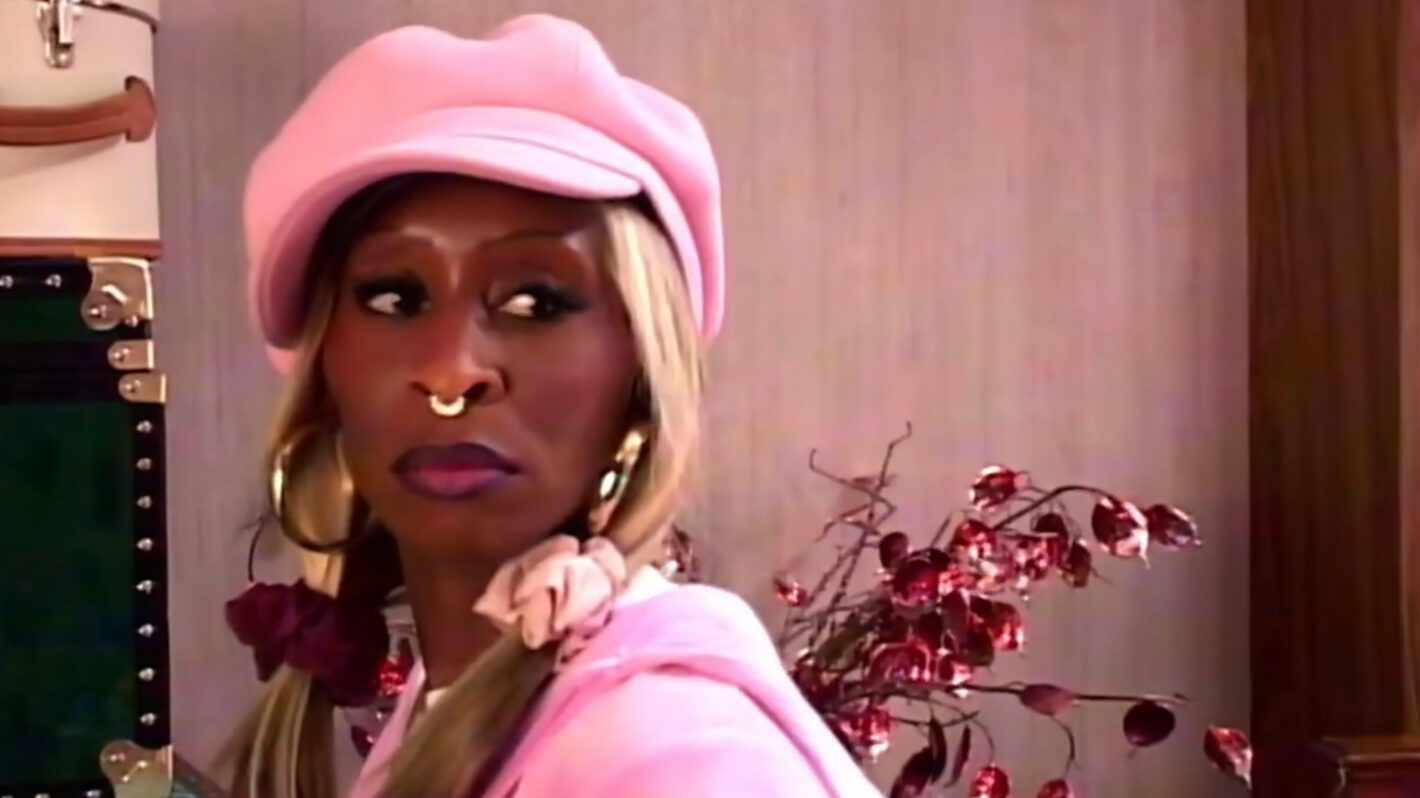
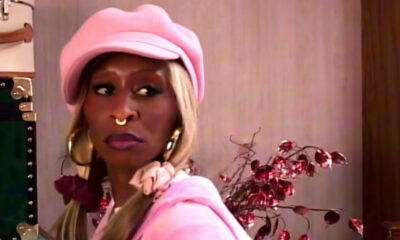
The sketch aired on October 24, 2026, during Saturday Night Live UK, where Cynthia Erivo played Glinda opposite comedian Ayoade Bamgboye as Elphaba. Hammed Animashaun voiced the Wizard in a parody inspired by the style of Nigerian films from the 1990s and early 2000s.

At one point, Glinda slaps Elphaba for being “very classless.” When the witches finally reach the Wizard, Glinda asks for a Birkin bag, while Elphaba requests a “skinny BBL.” The Wizard announces that she wants a BBL “that defies gravity,” only for the pair to discover that their supposedly powerful benefactor is broke.

The jokes are deliberately outrageous, but the casting and creative concept make the sketch particularly interesting for African entertainment.

Erivo was born in London to Nigerian parents, while Bamgboye, who wrote the sketch, is a Nigerian-born British comedian. Their involvement places Nigerian heritage and a Nigerian cinematic tradition at the centre of a production made for a British comedy show. That connection is worth noting, although neither performer’s personal motivation should be assumed from their background alone.

The parody takes familiar elements of Wicked and retells them through the melodrama, exaggerated performances and conspicuously low-budget effects associated with a particular era of Nollywood. It even borrows the colors of Nigeria’s flag for its version of the Emerald City.

That choice raises an interesting question: how did a filmmaking style associated with Nigerian popular cinema become recognizable enough to serve as the central joke in a British television production?

Nollywood is not one uniform style of filmmaking. Nigerian cinema has changed considerably across generations, budgets and genres. The sketch deliberately draws on a particular set of conventions, turning them into comedy for an audience familiar with Wicked.

The response has been substantial. By October 26, the sketch had attracted more than 4.5 million views across YouTube, Instagram and TikTok, according to UK comedy publication Chortle.

The numbers do not, by themselves, establish how audiences understand Nollywood or measure the industry’s global influence. But the sketch has created an opportunity for Nigerian cinematic references to circulate through an internationally recognised musical and a British television platform.

For African entertainment, the story is not simply that Cynthia Erivo has made people laugh. It is that a Nigerian-inspired cinematic style has become the foundation of a widely shared parody, with a Nigerian-born comedian shaping the idea and a British-Nigerian star helping bring it to life.

In LagOz, the Wizard cannot even deliver a real Rolex. The joke, however, has travelled millions of screens around the world.

Continue Reading

Entertainment

He Came to Kenya as a Priest, Now He is a Married Man

Published

on

By

For years, Sandro Ferretto was known in parts of Baringo as a Catholic missionary from Italy.

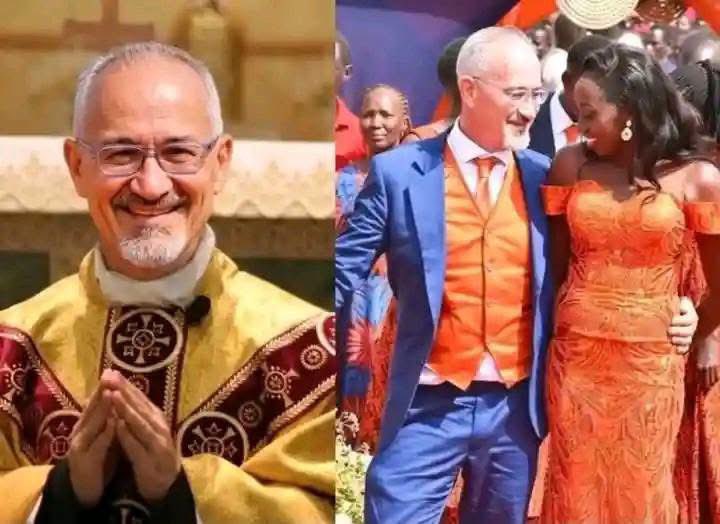
On September 6, 2026, he returned to the community under a very different title: husband.

Ferretto, 55, married Sharon Jepng’ok, a Tugen woman from Baringo, in a traditional Koito ceremony in Seretion village. Their wedding brought together relatives, elders, local leaders and members of Sharon’s community.

What makes the marriage remarkable is not simply that an Italian man married a Kenyan woman.

Ferretto had once been a Catholic priest.

And before he could become a husband, he had to leave that vocation behind.

Leaving the priesthood

Catholic priesthood comes with obligations that shape an entire way of life. In the Latin Church, priests are ordinarily required to observe celibacy. Marriage is therefore incompatible with remaining in that clerical state.

Leaving is not as simple as resigning from a conventional job.

The Church has a formal process through which a priest can seek dispensation from the obligations attached to priesthood and return to the lay state. Until that process is completed leaving active ministry does not simply mean becoming free to marry.

Ferretto eventually took that path.

It is an important part of the story because his wedding was not an act of a serving priest breaking Church rules. He had already left active priestly ministry.

That distinction also changes how his decision can be understood.

He was not choosing between secretly remaining a priest and getting married.

He was choosing what he wanted his life to become after priesthood.

A relationship formed in the place where he served

Ferretto’s connection to Kenya began through missionary work. He spent about 12 years serving in the country, including communities in Baringo.

It was during those years that he met Sharon.

She was not someone he encountered after returning to Kenya as an outsider. Their relationship emerged from the community that had already become part of his life.

That gives the marriage a particular complexity.

Missionary work is built around service to people and communities. But long-term service can also create friendships, familiarity and belonging.

In Ferretto’s case, one of those relationships eventually became personal.

The public accounts of the couple do not provide every detail of their courtship, so the romantic story should not be filled with invented first meetings, secret conversations or dramatic turning points.

What is known is enough: the two met during his years in Kenya, their relationship developed, and eventually Ferretto chose a life that included marriage.

Two families, two traditions

The wedding was significant because it was not conducted as a private ceremony between two people.

It entered the world of family and tradition.

The Koito ceremony placed the relationship within Kalenjin customary practice, where marriage involves more than the couple themselves. Families and elders have an important role, and the ceremony provides a public acknowledgement of the union.

For Sharon, this meant bringing an Italian partner into a Kenyan family and cultural setting.

For Ferretto, it meant entering a tradition different from the religious ceremonies that had defined much of his adult life.

The presence of relatives, elders and community members showed that the marriage was being treated as a social union as well as a personal one.

But there is an important distinction between participation and private opinion.There is not enough publicly documented evidence to say that every member of either family welcomed the relationship immediately, or that Catholics in the area had one shared reaction.

Those questions deserve direct interviews rather than assumptions.

What happens when a former priest gets married?

This is where the story becomes uncomfortable and therefore interesting.

For people who knew Ferretto as a priest, his marriage may force them to separate two ideas that are often treated as inseparable: the person and the vocation.

A priest can leave the clerical state. But leaving does not erase the years spent serving a church or community.

Nor does marriage automatically explain why someone entered priesthood in the first place.

Religious people may view his decision differently. Some may see it as a painful departure from a sacred commitment. Others may distinguish between respecting priesthood and accepting that an individual has chosen another life.

There is no single “religious reaction” that can honestly be assigned to everyone.

That is precisely why the story is worth examining rather than sensationalising.

The wedding itself

The Koito ceremony brought the story back to where much of Ferretto’s Kenyan experience had unfolded.

In Seretion, the former missionary was surrounded by the culture and community he had encountered during his years of service.

The ceremony included traditional elements and family participation, turning what might have been portrayed simply as a cross-cultural wedding into something more rooted in Sharon’s heritage.

The significance was in the setting.

An Italian who had once arrived in Kenya through the Church was now being incorporated into a Kenyan family through its own customary traditions.

More than a viral wedding

The easiest headline is that an Italian priest married a Kenyan woman.

The harder story asks what happens before and after that sentence.

How does someone leave a vocation that once defined his life?

What does it mean to build a relationship across nationality and culture?

How do families negotiate a marriage that does not fit their usual expectations?

And how does a religious community respond when someone it once knew by a sacred title chooses a different life?

Ferretto and Sharon’s wedding does not answer all of those questions.

But it puts them in one place.

Perhaps that is why the story has travelled so quickly.

It looks, at first, like an unusual wedding.

Look closer, and it becomes a story about the freedom to change, the weight of vocation, the influence of community and the strange ways a place can become home.

Continue Reading

Trending

Copyright © 2026 Africadigitmedia.net. Website powered by ProDigit.