Connect with us

Opinion

When “I’m Fine” Isn’t

Published

on

We say “I’m fine” so often, it almost stops meaning anything.

It’s become a reflex, a shield, a pause, a way to avoid questions we’re not ready to answer.

And most of the time, we accept it.

The hardest part isn’t always what someone is going through.
It’s how close you can see them almost every day and still not understand what you’re looking at.
Or maybe you do, but you don’t have the words yet.

They didn’t change all at once.
It was small things.
They laughed but not like they used to.
They were there but quieter, holding something back.
They still greeted everyone. Still showed up. Still said, “I’m fine.”
And I nodded.
Where I come from, people don’t always say when something is wrong. You don’t press. You don’t want to seem intrusive. So you accept it.

It shows up in ways that are easy to dismiss.
They sit with everyone but speak less.
They drift out of conversations and return like nothing happened.
They pause too long before answering simple questions.
But sometimes it looks different.
Sometimes it comes out sharp.
Short tempers. Snap reactions. Irritations that don’t match the moment.
Not because they’re angry at you because the weight inside has nowhere else to go.
Other times, it’s overcompensation.
Talking more than usual, filling every silence.
Joking louder. Laughing harder. Staying just a little too busy.
Checking on everyone else, making sure no one notices them.
And then there are the in-between moments.
Emotional, unexplained shifts. Sudden withdrawal. A smile that doesn’t reach the eyes.
Small behaviors that don’t scream “help,” but quietly ask for it.
You notice it slowly.
Not enough to name it.
But enough that it stays with you.

I used to think that if something was wrong, it would be obvious.
That someone would say something. Or someone older would notice.
But it hides in routine. In showing up. In “see you tomorrow” said like any other day.
And then there’s that feeling the quiet one you can’t prove.
The sense that something isn’t right.
But you hesitate.
You don’t want to embarrass them. You don’t want to cross a line. You don’t want to ask a question you’re not prepared to answer.
So you let it pass. And they keep saying, “I’m fine.”

Where I come from, strength often looks like silence.
We learn early not to burden others. To endure, to show up, to keep going.
From the outside, it looks like resilience.
But sometimes, it’s just loneliness that has learned to hide.

Looking back, I think about the chances I had to ask differently.
Not just “are you okay?” in passing but stopping. Sitting. Asking in a way that makes space for the truth, even if it’s messy.
Because sometimes people don’t need solutions.
They need permission.
Permission to not have the right words.
Permission to say something incomplete.
Permission to set down what they’ve been carrying even if only for a moment.

There wasn’t a single moment when it became serious.
Just a slow shift from “they’ve been quiet lately” to something heavier than I wanted to admit.
Something deeper. Something harder to ignore.
What I know now:
Silence can look like strength.
“I’m fine” can mean, “I don’t know how to say this out loud.”
We don’t need perfect words.
We need to stop accepting “I’m fine” as the end of the conversation.
Sometimes it’s enough to stay a little longer. To ask again. To sit without rushing.
Not to fix anything. Just to make it harder for someone to carry everything alone.
Because people don’t always open up when you ask.
Sometimes they open up when they realize you meant it when you stayed.

Continue Reading
Click to comment

Leave a Reply

Your email address will not be published. Required fields are marked *

Opinion

Paid for it

Published

on

By

A simple KSh 1,500 transfer meant to fund a trip to Eldoret has officially entered its villain arc. After the journey allegedly never happened—and the refund never came—the situation skipped all normal stages like “remind me” and “are you around?” and went straight to lawyer mode.

Within no time, a full legal demand letter dropped like a plot twist nobody asked for. The original KSh 1,500? Still there. But now it has company: a bold KSh 10,000 in legal fees, bringing the grand total to KSh 11,500. Yes, the fees said “we refuse to be smaller than the problem.”

To make it spicier, there’s a 48-hour deadline, court threats, 14% interest, and enough serious legal wording to make it sound like a billion-shilling scandal.
Somewhere along the way, “send fare” turned into “see you in court.”

Moral of the story?

That KSh 1,500 might just be the most expensive ride that never happened.

Continue Reading

Opinion

The Night I Paid to Meet Strangers and Found a Friend

One awkward dinner with strangers, a fake “CEO,” and an unexpected friendship that made the risk worth it.

Published

on

What Lengths Are You Willing to Go to, to Find ‘Your People’?

Have you ever noticed how lonely it gets to be an adult? It’s not just that we’re busy; it’s that the people we’ve known for years start to feel like strangers. Their priorities shift, and suddenly, you’re the only one holding the rope.

I started seeing the signs in my own friendships. I was always the one showing up, always the one with their back, but they were less and less there for me. It’s a heavy feeling when you realize you’re giving 100% to people who can’t even give you 10%.

And thought you understand their circumstances and even still hold them dear, but sometimes, that frustration builds up so much that you don’t even know how to speak it. You might have physical or emotional scars from just trying to cope, but the people closest to you don’t even notice. And even if they do see you’re hurting, they still put you in the same situations that caused the pain in the first place.

At first, I just pulled away. I told myself it’s better to be alone than to keep expecting a hand to pull me up and getting disappointed. But eventually, you get tired of your own company. You see an ad for a “Dinner with Strangers” and you think maybe. Maybe there’s someone else out there who is looking for a “me” too.

So, I took the leap. I paid the fee (it was less than $7) and went to this fancy restaurant. They told us we’d be matched with people who share our goals and interests. In my head, I saw a table of four to six deep-thinkers.

The reality? Only three of us showed up.

One was this guy who wouldn’t stop bragging about owning his own company. But when the bill came, the “CEO” disappeared. Even though the survey we took beforehand asked if we were okay with spending 20k+ on dinner, he spent nearly thirty minutes arguing with the manager. He was furious that his $5.5 event fee didn’t cover his whole meal.

It was so embarrassing. He’s trying to impress us one minute, and the next, he’s causing a scene over a few thousand francs. And to top it all off? When the organizer finally came over to fix the situation, the poor guy’s (the organizer) pants zipper was wide open. Just fully down.
I’m sitting there in this expensive place, looking at a guy with an open fly trying to calm down a “businessman” who wanted a refund or such, and we (two of us remaining) just had to laugh.

But honestly? It wasn’t a waste.

I actually really hit it off with the other girl at the table. We bonded over how ridiculous the whole night was, as well as our background, religion, and other aspects of life. We left with a connection that actually feels promising, the kind of genuine friendship I went there to find in the first place.

At the end of the night, I realized it was an adventure. Even with the empty chairs and the drama, it gave me hope. It reminded me that I’m not the only one out here looking for something real.

So, would you take a leap like that? Would you put yourself out there, knowing it might be messy, just for the chance that someone is looking for you too?

Continue Reading

Opinion

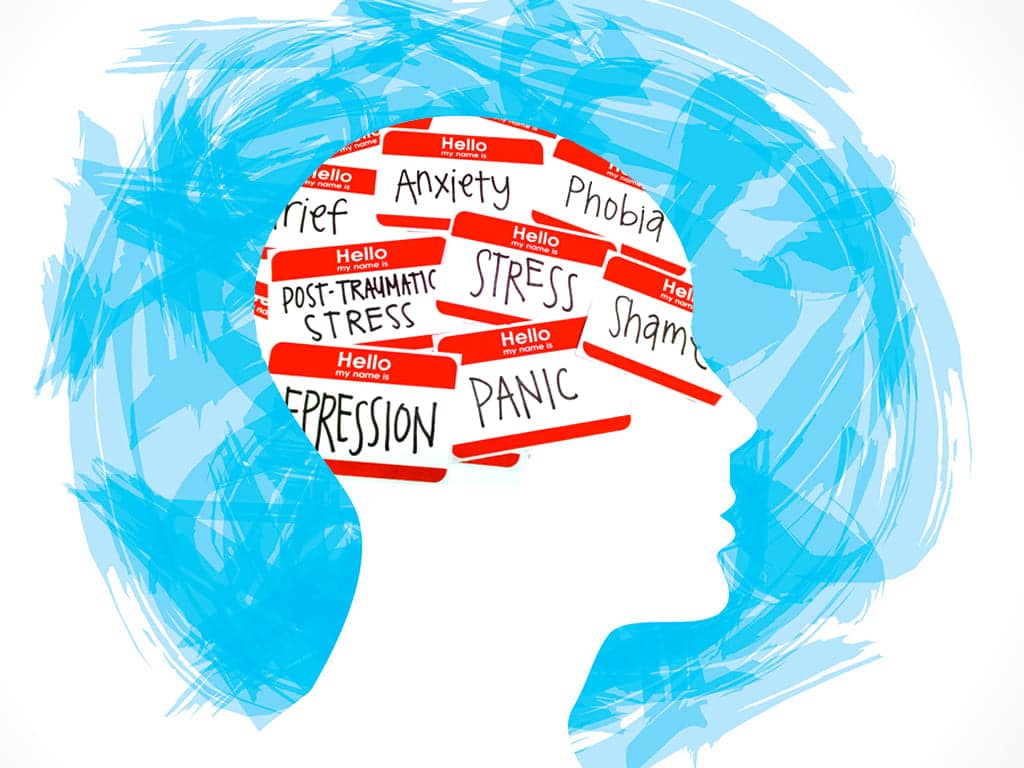
Mental Health Is Bigger Than We Think

Published

on

A few days ago, I attended a meeting where mental health was brought up. What struck me
most was how quickly the conversation centered only on depression as if it is the only mental
health struggle that exists.

Yes, depression is real. It is serious. It deserves attention.
But mental health is so much broader than that.
We Have Normalized Words Without Understanding Them.

Somehow, we have become comfortable saying:

  • “I have OCD” because we like things organized.
  •  “I have ADHD” because our minds move fast.
  •  “I’m depressed” because we feel sad.

But being organized does not automatically mean you have OCD. It may simply mean you enjoy
structure and control.

Having a busy, fast-moving mind does not automatically mean you have ADHD.
These are serious clinical conditions. They affect daily functioning, relationships, and quality of life. They are not personality traits.

When we casually throw these terms around, we unintentionally minimize the lived realities of people who are truly struggling.
Mental Health Is a Wide Spectrum.
Mental health is not just depression, OCD, or ADHD.

It includes conditions such as:

  • ADHD
  • Autism
  •  Schizophrenia
  •  Bipolar Disorder
  •  Depression
  •  Anxiety Disorders
  • OCD
  • PTSD (Trauma Disorders)
  • Dissociative Disorders
  • Eating Disorders
  • Sleep Disorders
  • Addiction (Substance Abuse)
  • Personality Disorders
  • Dementia
  • And more.

These conditions exist across all types of people: children, adults, men, women, students,
professionals.

Mental health is not a “type” of person. It is a human reality.
Rwanda’s History and Our Mental Health
As a country, we also need to acknowledge something deeper.
Our collective history has affected our mental health more than we often admit.

Among 1,271 genocide survivors interviewed in a study:

  • 53.3% of women and 48.8% of men had at least one mental disorder.
  •  The most prevalent were major depressive episodes (35.0%), PTSD (27.9%), and panic
    disorder (26.8%).
  •  76.2% were aware of mental health services.
  •  Only 14.1% had actually used them.

That gap speaks volumes.
Awareness is not enough. Access and action matter.
Our Children Deserve Better.

In many homes and schools, when a child struggles, we quickly say:

  • “He’s not working hard.”* “She’s just difficult.”
  • “He’s not social.”
  • “She’s stubborn.”

But what if the child is overwhelmed?
What if they are neurodivergent?
What if they are struggling silently?

As Rwandans, we need to normalize testing not as a label, but as understanding.
Getting a child assessed does not mean something is “wrong.”
It means we are trying to understand how their mind works so we can support them better.
Parents, please do not give up on your children.

Schools and institutions must also step up:

  • Provide easier access to assessments.
  • Offer counseling services.
  • Train teachers to recognize signs early.
  • Create supportive environments instead of punishment-driven ones.

Let’s Learn to Meet People Where They Are.
We often expect people with mental health conditions to adjust to society.
But what if we also adjusted?

Let’s:

  • Be patient.
  • Be informed.
  • Be cautious with our words.
  •  Support families who are navigating these realities.
  • Create safe spaces for conversation.

There are facilities. There are professionals. There are support systems. We just need to use
them and make them more accessible.You Are Not “Crazy.” You Might Be Tired.

If you are struggling, hear this clearly:

You are not crazy.
Your mind may simply be overwhelmed.
Your nervous system may be tired.
Your past may be unresolved.
Therapy is not weakness.
Counseling is not shameful.
Testing is not failure.

Everyone needs someone to talk to about their inner world.
Mental health is not a trend. It is not a personality aesthetic. It is a serious, layered, deeply
human topic.

And as a country as communities we need to treat it that way.
Let’s move beyond labels.
Let’s move beyond jokes.
Let’s move toward understanding.
Because mental health is not just about surviving.

It is about living well.

Continue Reading

Trending

Copyright © 2026 Africadigitmedia.net. Website powered by ProDigit.