Connect with us

Tech

Sam George Urges Stronger Data Protection as Conference Concludes

Published

on

Samuel Nartey George, Ghana’s Minister for Communications, Digital Technology and Innovations, has called for stronger accountability in the handling of personal data, warning that the consequences of misuse extend beyond financial loss.

Speaking at the recent Data Protection Conference, George stressed that privacy breaches can erode public trust, expose individuals to security risks and undermine confidence in digital systems.
He noted that as governments and institutions accelerate digital transformation, the responsibility to safeguard personal information must remain a priority.
“Personal data represents people’s identities and livelihoods. When it is mishandled, the damage goes far beyond regulatory fines,” he indicated.

Trust at the Centre of Digital Growth

George emphasized that trust is essential for the success of digital services, including e-government platforms, financial technology solutions and telecommunications systems. Without strong data protection safeguards, he warned, citizens may become hesitant to engage fully in digital platforms.
He further highlighted the need for institutions to adopt responsible data collection practices, ensure secure storage systems and maintain transparency in how information is used.

Call for Accountability

The Minister underscored the importance of compliance with data protection laws and encouraged institutions to treat privacy not merely as a legal requirement but as a governance responsibility.
He stated that enforcement mechanisms must be strengthened to ensure that organizations that fail to comply with regulations are held accountable.

Continue Reading
Click to comment

Leave a Reply

Your email address will not be published. Required fields are marked *

Business

The Earring the Internet Forgot

Published

on

By

The internet has a peculiar relationship with time.

A story can disappear for years, then return one morning carrying the urgency of breaking news.

The photograph is familiar. The achievement is old. But to a new audience, everything looks freshly discovered.

That is what makes the renewed attention around Bohlale Mphahlele worth examining.

The first version of her story belongs to 2020.

Mphahlele was 16, a Grade 11 student in Limpopo, when she developed what became known as the Alerting Earpiece. It was designed to look like an ordinary piece of jewelry while functioning as a discreet emergency device.

The idea was born from a problem that was anything but technological: violence against women and children.

The prototype was designed to allow a wearer to trigger an alert without having to reach for a phone. Its proposed functions included sending an emergency notification and location to selected contacts and capturing an image. At the Eskom Expo for Young Scientists, the project received a bronze medal in engineering and electronics.

For a teenager, it was an extraordinary achievement.

For the internet, it was an irresistible story.

And then the story largely went quiet.

That is where the conventional version usually ends.

A clever young African inventor. A clever invention. A medal. A headline. An uplifting conclusion.

But invention stories rarely end when the cameras leave.

Six years later, Mphahlele is no longer the teenager standing beside her prototype.

She is 22.

In 2026, she has again been speaking publicly about the invention and the problem that inspired it, including an appearance connected to France 24. She has also established Mphahlele Alerts

and continued her studies in Information Technology.The distinction matters.

Because the question in 2020 was: Can a teenager build an ingenious response to a frightening problem?

The question now is harder:

Can that idea actually become something people can use?

There is a vast distance between a prototype and a product.

A prototype proves that an idea can exist.

A product has to prove that it can survive.

It has to be engineered, tested, manufactured, maintained and made affordable. It has to work when the person wearing it needs it to work not merely when it is being demonstrated.

And there is another uncomfortable question that viral retellings tend to avoid: Has the earpiece actually reached ordinary users?

The evidence available publicly does not establish that it has been widely deployed or used in real-life emergencies.

That is not a failure of the invention.

But it is an important fact about where the story stands.

Mphahlele’s creation remains, at its heart, an attempt to turn technology into a little more control in a moment when someone might otherwise have very little.

That idea began long before the earpiece existed.

In 2020, Mphahlele told the Sowetan that she had been thinking about the concept since primary school. Her motivation came from seeing reports of violence and wondering whether technology could offer another form of protection.

There is something revealing in that instinct.

Most people encounter a social crisis and ask who should fix it.

A young inventor asked what she could build.

The object she came up with was small enough to sit beside the face. The problem behind it was enormous.

That contrast is probably why the story continues to travel.But it is also why the story deserves more than another round of inspirational reposts.

Gender-based violence cannot be engineered away. An earpiece cannot replace justice,

prevention, accountable institutions or safer communities. Technology can provide a tool; it cannot repair the conditions that make the tool necessary.

What technology can sometimes do is narrow the distance between danger and assistance.

That is what Mphahlele was trying to explore.

And perhaps the most interesting part of her story is no longer the ingenuity of a 16-year-old.

It is the persistence of the idea after the attention disappeared.

South Africa’s Parliament was still discussing and recognizing her work in 2025, with calls for support to help advance the invention.

The teenager became an adult.

The school project became a company.

And an old photograph became new again.

That is the peculiar thing about viral stories: they often make the moment of invention look like the destination.

It isn’t.

The medal is not the destination.

The headline is not the destination.

Even going viral is not the destination.

The difficult part comes afterward, when nobody is watching.

For Bohlale Mphahlele, that part has lasted six years.

So perhaps the story resurfacing in 2026 is not really a story about an earring at all.

It is a story about what happens after the applause.

About whether an idea can survive its first moment of attention.

And about a young woman who, at 16, imagined that something as ordinary as an earring might give someone in danger one more way to be heard.

Six years later, the internet has remembered the invention.The more important question is whether it will remember to follow the inventor.

Continue Reading

Health

Kenya’s Solar Ambulance Points to a Different Future for Rural Healthcare

Published

on

By

In parts of Africa, the distance between a patient and a doctor is measured in more than kilometers.

It is also measured in roads, electricity and the medical equipment available when the patient finally arrives.

Kenya’s experiment with a solar-powered ambulance aims to change that.

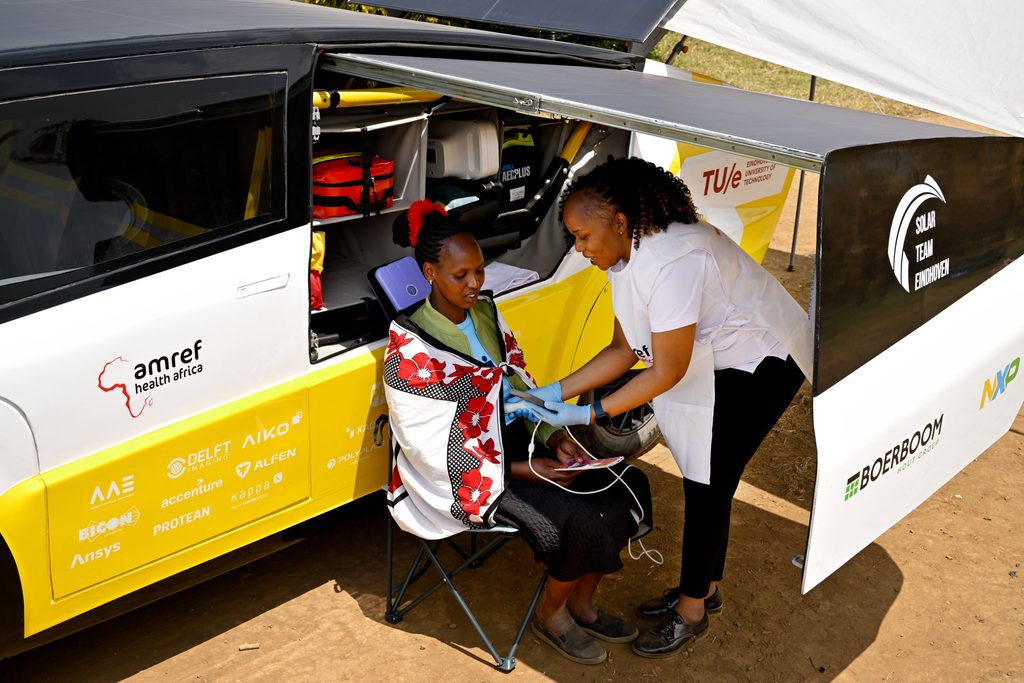
The vehicle, known as Stella Juva, has been tested in Kenya as a mobile healthcare platform. It can carry medical equipment, vaccine refrigerators and other supplies. Solar power helps support its operations.

The ambulance has travelled more than 800 kilometers. It has also taken difficult routes to remote communities, including Mosiro in Narok County.

The important point is not simply that an ambulance can run on solar power.

Instead, Stella Juva brings together three things that rural healthcare systems often struggle to provide in the same place: mobility, electricity and medical technology.

Bringing Healthcare to Remote Communities

For people who live far from well-equipped hospitals, healthcare can fail long before they reach an emergency room.

A health centre may exist without reliable electricity. A health worker may be available without the equipment needed to diagnose a patient.

At the same time, vaccines may need refrigeration that an off-grid facility cannot provide every day.

A mobile healthcare unit changes the question.

Rather than asking when every remote community will get all the facilities of a modern hospital, it asks whether some of that infrastructure can travel to the community.

That is the bigger idea behind Stella Juva.

Why Kenya Is an Important Testing Ground

Kenya’s role in the experiment is also important.

The vehicle is not being tested only to see whether it works on paper. It is being tested in places where long distances, rough roads and limited access to electricity are part of daily life.

That makes the test more meaningful.

If a solar-powered ambulance can support healthcare workers in these conditions, it could offer useful lessons for other communities facing similar challenges.

The idea also fits into a wider pattern across Africa.

The continent’s infrastructure gaps have often pushed countries to find new ways to deliver basic services.

For example, mobile money grew partly because many people lacked access to traditional banking. In the same way, solar power has expanded in places where national electricity grids remain limited.

Now healthcare technology is asking a similar question:

Can medical care become more mobile?

The Challenges Behind the Idea

However, enthusiasm needs to come with caution.

A prototype that survives a field test is not automatically a solution for an entire health system.

The harder questions come next.

Who will buy the vehicles? Who will maintain them? How much will they cost? Who will operate them? And how will they fit into existing public healthcare networks?

These questions will determine what happens to Stella Juva.

If the model proves affordable and practical, it could become more than an interesting engineering project. It could offer a new way to reach communities that traditional healthcare systems struggle to serve.

If the costs are too high or the vehicles prove difficult to maintain, the project may remain a promising experiment.

For Kenya, however, the test offers more than a glimpse of a greener ambulance.

It offers a glimpse of a different way to think about rural healthcare.

Instead of making every patient travel to a hospital, some healthcare services could travel to the patient.

And sometimes, the healthcare system may have to go looking for the patient.

Continue Reading

Tech

Science Fest Africa 2026: Teenagers, Ideas, and the Quiet Making of the Future

Published

on

By

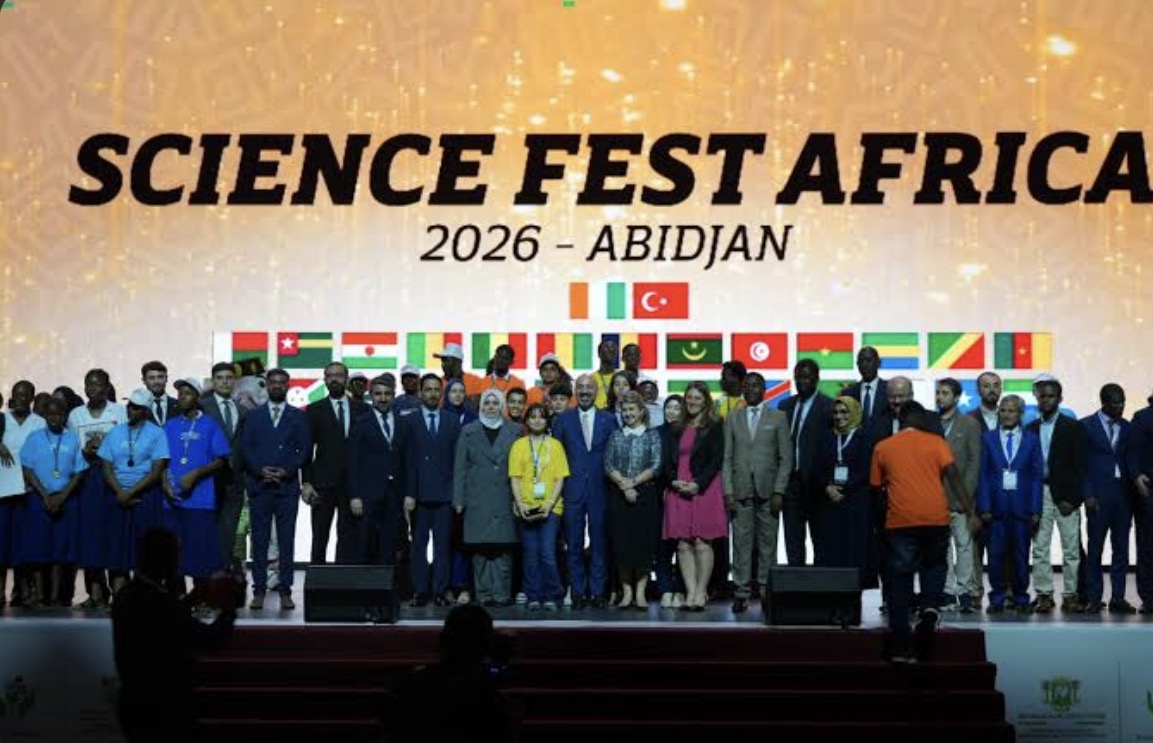
In April 2026, Abidjan hosted something that felt less like a formal event and more like a glimpse into what the continent is becoming. Science Fest Africa 2026 brought together students from across Africa many of them still in their early teens and placed them, their ideas, and their inventions at the center of the conversation.

The festival itself is part of a growing initiative led by the Türkiye Maarif Foundation, which has steadily expanded its educational footprint across the continent. What began as a school-based effort has, over a few years, grown into a pan-African gathering where science is no longer something confined to textbooks. It is something built, tested, and argued over in real time.

What gives the festival its particular energy is the age of the participants. Most of the students fall somewhere between twelve and eighteen. Some are just beginning to understand the logic of circuits or the language of code; others already move with the quiet confidence of engineers. Yet all of them share the same stage, and that creates a kind of tension between learning and mastery, between curiosity and capability that drives the entire event forward.

Walking through the exhibition spaces, what stands out is not just the intelligence on display, but its direction. These students are not building for abstraction. Their ideas lean heavily toward the immediate and the practical, shaped by the environments they come from. A group of students presents a system designed to manage electricity in homes where outages are common, allowing essential devices to keep running when power becomes unstable. Nearby, another project uses artificial intelligence to identify diseases in crops like cocoa and cashew, translating its findings into local languages so that farmers can act on them without needing technical training.

There is a sense that these ideas are not borrowed from somewhere else, they belong exactly where they are being built.

The competitive aspect of the festival exists, but it never quite overshadows the atmosphere of shared discovery. Teams are evaluated across categories like robotics, artificial intelligence, and sustainable technology, and in 2026 a group from Somalia emerged as the overall top performer. Their project stood out not simply because it worked, but because it connected innovation to everyday use in a way that felt immediate. Other teams from countries such as Guinea and Côte d’Ivoire also gained recognition, particularly in robotics and applied systems, reinforcing the sense that talent is widely distributed rather than concentrated.

What happens after the awards matters just as much as the moment of winning. The prizes are structured to extend beyond applause. Schools receive fully equipped robotics labs, and students are given access to additional training, creating a pathway for ideas to evolve rather than end at the exhibition table. It is an approach that treats innovation as something ongoing, not something completed.

Still, the most important outcome of Science Fest Africa 2026 is harder to measure. It lives in the shift that occurs when young people begin to see science differently, not as distant knowledge, but as a tool they can use immediately. At an age when many are still deciding what they might become, these students are already building, testing, and presenting solutions to problems that surround them.

There is something quietly significant about that. The festival does not claim to solve Africa’s challenges, and it does not need to. What it does instead is create a space where those challenges are confronted early, by minds that have not yet learned to think in terms of limitation.

And in that space, among prototypes and code and improvised machines, the future does not feel abstract. It feels like something already underway.

Continue Reading

Trending

Copyright © 2026 Africadigitmedia.net. Website powered by ProDigit.