
Connect with us

Tech

Rwanda’s ‘Nshuti’ Is Rewriting Digital Diplomacy in the UK

The High Commission of the Republic of Rwanda to the United Kingdom has launched Nshuti, a 24/7 AI-powered virtual assistant designed to transform how Rwandans in the UK access consular services.


Published

on

Photo: Shutterstock

What Is Nshuti?

Nshuti is a conversational digital assistant that handles first-line consular inquiries from passport renewals and travel documents to visa guidance and procedural information.

Instead of waiting for office hours or navigating complex websites, users simply send a message. The system responds instantly with structured, menu-driven guidance, functioning as both a digital receptionist and a knowledge engine.

Who Built It And For Whom?

The assistant was developed and deployed by Rwanda’s High Commission in London to serve the growing Rwandan diaspora in the UK including students, professionals, dual nationals, and travelers.

But the real audience is broader: any government observing how digital transformation can extend beyond domestic public services into international missions.

When And Where Does It Operate?

Nshuti operates now, continuously 24 hours a day, seven days a week.

While geographically tied to the UK mission, its delivery platform makes it globally accessible. Anyone with WhatsApp can engage the system, effectively decentralizing consular access.

Why Launch It?

The challenge facing consular offices worldwide is scale. Growing diasporas generate rising inquiry volumes. Traditional support systems, phone calls, email threads, in-person appointments struggle under peak demand.

Nshuti introduces a scalable solution:

  • Instant responses to frequently asked questions
  • Reduced administrative bottlenecks
  • Extended service hours without additional staffing
  • Clear digital pathways for escalation when human intervention is required

This app is not about replacing staff. It is about filtering noise from necessity.

How Does It Work?

Users initiate contact by messaging the High Commission’s official WhatsApp number. The assistant then guides them through structured prompts or keyword-based triggers.

Behind the interface, the system likely combines rule-based workflows with automated response logic, a lightweight but powerful deployment model. Straightforward queries are resolved immediately. Complex or sensitive cases are redirected to human officers.

Rwanda has steadily built a reputation as a digital governance frontrunner in Africa, embedding technology into identity systems, public services, and administrative infrastructure.

Nshuti extends that philosophy into diplomatic operations.

The innovation is not that it uses AI. It is that it uses AI precisely where friction exists in communication, accessibility, and response time.

By turning a messaging platform into public infrastructure, Rwanda is demonstrating that digital transformation does not require massive new ecosystems. Sometimes it begins with a chatbot that answers at 2 a.m.

In the evolving architecture of e-government, Nshuti may look modest. But strategically, it signals something larger:

Diplomacy is going digital and Rwanda is coding ahead.

Continue Reading
Click to comment

Leave a Reply

Your email address will not be published. Required fields are marked *

Society

Melania Trump Introduces Talking Robot to Inspire Kids’ Learning

Published

on

By

First Lady Melania Trump wowed attendees at a children’s education and technology summit this week by introducing a walking, talking humanoid robot designed to show how technology can transform learning.
The event, part of a global initiative to explore the role of technology in education, brought together educators, innovators, and officials to discuss ways to prepare children for a future full of digital tools and artificial intelligence.

Trump unveiled a sleek robot named Figure 03, capable of speaking multiple languages, moving naturally, and interacting with people. She described it as a glimpse into the future, where robots could help kids learn subjects like math, science, and literature, offering personalized lessons right at home or in the classroom.

During the presentation, Figure 03 greeted attendees, answered questions, and demonstrated its ability to engage with students showing how robots could supplement teaching in creative and exciting ways.
“Imagine a world where every child has access to instant knowledge and personalized learning,” Trump said, emphasizing that technology can make education more accessible and engaging for all children.

The summit highlighted how AI and robotics are no longer just science fiction, they are becoming practical tools that could reshape the way children learn, think, and explore the world. With initiatives like this, Trump hopes to spark curiosity, inspire innovation, and encourage young people to embrace technology as a part of their education journey.

By bringing a robot into the spotlight, the former First Lady’s message was clear: the classroom of the future is interactive, exciting, and full of possibilities and children should be ready to take advantage of it.

Continue Reading

Tech

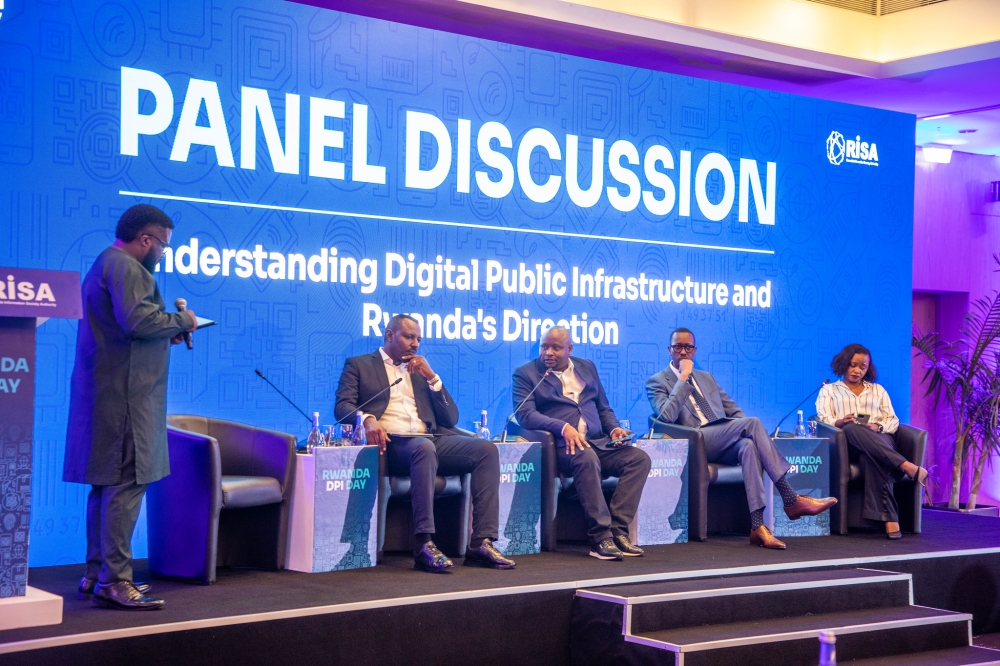
Rwanda Accelerates Digital Government and Economy Through Innovative Platforms

Over a decade of strategic investment is transforming public services, connectivity, and technology-driven growth
Published

on

By

Rwanda has spent more than a decade building the foundations of a digital government and digital economy, making technology a central pillar of its national development strategy.

The country’s digital transformation has been driven by policies under the Smart Rwanda Master Plan, implemented by the Rwanda Information Society Authority and guided by the Ministry of ICT and Innovation. The plan focuses on expanding digital infrastructure, improving government services, and encouraging innovation in sectors such as finance, health, and education.

One of Rwanda’s most visible achievements has been the expansion of online government services through the IremboGov platform, which allows citizens and businesses to access public services digitally instead of visiting government offices. The system has helped streamline services such as permit applications, civil registration, and business-related procedures.

Rwanda has also invested heavily in broadband connectivity and digital innovation, including the rollout of nationwide 4G internet and the creation of technology hubs and innovation programs in Kigali.

The introduction of a Digital Public Infrastructure (DPI) strategy represents the next phase of this effort. DPI aims to connect key digital systems such as digital identity, payment platforms, and government databases so that institutions can securely exchange information and deliver faster, more integrated services.

Officials say strengthening these systems will not only improve public service delivery but also create a stronger foundation for data-driven innovation, digital trade, and emerging technologies such as artificial intelligence.

The initiative aligns with Rwanda’s broader ambition to position itself as a regional leader in digital governance and technology-driven economic growth in Africa.

Continue Reading

Tech

Musk’s Starlink Teams Up with Kenyan ISP to Bring Internet to Remote Areas

Satellite broadband provider Starlink partners with local firm Mawingu Networks to expand access in rural Kenya.


Published

on

By

Elon Musk’s Starlink, the satellite internet network operated by SpaceX, is making a strategic move in Kenya. Instead of expanding alone, the company has teamed up with Mawingu Networks, a Kenyan internet service provider that has spent years connecting rural and semi-urban communities. Together, they plan to roll out high-speed internet to hundreds of community hubs across the country, including schools, farmer cooperatives, and local resource centers.

Starlink works differently from regular internet providers. Its network of satellites in low Earth orbit beams internet signals directly to the ground, allowing coverage in areas where traditional fiber or mobile networks are limited or unreliable. While this technology can reach remote regions quickly, it still needs local support to make the service practical for everyday users. That’s where Mawingu comes in. With its on-the-ground experience and existing infrastructure, Mawingu can manage installations, maintain equipment, and help communities make the most of the connectivity.

The partnership also ties into global efforts, supported by companies like Microsoft, to improve digital access in underserved areas. By combining satellite coverage with local knowledge, the initiative aims to make the internet not just available, but usable, enabling online education, business opportunities, and access to digital services in communities that have long been left behind.

This collaboration marks a shift in Starlink’s strategy in Africa. Initially, the company entered markets as a standalone provider, which caused concern among local operators worried about competition.
By working alongside an established Kenyan ISP, Starlink can expand more smoothly, reduce regulatory friction, and integrate more effectively into the local digital ecosystem.

Instead of operating in isolation, global companies are increasingly finding that partnerships with local operators are essential to deliver technology in a way that benefits communities and supports sustainable growth.

For Kenya, the Starlink-Mawingu partnership could mean faster, more reliable internet for hundreds of communities, unlocking opportunities for learning, commerce, and communication in regions that have long struggled with connectivity gaps.

Continue Reading

Trending

Copyright © 2026 Africadigitmedia.net. Website powered by ProDigit.