Connect with us

Sports

Tour du Rwanda 2026: Who Will Conquer the Hills?

The eight‑day stage race tests endurance and strategy across Rwanda’s hills as a strong international field lines up

Published

on

As the world’s cycling season unfolds, the 2026 Tour du Rwanda once again commands attention across Africa’s roads. From 22 February to 1 March, nearly a thousand kilometres of hilly terrain will serve as the proving ground for some of the continent’s most promising riders and a strong contingent of international teams.

Classified as a UCI 2.1 race, this edition retains its status as the premier stage race on the UCI Africa Tour, attracting squads whose ambitions range from earning valuable UCI ranking points to showcasing talent on an international stage.

The route demands consistency and tactical awareness. Riders face long approaches out of Rukomo, sharp punchy climbs, and undulating profiles that roll through Kigali’s surrounding hills before the finale back in the capital. With stages crossing regions like Nyamata, Huye and Rusizi, advantages gained or lost on one day can ripple through the leaderboards over the next.

Team compositions this year reflect true diversity. National sides such as Rwanda, Eritrea, South Africa and Ethiopia ride alongside European continental and development teams, including the likes of Movistar Team Academy, Lotto‑Groupe Wanty and Picnic PostNL. Swiss NSN Development and Turkey’s Istanbul Team deepen the competitive field, giving rise to different tactical approaches and potential breakaway specialists eager to make their mark.

While outright favourites can be hard to pinpoint in a field without WorldTour heavyweights, riders from strong cycling nations like Eritrea and Rwanda always draw attention. Past editions have seen riders from these nations deliver top performances, and experience here can be as valuable as raw climbing ability.

Unlike high‑budget European tours, prize money at a 2.1 African stage race is modest, and the real rewards often come in the form of UCI points that bolster team rankings and rider profiles. Strong results here can propel a rider toward contracts with higher‑level squads or invitations to broader international races later in the season.

From taxing ascents under an African sun to tactical sprints into historic town centres, the Tour du Rwanda continues to be more than a race of distance. It is a competitive battlefield where ambition meets resilience, and where emerging talent seeks its breakthrough moment on the UCI stage.

Continue Reading
Click to comment

Leave a Reply

Your email address will not be published. Required fields are marked *

Politics

Kenya Pays KSh 3.9 Billion to Lock in AFCON 2027 Hosting

Published

on

By

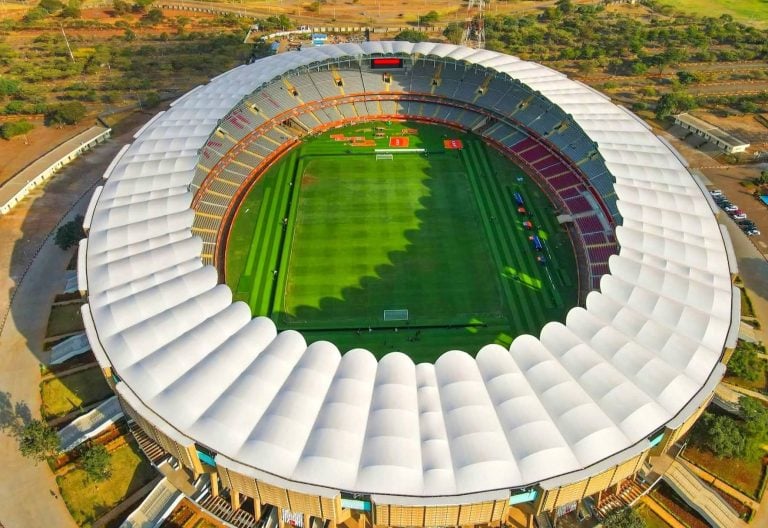
Kenya has officially secured its spot as a co-host for the 2027 Africa Cup of Nations (AFCON) after paying the required KSh 3.9 billion (approximately $30 million) hosting fee to the Confederation of African Football (CAF).

The payment, completed in late March 2026, comes after weeks of scrutiny and pressure from CAF, which had set strict deadlines for co-host nations. Uganda and Tanzania had already fulfilled their financial obligations, leaving Kenya as the final piece in the tri-nation hosting puzzle. Sports Cabinet Secretary Salim Mvurya confirmed the government had met the full financial requirement, removing any uncertainty about Kenya’s participation.

This historic 36th edition of AFCON will run from 19 June to 18 July 2027, marking the first time the tournament will be jointly hosted by three countries. The competition will feature an expanded 28-team format, promising more matches and greater fan engagement across East Africa.

By settling the hosting fee, Kenya not only guarantees its involvement but also unlocks preparations for stadium upgrades, logistics, and promotional activities ahead of the continent’s premier football event.

Continue Reading

Society

Caught in the Crossfire: Ex-Footballer Jean‑Manuel Nedra’s 102 kg Cocaine Bust

A routine airport stop turned into a high-stakes drama as the former Martinican midfielder faced the law.

Published

on

By

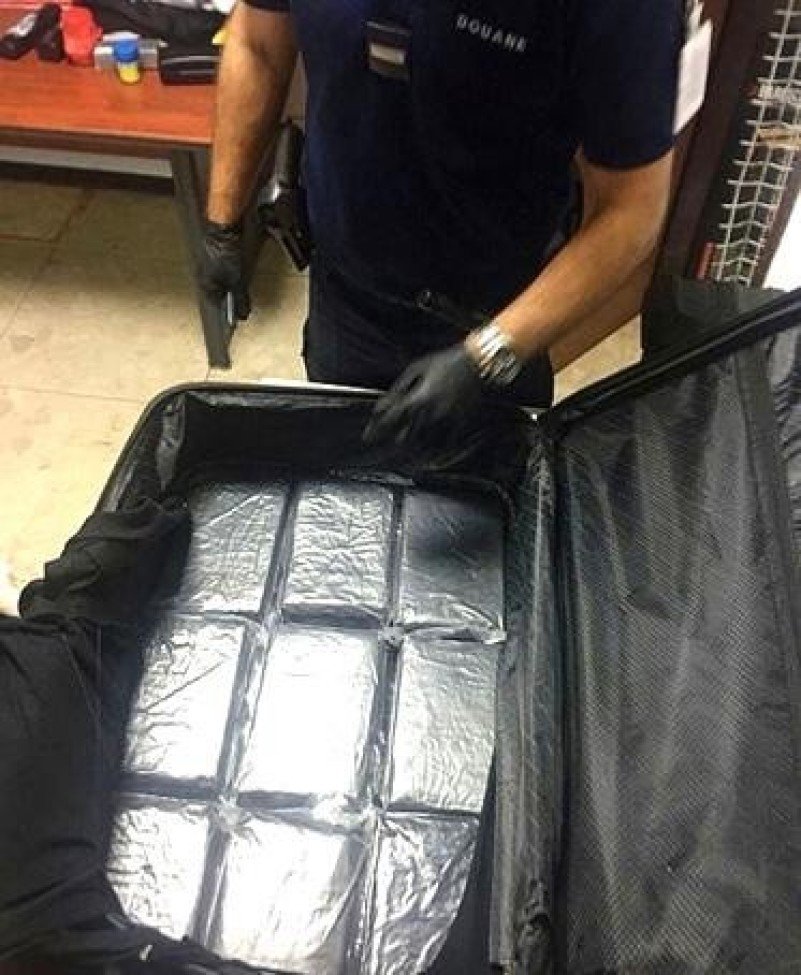
On December 31, 2022, the bustling halls of Paris‑Charles‑de‑Gaulle Airport became the stage for an extraordinary police operation. Among the sea of travelers, Jean‑Manuel Nedra, a former footballer from Martinique, seemed like any other passenger. But tucked inside his luggage was over 102 kg of pure cocaine, a cache large enough to trigger a national investigation.

Authorities, tipped off by irregularities in his flight itinerary, intercepted Nedra and his companion as they attempted to bypass the final leg of their journey. Customs officers were met with an astonishing sight: suitcases filled solely with cocaine bricks, no clothing, no personal items, only evidence of a high-risk smuggling operation.

In the weeks that followed, the Tribunal correctionnel of Bobigny pieced together the story. Nedra admitted to carrying the drugs, claiming he was recruited for a “service” he could not refuse, but vehemently denied organizing the trafficking ring. Prosecutors painted a starkly different picture, calling the haul a sophisticated attempt to flood European markets.

The courtroom drama culminated on March 20, 2026, when the court delivered its verdict: five years in prison for the fallen sportsman. The ruling sent shockwaves across France and Martinique, a grim reminder that fame and fortune can unravel in an instant when choices collide with the law.

Investigations continue, extending into networks that span from the Caribbean to mainland France. While Nedra’s football career is now firmly behind him, his story serves as a chilling cautionary tale: even a single suitcase can change the trajectory of a life.

Continue Reading

Sports

The Originator: Dell Curry’s No. 30 Finally Takes Its Place in Charlotte History

Published

on

By

March 19, 2026, The lights dimmed inside Spectrum Center. A hush fell over the crowd. And then, slowly, deliberately, a gold-trimmed No. 30 began its climb.
For a moment, time stretched.
Then came the roar.
Wardell Stephen “Dell” Curry Sr. stood at center court, eyes fixed upward as the jersey rose into the rafters, no longer just a number worn in games past, but a permanent piece of Charlotte basketball history. On Thursday night, the Charlotte Hornets retired his No. 30, honoring a man who didn’t just help build the franchise, but quietly laid the foundation for something far bigger than himself.
This wasn’t just a ceremony.
It was a recognition long overdue.

Built Before the Spotlight

Long before sold-out arenas and global attention, Dell Curry was the steady force behind an expansion team finding its identity. A first-round pick in 1986, he would go on to spend a decade in Charlotte (1988–1998), becoming the face of consistency in a young franchise still learning how to win.
He wasn’t the loudest star. He didn’t demand headlines.
He just delivered.
Night after night, Curry came off the bench with a shooter’s touch and a veteran’s calm, stretching defenses before it became the modern blueprint. In 1994, he was named NBA Sixth Man of the Year — a recognition of a role he had already mastered. By the time he left, he had scored over 9,800 points for the Hornets, cementing himself among the franchise’s all-time leaders.
But numbers alone never captured his value.
Dell Curry became Charlotte.

The Moment That Said Everything

As the banner reached the rafters and locked into place, the arena erupted again, louder this time, fuller. Fans rose to their feet, many holding up homemade signs, others simply clapping in rhythm as if trying to hold onto the moment just a second longer.
At midcourt, Curry wiped his eyes.
Not dramatically. Not for show.
Just enough to tell the truth.
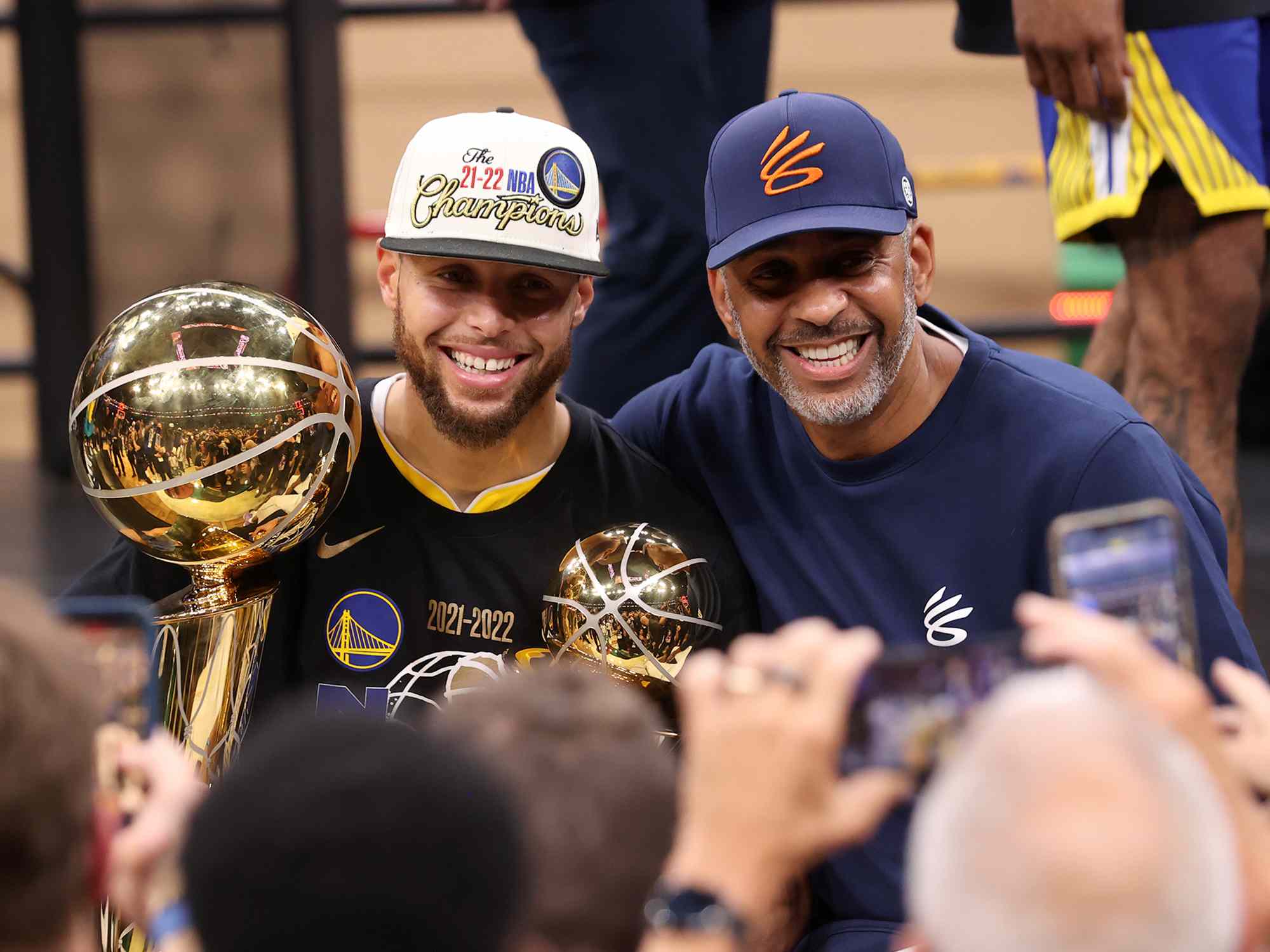
Nearby stood his sons; Stephen and Seth, both NBA players, both sharpshooters, both unmistakably shaped by the man being honored above them.
Stephen, now one of the most transformative players the game has ever seen, later described his father with a single phrase:

“The originator.”

It landed heavier than any statistic.
Because before the championships, before the MVPs, before No. 30 became iconic worldwide, it belonged to Dell.

A Legacy That Never Left

Even after his final game, Curry didn’t fade into history. He stayed. As a broadcaster, as an ambassador, as a constant presence around the organization, he became the bridge between eras, a living reminder of where the Hornets began.
Off the court, his impact ran just as deep. Through his foundation and community work, he invested in Charlotte’s next generation, turning influence into opportunity and legacy into action.
He wasn’t just part of the city.
He helped shape it.

More Than a Jersey

There’s a certain irony to how basketball history works.
Dell Curry helped pioneer the value of perimeter shooting, a skill that would later redefine the entire sport. Years later, his son would take that same principle and revolutionize the game on a global scale.
But on this night, none of that felt separate.
It felt connected.
Complete.
Because the story didn’t start in Golden State. It didn’t start with MVP trophies or championship parades.
It started here.
With a father.
With a jumper.
With a number.

Forever in the Rafters

As the ceremony ended and the game resumed, the jersey remained suspended above the court, steady and permanent, exactly where it belonged.
And maybe that’s the most fitting part of all.
Long before No. 30 became a symbol recognized around the world, it was built quietly, consistently, and without fanfare by a man in Charlotte.

Now, at last, it belongs to history.

Continue Reading

Trending

Copyright © 2026 Africadigitmedia.net. Website powered by ProDigit.