Connect with us

Health

When a Court Case Became a Digital Crisis in Senegal When a Court Case Became a Digital Crisis in Senegal

How leaked health data and social media panic exposed privacy gaps and stigma

Published

on

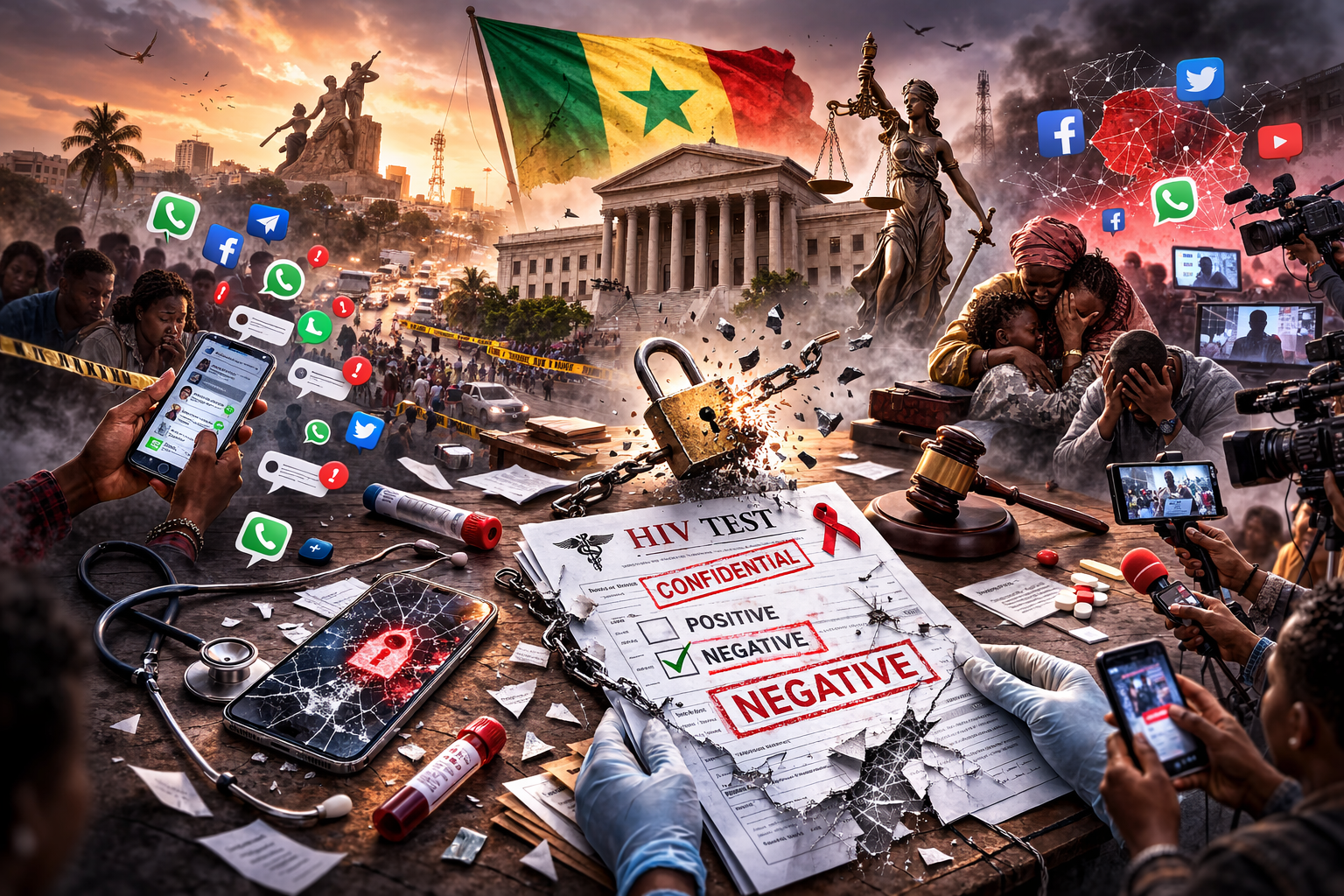
Dakar — In early 2026, Senegal found itself in the grip of a story that was part criminal investigation, part social media storm. Authorities had arrested a group of people accused of deliberately putting others at risk of HIV. The legal process began quietly, as such cases usually do, but it didn’t stay quiet for long.

Within hours, confidential information about the arrested individuals including HIV test results began circulating on WhatsApp, X, and Facebook. Screenshots of serological forms and fragments of police reports spread rapidly, accompanied by rumours and speculation. No official government agency had released the data. Instead, the leak seemed to originate from someone with access to the case files or medical records. Once online, it was unstoppable.

The exposure of these private details triggered immediate concern and outrage. Families of the accused faced awkward questions and stigma, while the general public became both curious and fearful. In a society where HIV remains heavily stigmatised, seeing personal health information on millions of screens was shocking and potentially damaging.

Senegal’s Prime Minister, Ousmane Sonko, spoke out forcefully. He condemned the publication of serological results as inadmissible and harmful, particularly to children whose lives were suddenly touched by the leak. He emphasised that confidential medical data should not be shared online, even in cases that capture national attention. Human rights advocates echoed his concerns, warning that revealing HIV status in such circumstances violates both legal protections and personal dignity.

Amid the panic, several celebrities shared their negative HIV test results because they were close to some of the people who had been arrested. Mame Ndiaye Savon and her husband had ties through her employees, while TikToker Nogaye Kara, singer Adji Mass, and socialite Rangou all moved in the same social circle as those involved. Posting their results was a way to reassure the public and show that, despite these personal connections, they themselves were not affected.

Even as their posts circulated widely, the real legal story was at risk of being lost. Attention shifted from the investigation itself to the viral sharing of health data, and the public debate became more about fear and speculation than about consent, responsibility, or the judicial process.
Beyond the headlines, the episode revealed deeper gaps in how Senegal handles sensitive health information. HIV is still heavily stigmatised, and this stigma can discourage people from getting tested or seeking treatment. Even with expanding access to antiretroviral therapies and emerging prevention tools such as long-acting injectable drugs being trialled in Africa, the fear of exposure remains potent. Leaked results don’t just inform; they shape social perception, influence behaviour, and have long-lasting consequences for those affected.

The case also illustrates the tension between transparency and privacy in a digital age. Legal and medical institutions must navigate public demand for information while safeguarding individual rights, yet social media moves faster than any official clarification. Rumours fill the gaps, sometimes causing more harm than the original incident.

By the time authorities publicly addressed the leak, much of the conversation had shifted. The focus was no longer the allegations under investigation, but the viral spread of health data and the reactions of public figures. Senegalese society had glimpsed the fragility of privacy in a digital world, and the case became a cautionary tale about how fear, stigma, and social media can converge to magnify the impact of an already serious legal matter.

Continue Reading
Click to comment

Leave a Reply

Your email address will not be published. Required fields are marked *

Health

Meningitis: A Fast-Moving Threat That Can Hit Anywhere

When a Deadly Infection Shows How Close Danger Really Is

Published

on

By

It was mid-March 2026 in Canterbury, United Kingdom, and the campus of the University of Kent was alive with students rushing to classes, hanging out in dorms, and meeting friends at local cafes and nightclubs. But beneath the ordinary bustle, a hidden threat was spreading. Two students fell seriously ill in the span of just a few days. By the time medical staff realized the severity, both had tragically died. Within a week, more than a dozen others were hospitalized, all showing similar severe symptoms: fever, headache, vomiting, stiff neck, and rashes.

What made this outbreak so alarming was how fast it moved. Meningitis bacteria, which live in the nose and throat of some carriers, can spread quietly through close contact, sharing drinks, food, cigarettes, or even just a crowded dorm room. Universities are perfect breeding grounds: students socialize, live in close quarters, and attend large gatherings. In this case, health investigators suspect that one or more social events, including a nightclub gathering, helped the bacteria leap from person to person.

Meningitis, by definition, is an infection that inflames the membranes around the brain and spinal cord. The term comes from “meninges,” meaning the protective layers around the brain, and “-itis,” meaning inflammation. Though the disease often starts with flu-like symptoms, it can escalate rapidly. That’s why the two students died so quickly, the infection attacks the body fast, sometimes in just hours, and without immediate treatment, it can be fatal.

The outbreak at this specific university is not about the campus itself being “bad” or unsafe. It’s a combination of biology and environment: close living spaces, social habits, and a strain of bacteria that some students had not been vaccinated against. Once one person got infected, the others who were in close contact became vulnerable, creating a chain reaction that authorities had to act on immediately.

For Africans reading this story, it matters because meningitis is not confined to the UK. The same bacteria exist across the world, including the “meningitis belt” of sub-Saharan Africa, where seasonal outbreaks are common. Students traveling to the UK, families with loved ones studying abroad, or travelers returning from affected areas can all be at risk. Knowing the symptoms, acting quickly, and keeping vaccinations up to date can prevent tragedy.

The outbreak in Canterbury is a reminder that meningitis is fast-moving, deadly, and unpredictable, but also preventable. Awareness, early treatment, and proper hygiene can save lives whether in the dorms of England or the crowded streets of anywhere in Africa.

Continue Reading

Health

Mombasa Doctors Begin Strike After County Fails to Address Grievances

Published

on

By

Mombasa, Kenya – Doctors across Mombasa County went on strike from midnight on March 3, 2026, following the expiry of a seven‑day notice to the county government.

The industrial action started at Coast General Teaching and Referral Hospital, the county’s largest public facility. Health workers cited unresolved governance issues, staffing concerns, and the suspension of the hospital CEO as reasons for the strike.

During the strike, hospitals are providing emergency care only, while outpatient clinics, elective surgeries, and routine services have been suspended.

The Kenya Medical Practitioners, Pharmacists and Dentists Union (KMPDU) called on county authorities to address salary disputes, stalled career progression, and administrative concerns immediately. Union officials warned the strike could continue until meaningful dialogue takes place.

Continue Reading

Health

Young Americans Under 55 Dying More from Severe Heart Attacks

Published

on

By

A study published on February 26, 2026 in the Journal of the American Heart Association has found that deaths among young and middle-aged Americans hospitalized for severe heart attacks increased between January 1, 2011, and December 31, 2022.

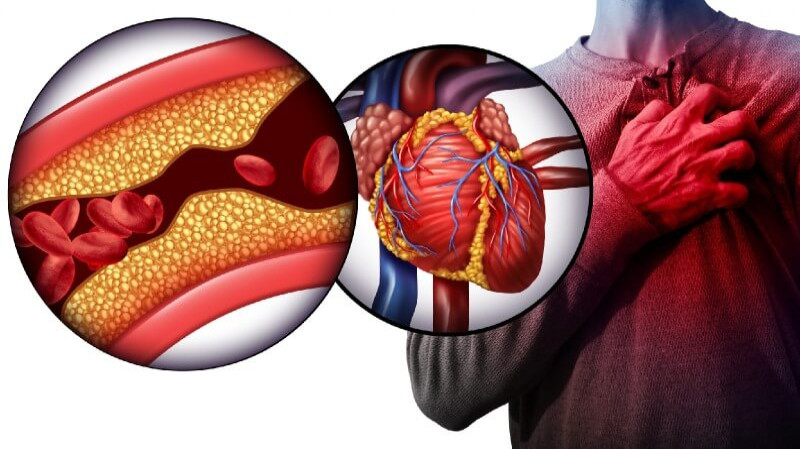
The research examined nearly one million hospitalizations involving adults aged 18 to 54 diagnosed with ST-elevation myocardial infarction (STEMI), a life-threatening heart attack caused by complete blockage of a coronary artery.

While men accounted for most of the cases recorded during the 12-year period, women under 55 were more likely to die in hospital following a severe heart attack compared to men of the same age group.
Researchers attribute the trend to rising rates of high blood pressure, diabetes, obesity, smoking and substance use among younger populations. They also note that women often experience less typical symptoms, which may delay diagnosis and treatment.

Health experts warn that heart disease is no longer limited to older adults and are urging younger people to undergo regular medical check-ups, monitor blood pressure and cholesterol levels, and seek immediate care when symptoms appear.

Continue Reading

Trending

Copyright © 2026 Africadigitmedia.net. Website powered by ProDigit.