Connect with us

Sports

The Originator: Dell Curry’s No. 30 Finally Takes Its Place in Charlotte History

Published

on

March 19, 2026, The lights dimmed inside Spectrum Center. A hush fell over the crowd. And then, slowly, deliberately, a gold-trimmed No. 30 began its climb.
For a moment, time stretched.
Then came the roar.
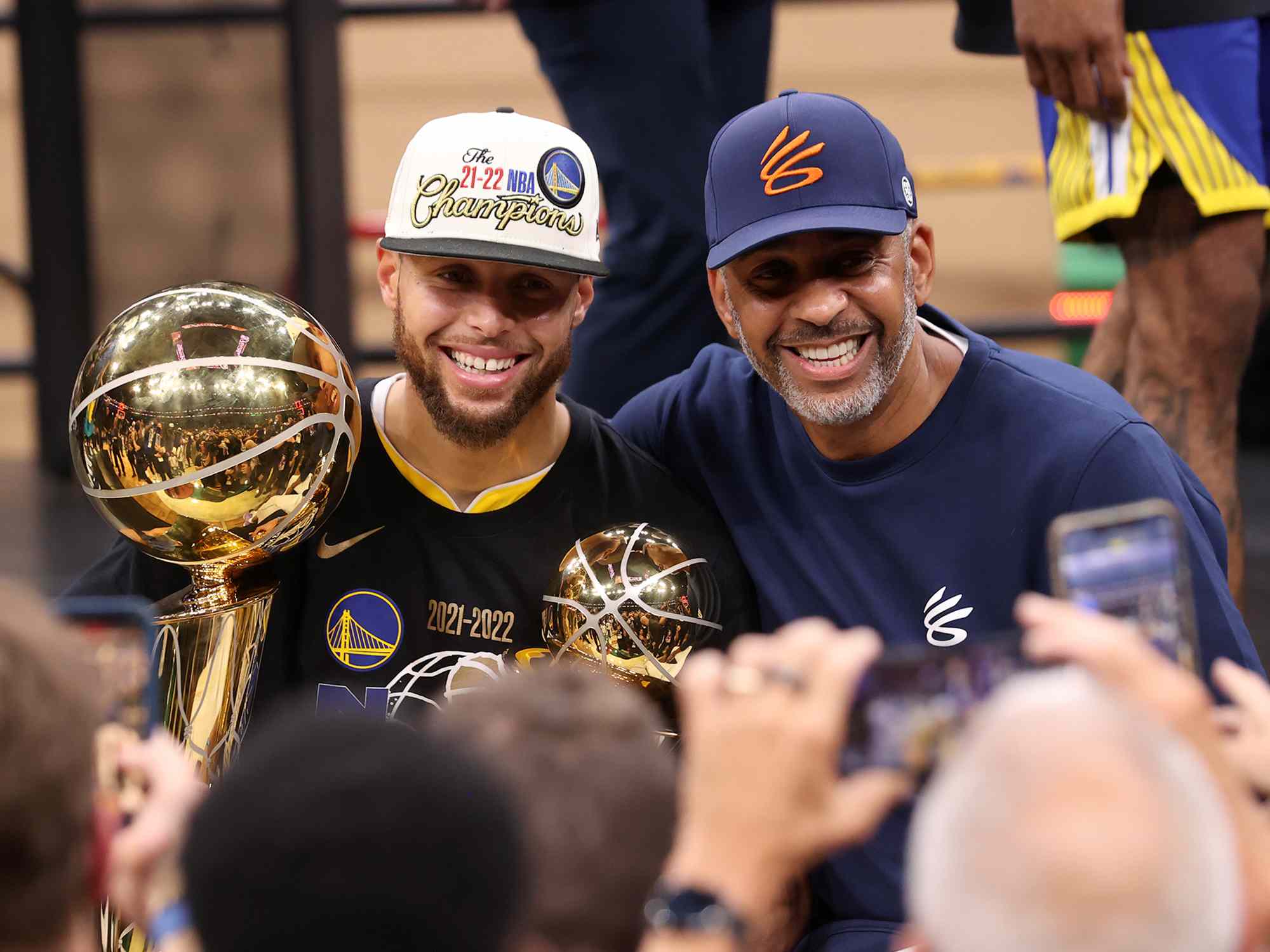
Wardell Stephen “Dell” Curry Sr. stood at center court, eyes fixed upward as the jersey rose into the rafters, no longer just a number worn in games past, but a permanent piece of Charlotte basketball history. On Thursday night, the Charlotte Hornets retired his No. 30, honoring a man who didn’t just help build the franchise, but quietly laid the foundation for something far bigger than himself.
This wasn’t just a ceremony.
It was a recognition long overdue.

Built Before the Spotlight

Long before sold-out arenas and global attention, Dell Curry was the steady force behind an expansion team finding its identity. A first-round pick in 1986, he would go on to spend a decade in Charlotte (1988–1998), becoming the face of consistency in a young franchise still learning how to win.
He wasn’t the loudest star. He didn’t demand headlines.
He just delivered.
Night after night, Curry came off the bench with a shooter’s touch and a veteran’s calm, stretching defenses before it became the modern blueprint. In 1994, he was named NBA Sixth Man of the Year — a recognition of a role he had already mastered. By the time he left, he had scored over 9,800 points for the Hornets, cementing himself among the franchise’s all-time leaders.
But numbers alone never captured his value.
Dell Curry became Charlotte.

The Moment That Said Everything

As the banner reached the rafters and locked into place, the arena erupted again, louder this time, fuller. Fans rose to their feet, many holding up homemade signs, others simply clapping in rhythm as if trying to hold onto the moment just a second longer.
At midcourt, Curry wiped his eyes.
Not dramatically. Not for show.
Just enough to tell the truth.
Nearby stood his sons; Stephen and Seth, both NBA players, both sharpshooters, both unmistakably shaped by the man being honored above them.
Stephen, now one of the most transformative players the game has ever seen, later described his father with a single phrase:

“The originator.”

It landed heavier than any statistic.
Because before the championships, before the MVPs, before No. 30 became iconic worldwide, it belonged to Dell.

A Legacy That Never Left

Even after his final game, Curry didn’t fade into history. He stayed. As a broadcaster, as an ambassador, as a constant presence around the organization, he became the bridge between eras, a living reminder of where the Hornets began.
Off the court, his impact ran just as deep. Through his foundation and community work, he invested in Charlotte’s next generation, turning influence into opportunity and legacy into action.
He wasn’t just part of the city.
He helped shape it.

More Than a Jersey

There’s a certain irony to how basketball history works.
Dell Curry helped pioneer the value of perimeter shooting, a skill that would later redefine the entire sport. Years later, his son would take that same principle and revolutionize the game on a global scale.
But on this night, none of that felt separate.
It felt connected.
Complete.
Because the story didn’t start in Golden State. It didn’t start with MVP trophies or championship parades.
It started here.
With a father.
With a jumper.
With a number.

Forever in the Rafters

As the ceremony ended and the game resumed, the jersey remained suspended above the court, steady and permanent, exactly where it belonged.
And maybe that’s the most fitting part of all.
Long before No. 30 became a symbol recognized around the world, it was built quietly, consistently, and without fanfare by a man in Charlotte.

Now, at last, it belongs to history.

Continue Reading
Click to comment

Leave a Reply

Your email address will not be published. Required fields are marked *

Politics

Kenya Pays KSh 3.9 Billion to Lock in AFCON 2027 Hosting

Published

on

By

Kenya has officially secured its spot as a co-host for the 2027 Africa Cup of Nations (AFCON) after paying the required KSh 3.9 billion (approximately $30 million) hosting fee to the Confederation of African Football (CAF).

The payment, completed in late March 2026, comes after weeks of scrutiny and pressure from CAF, which had set strict deadlines for co-host nations. Uganda and Tanzania had already fulfilled their financial obligations, leaving Kenya as the final piece in the tri-nation hosting puzzle. Sports Cabinet Secretary Salim Mvurya confirmed the government had met the full financial requirement, removing any uncertainty about Kenya’s participation.

This historic 36th edition of AFCON will run from 19 June to 18 July 2027, marking the first time the tournament will be jointly hosted by three countries. The competition will feature an expanded 28-team format, promising more matches and greater fan engagement across East Africa.

By settling the hosting fee, Kenya not only guarantees its involvement but also unlocks preparations for stadium upgrades, logistics, and promotional activities ahead of the continent’s premier football event.

Continue Reading

Society

Caught in the Crossfire: Ex-Footballer Jean‑Manuel Nedra’s 102 kg Cocaine Bust

A routine airport stop turned into a high-stakes drama as the former Martinican midfielder faced the law.

Published

on

By

On December 31, 2022, the bustling halls of Paris‑Charles‑de‑Gaulle Airport became the stage for an extraordinary police operation. Among the sea of travelers, Jean‑Manuel Nedra, a former footballer from Martinique, seemed like any other passenger. But tucked inside his luggage was over 102 kg of pure cocaine, a cache large enough to trigger a national investigation.

Authorities, tipped off by irregularities in his flight itinerary, intercepted Nedra and his companion as they attempted to bypass the final leg of their journey. Customs officers were met with an astonishing sight: suitcases filled solely with cocaine bricks, no clothing, no personal items, only evidence of a high-risk smuggling operation.

In the weeks that followed, the Tribunal correctionnel of Bobigny pieced together the story. Nedra admitted to carrying the drugs, claiming he was recruited for a “service” he could not refuse, but vehemently denied organizing the trafficking ring. Prosecutors painted a starkly different picture, calling the haul a sophisticated attempt to flood European markets.

The courtroom drama culminated on March 20, 2026, when the court delivered its verdict: five years in prison for the fallen sportsman. The ruling sent shockwaves across France and Martinique, a grim reminder that fame and fortune can unravel in an instant when choices collide with the law.

Investigations continue, extending into networks that span from the Caribbean to mainland France. While Nedra’s football career is now firmly behind him, his story serves as a chilling cautionary tale: even a single suitcase can change the trajectory of a life.

Continue Reading

Sports

AFCON Shock: Senegal’s Triumph Stripped, Controversy Crowned

Rabat, Morocco — January 18, 2026 / CAF Decision — March 17, 2026

Published

on

By

The 2026 AFCON final between Senegal and Morocco was expected to be a showcase of African football. Instead, it became one of the most debated conclusions in recent tournament history, with the outcome ultimately decided both on the pitch and in the boardroom.

For over 90 minutes, both teams displayed disciplined and tactical performances. Senegal executed a composed and defensively organized game plan, neutralizing Morocco’s attacking threats and creating decisive opportunities. Morocco, playing at home, leveraged crowd support and field familiarity to generate several scoring chances. Extra time produced a breakthrough when Senegal scored the decisive goal, bringing the scoreboard to Senegal 1–0 Morocco at full-time.

The match’s turning point came late, during a VAR review that awarded Morocco a penalty under contentious circumstances. The decision sparked immediate protests from both teams. Key concerns highlighted included conflicting interpretations of the review, disagreement over the referee’s call, and perceptions of inconsistent officiating. The atmosphere on the pitch grew tense, setting the stage for further incidents.

Beyond the VAR controversy, the match featured several notable on-field and bench incidents. Morocco’s players and staff were involved in multiple disruptions, including throwing towels and other objects, repeated sideline appeals, and animated interventions that contributed to a stop-start rhythm. Senegal also protested the VAR decision, culminating in a temporary walk-off that brought the match to a halt before play resumed. These moments shaped the intensity of the final and the perception of fairness surrounding it.

Senegal’s walk-off generated debate. From the team’s perspective, it was a protest against perceived unjust officiating and an emotional reaction in a high-stakes final. From a regulatory standpoint, it was interpreted as a violation of competition rules, triggering disciplinary review.

On March 17, 2026, the Confederation of African Football (CAF) ruled that Senegal’s walk-off breached tournament regulations. As a result, Senegal forfeited the match, and the official score was changed to 3–0 in favor of Morocco, awarding them the AFCON title.

This decision has sparked discussion about what defines a champion. Should a title be decided solely on performance during play, or can off-field actions and rule enforcement alter the outcome? Rules exist to maintain fairness and order, but the match itself saw Senegal dominate critical periods and score the decisive goal. Morocco benefited from home conditions and decisive rulings, while both teams contributed to a highly charged, tension-filled environment.

Across Africa, reactions remain divided. Some support CAF’s strict application of regulations, while others argue that the forfeiture outweighs on-field performance. Debate continues over the role of VAR and the impact of team conduct on match flow.

The 2026 AFCON final illustrates the complexity of modern football, where performance, officiating, and conduct intersect. Both teams contributed to a tense and emotionally charged match, but the official outcome ultimately hinged on regulations rather than play alone. As African football navigates VAR, disciplinary rules, and competitive integrity, one question endures:

When the final whistle blows, what truly decides the winner; the players on the pitch, or the rulebook?

Continue Reading

Trending

Copyright © 2026 Africadigitmedia.net. Website powered by ProDigit.