There is a sentence that can stop a conversation before it even begins.
“Isi irimo abagabo ni isi y’akaga.”
A world with men is a dangerous world.
That is what Miss Uwase Raissa Vanessa told her audience this week, before going further: parents should teach their daughters from an early age how to protect and defend themselves against what she called “inyamanswa”; animals.
The words were severe. They were also almost impossible to ignore.
Vanessa was not merely telling parents to enrol their daughters in self-defence classes. Her warning went much further. She argued that a girl cannot automatically be considered safe simply because the man around her is familiar, naming fathers, brothers, uncles, cousins and family friends among those who should not be trusted blindly.
That is a much bigger proposition than teaching a child how to protect herself.
It is a proposition about trust.
And perhaps that is where the conversation should begin.
Because behind the outrage over one word; inyamanswa, is a question that is considerably harder to answer:
What kind of world are we preparing our daughters to enter?
The girl who is taught to be ready
There is an understandable appeal in telling a girl that she should know how to protect herself.
Give her confidence. Teach her to recognise uncomfortable situations. Teach her that she can say no. Teach her where to seek help. Teach her that being young does not mean she has to tolerate behaviour that makes her uncomfortable.
Those are valuable lessons.
But Vanessa’s argument pushes the idea further.
She is effectively saying that girls should be prepared for the possibility that danger may come from men, including men already inside the circle of trust.
That is what makes her message uncomfortable.
Because a child’s world is built around trust.
A father is supposed to be safe. A brother is supposed to be safe. An uncle is supposed to be safe. A family friend is supposed to be safe.
If we tell children that familiarity cannot guarantee safety, we are teaching them an important lesson about boundaries.
But if we tell girls that the presence of men itself represents danger, we risk teaching something else entirely:
fear.
The distinction matters.
The burden placed on the girl
There is another question hiding underneath the self-defence argument.
Why is the solution so often to prepare the girl?
Teach her to be careful.
Teach her not to trust too easily.
Teach her to recognise warning signs.
Teach her to defend herself.
Teach her to get away.
All of that may help a child navigate an unsafe situation.
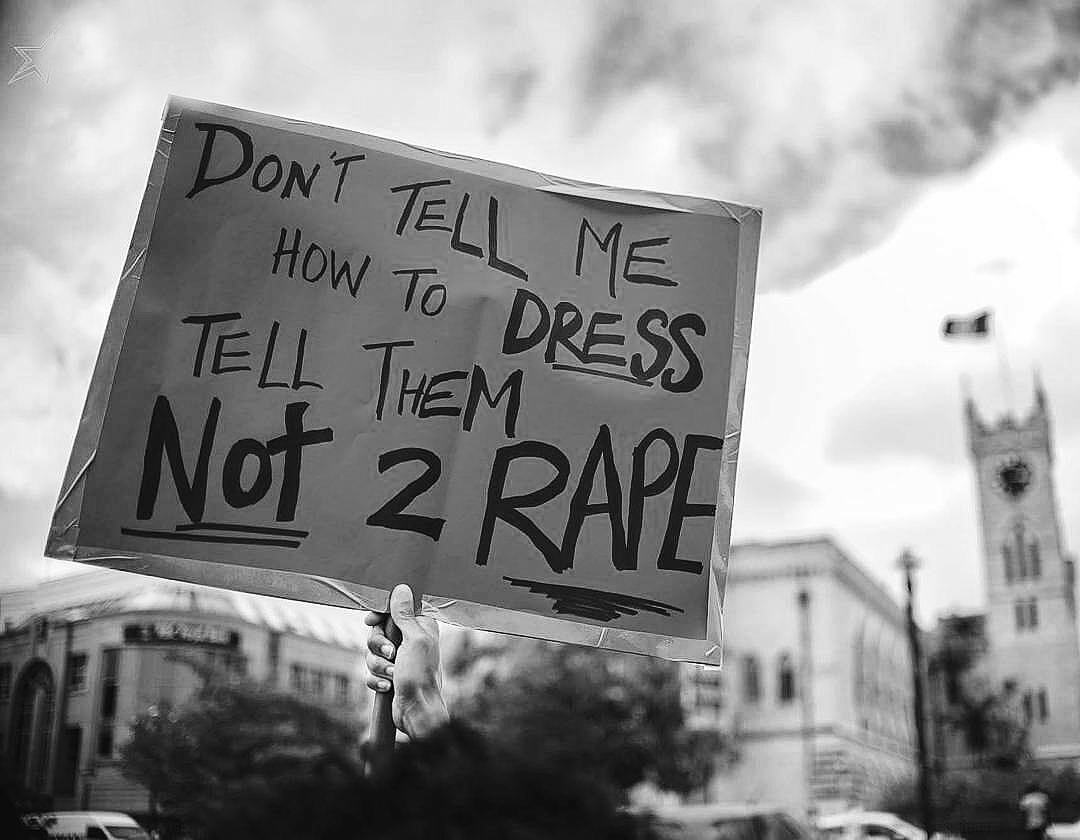
But there is a strange imbalance in a society where the person potentially facing harm is repeatedly given instructions on how to avoid the person capable of causing it.
At some point, the question has to turn around.
What are we teaching boys?
Not just how to protect themselves.
Not just how to become strong.
But how to understand boundaries.
How to recognize discomfort.
How to respect another person’s refusal.
How to understand that being someone’s father, brother, boyfriend, husband, uncle, teacher or friend does not give them ownership over that person.
And, perhaps most importantly, how to understand that strength without restraint is not strength at all.
Vanessa’s warning is bigger than Vanessa
It would be easy to reduce this entire episode to a familiar social-media argument:
Women versus men.
One side says she went too far.
Another says people are deliberately ignoring what she meant.
Then everyone picks a camp.
The argument ends where it started.
That would be a shame.
Because Vanessa has raised an issue that deserves to survive the controversy surrounding her language.
She is a public figure who became known nationally after finishing as first runner-up in Miss Rwanda 2015. She is also now a mother. Her argument is therefore being made not only as a public statement about women, but in the context of raising a daughter herself.
But motherhood does not automatically make her conclusion correct.
Nor does criticism of her language automatically make the concern underneath it meaningless.
Both things can be true.
A person can raise a legitimate concern about girls’ safety while expressing that concern in a way that many people consider unfair or unnecessarily sweeping.
And a person can object to the generalisation without dismissing the very real question of how children are protected.
That is the conversation worth having.
But what made her say it?
This may be the most important unanswered question.
Was there a particular story?
A particular case?
Something she had witnessed?
Something someone had told her?
Or did years of hearing stories about women and girls simply reach a point where she felt compelled to speak?
We do not know.
Reports following her original statement say journalists attempted to reach her to ask what prompted her to describe men this way, but did not get an answer.
That gap matters.
Because without it, everyone else is left interpreting her words.
And interpretation is exactly how a complicated conversation becomes a social-media fight.
She isn’t taking the words back
If this were simply an angry sentence posted and deleted, perhaps the story would already be over.
But Vanessa has since doubled down.
On September 23, she said she did not make the statement impulsively. She said she was willing to take criticism because she believed she was speaking for girls and women who struggle to say certain things publicly.
That changes the story.
She is no longer merely being quoted.
She is defending the argument behind the quote.
And the reaction has grown accordingly. Other public figures have entered the discussion, including singer and writer Kibasumba Confience, who publicly defended Vanessa, while dancer Titi Brown said the comments had made him question whether there is still peace and love within families and relationships.
The debate is therefore no longer really about one Instagram post.
It has become a conversation about men, women, marriage, family, trust and fear.
The question we should ask our sons
Perhaps the most revealing part of this entire controversy is what is missing.
We hear constantly about what girls need to learn.
Be careful.
Don’t go there.
Don’t trust him.
Don’t walk alone.
Learn to defend yourself.
Tell someone.
Leave.
All useful advice.
But somewhere alongside those lessons, boys need their own education.
Not an education built around the idea that every boy is a potential threat.
An education built around responsibility.
You do not get to cross someone’s boundary because you are stronger.
You do not get to interpret silence as permission.
You do not get to use familiarity as entitlement.
You do not get to turn someone’s trust into vulnerability.
Those lessons do not make boys enemies of girls.
They make boys accountable human beings.
A daughter should not have to inherit our fear
Perhaps this is the uncomfortable truth underneath Vanessa’s controversial words.
A mother looking at her daughter may reasonably want that girl to be prepared for a world that is not always kind.
There is nothing wrong with preparation.
But preparation and fear are not the same thing.
We should want girls who can recognize danger without believing that danger is everywhere.
We should want boys who understand boundaries before they ever need to be confronted about breaking them.
We should want families where children know they can speak.
We should want adults who listen when they do.
And we should want a society where protecting girls does not become synonymous with teaching girls that men are something to fear.
Vanessa’s words have created an argument.
Perhaps the more useful question is what we do with it.
Because the goal cannot simply be to raise girls who are better at surviving dangerous situations.
It should be to raise a generation that has fewer dangerous situations to survive.




















 Entertainment2 days ago

 Entertainment2 days ago

 Business2 days ago

 Sports2 days ago