Connect with us

Entertainment

Who Owns African Stories on the Way to Netflix?

Published

on

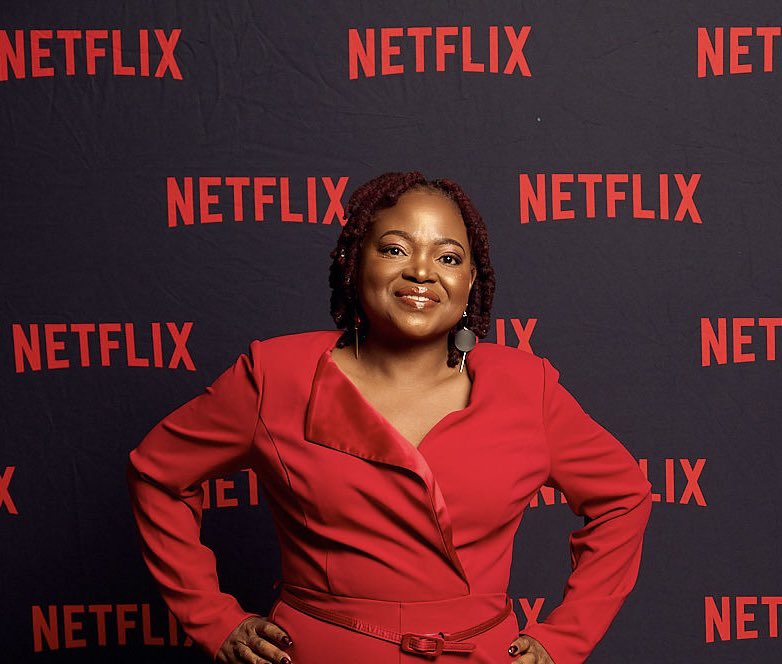
Sue Nyathi’s The Polygamist has joined a growing list of African literary works that reach global audiences only after being reshaped far from their original publishing contexts. Thirteen years after its debut as a self-published novel in Zimbabwe, the story has re-emerged as a 22-episode Netflix supernovela produced in South Africa and distributed worldwide.

On the surface, the adaptation looks like a straightforward success story: a rejected manuscript that eventually found mass appeal and international recognition. But beneath that narrative lies a more complex question shaping African creative industries today; what happens to authorship, ownership and cultural identity when African stories move through global production systems?

The series premiered on 12 June 2026 on Netflix, positioning itself among the platform’s most ambitious South African drama productions. It reintroduces Nyathi’s narrative to a global audience, but in a form that reflects the realities of contemporary streaming economics rather than the original literary landscape in which it was written.

Originally set in Zimbabwe, The Polygamist tells the story of women whose lives are bound to a wealthy businessman, exposing tensions around marriage, power and emotional survival. In its screen adaptation, the setting is relocated to South Africa, where production infrastructure and established studio ecosystems have increasingly become the entry point for African content into global streaming platforms.

That shift is not incidental. Across the continent, South Africa has emerged as a dominant production hub for African series commissioned by international streamers. The result is a growing pattern in which stories written in smaller literary markets are filmed, financed and structured in more established media economies before reaching global audiences.

The adaptation of The Polygamist reflects that trajectory clearly. Produced by Stained Glass Productions, the series brings together a South African cast and creative team, including directors Akin Omotoso, Rolie Nikiwe and Nthabi Tau, with writing led by Busisiwe Zwane. The result is a locally produced interpretation of a Zimbabwean narrative designed for global streaming consumption.

For Zimbabwe, the milestone is significant. Adaptations of Zimbabwean novels at this scale remain rare, making Nyathi’s work an unusual case of international visibility for the country’s literary output. Yet the path to that visibility highlights a broader structural reality: African literature often travels internationally only after being filtered through external production systems.

The 13-year gap between publication and screen adaptation underscores another feature of the global content economy. African novels can circulate widely in print or local markets without attracting screen interest until global platforms identify them as viable streaming content. The delay is less about artistic value than about timing, access and industry alignment.

In Nyathi’s case, the novel’s initial rejection by publishers followed by self-publication and later commercial success has become part of its public narrative. But the more revealing dimension lies in what happened afterward; how a story rooted in Zimbabwean social dynamics was repositioned within a South African production framework and then elevated to global distribution through Netflix.

This transformation raises difficult but increasingly relevant questions for African creative industries. When a story travels across borders in this way, where does authorship sit? Is it anchored in the writer, the production location, or the platform that ultimately defines its global form? And at what point does adaptation become not just translation, but redefinition?

Streaming platforms are not passive distributors in this process. They function as cultural curators, determining episode structures, production scale and sometimes even narrative pacing. In the case of The Polygamist, the shift into a long-form 22-episode structure reflects the demands of serialised streaming content rather than the constraints of the original literary form.

At the same time, the adaptation highlights a growing appetite for African intellectual property within global entertainment markets. For African writers, this creates new opportunities but also new dependencies, as screen visibility often depends on access to production ecosystems outside their home markets.

The result is a layered identity for stories like The Polygamist; Zimbabwean in origin, South African in production, and global in distribution. That hybridity is increasingly common, but still under-examined in mainstream coverage, which often frames such adaptations purely as cultural victories.

What remains less discussed is what is lost, reshaped or reinterpreted in the process of moving African literature through these systems and how that affects the long-term development of storytelling industries within countries like Zimbabwe.

As African content continues to scale globally, The Polygamist stands less as an endpoint and more as a signal. It reflects a moment where African stories are no longer struggling for visibility but are instead being reconstructed within global frameworks that determine how they are told, where they are filmed, and how they are ultimately understood.

In that sense, the real story is not only that Sue Nyathi’s novel reached Netflix. It is how far it had to travel and how much it had to change along the way.

Continue Reading
Click to comment

Leave a Reply

Your email address will not be published. Required fields are marked *

Entertainment

Africa Was in the Room at the Ballon d’Or. The Question Is What the World Saw.

Published

on

By

From a Nigerian musician’s ambitions for football to a Rwandan boy’s restored eyesight, the 2026 Ballon d’Or offered several ways to understand Africa’s place in the global game.

Africa’s presence at the 2026 Ballon d’Or ceremony in London was visible in several forms: through Burna Boy’s cultural influence, Bukayo Saka’s humanitarian work, the story of a Rwandan child who regained his eyesight and the African players included among the nominees.

These moments were connected by the ceremony, but they represented different realities. Together, they showed both the reach of African talent and the distance between visibility and influence in global football.

A Nigerian ambition on a European stage

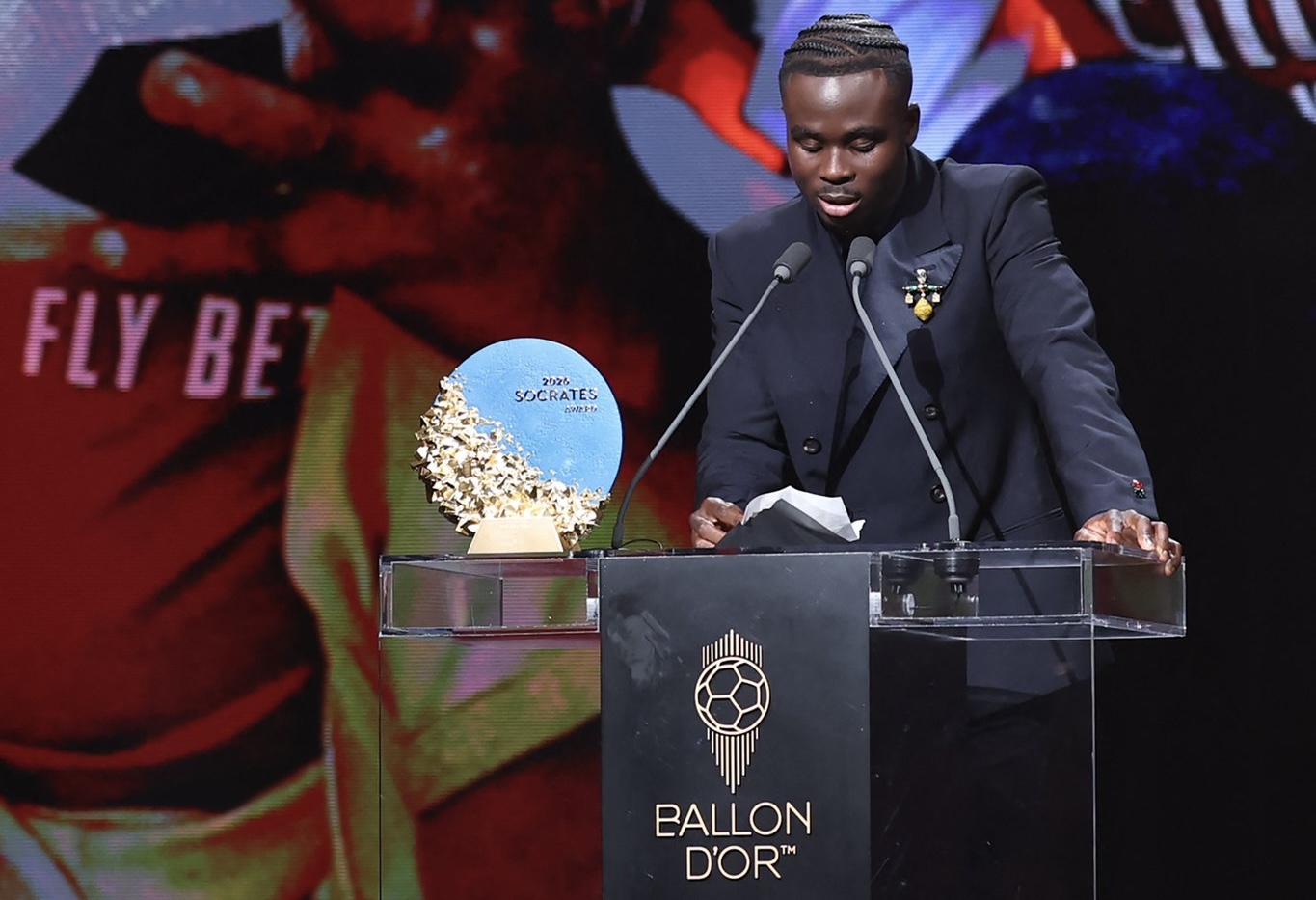
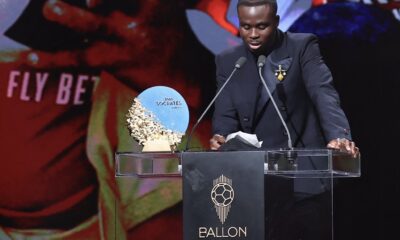
Before presenting the Socrates Award, Burna Boy spoke about the football academy he established in Nigeria. He said he hoped to return to the Ballon d’Or one day and see a player from his country receive the sport’s most coveted individual prize.

That ambition points to a longstanding reality. Africa has produced players who have shaped European football, won major competitions and become global stars. Yet Liberia’s George Weah remains the only African winner of the men’s Ballon d’Or, having received the award in 1995.

The gap between Africa’s supply of talent and its representation among football’s highest individual honours remains difficult to ignore. Burna Boy’s remarks focused attention on the work required to close it, particularly through investment in youth development and stronger football structures at home.

His presence also reflected the global reach of African culture. A Nigerian musician stood at a ceremony centred on European football and spoke not only as an entertainer, but as someone investing in the sport’s future in Nigeria.

A boy in Rwanda enters the conversation

Saka’s acceptance speech brought the ceremony’s humanitarian dimension into sharper focus. He read a letter from Byiringiro, a boy from Rwanda who had begun losing his eyesight at the age of 12.

Byiringiro described living in a village without electricity and struggling as his vision deteriorated. In the classroom, he could no longer read the blackboard clearly.

Medical care facilitated by BigShoe helped restore his eyesight. He could read again, play with his friends and pursue his ambition of becoming an English teacher.

The significance of that story lies in its ordinariness. Byiringiro wanted to learn, play and choose a profession. Medical treatment helped return those possibilities to him.

Saka’s humanitarian work has supported medical treatment for children in Africa, including operations for 120 children in Kano, Nigeria, in 2022 and support for another 100 children in Rwanda, Kenya and Tanzania in 2023. The Socrates Award recognised that work, while Biringiro’s letter showed its impact through one child’s experience.

His story also raises a broader issue. International attention can bring visibility to a child’s circumstances, but it does not resolve the wider shortage of accessible healthcare. Many other children still face preventable conditions without the treatment they need.

Byiringiro’s recovery is hopeful. It also shows how access to healthcare can determine the future a child is able to imagine.

The players whose names carried African flags

Africa’s presence extended across the ceremony’s football categories.

Morocco’s Achraf Hakimi and Senegal’s Sadio Mané were nominated for the men’s Ballon d’Or. Zambia’s Barbra Banda and Malawi’s Temwa Chawinga featured in the women’s race. Morocco’s Ayyoub Bouaddi, Côte d’Ivoire’s Yan Diomandé and Algeria’s Ibrahim Maza were nominated for the men’s young-player award. Morocco’s Yassine Bounou, Senegal’s Édouard Mendy and Cape Verde’s Vozinha were among the goalkeeper nominees.

Their inclusion reflected different aspects of African football. Hakimi and Mané represent established careers at the highest level. Banda and Chawinga brought African women’s football into a global conversation that has historically focused more heavily on men. The young-player nominees represented a generation whose careers will develop across national, continental and international competitions.

Nominations, however, are not victories, and representation is not the same as equal recognition. Harry Kane won the men’s Ballon d’Or, while the African players competed in their respective categories.

The significance of these nominations does not depend on presenting them as proof that African football has finally arrived. African football has long been part of the global game. The more important questions concern how its achievements are recognised and whether the structures supporting its next generation are strong enough.

The ceremony brought together several distinct stories: Burna Boy’s vision for Nigerian football, Saka’s support for children needing medical care, Byiringiro’s recovery in Rwanda and the presence of African players across the nominees’ lists.

Together, they showed Africa’s place in global football as more than a single narrative. The continent appeared through cultural influence, sporting ambition, humanitarian work and the lives affected by that work.

But visibility does not automatically create influence. African music has achieved global reach, and African players compete at the highest levels. African children can also benefit from international charitable partnerships. Sustaining those achievements requires long-term investment in local football, stronger opportunities for young players, wider access to healthcare and recognition that reflects the quality of African talent.

The Ballon d’Or cannot resolve those issues. It can make them visible.

For one evening in London, Africa was represented by a Nigerian musician, a footballer with Nigerian roots, nominees from across the continent and a Rwandan schoolboy whose eyesight had been restored.

Byiringiro wants to become an English teacher. He does not need to become famous for that ambition to matter. He needed medical care, received it and can now see the blackboard again.

That may be one of the clearest measures of football’s influence: not only the trophies won on stage, but the opportunities made possible for people who will never stand there.

Continue Reading

Entertainment

Cynthia Erivo Brings Her Nigerian Roots Into a Nollywood-Inspired ‘Wicked’

Published

on

By

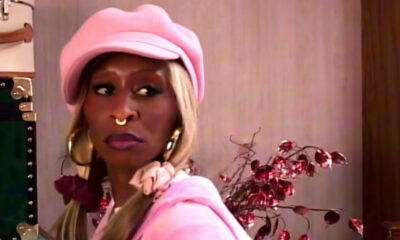
Glinda wants a Birkin bag. Elphaba wants a BBL that defies gravity. And the Wizard of Oz? His Rolex is fake.

In Nigerian Wicked, even the journey to the Emerald City comes with a Nigerian twist. The fictional destination is LagOz, the city is green, white and green, and the witches’ magical ambitions quickly turn into a comedy of money, beauty and dramatic confrontations.

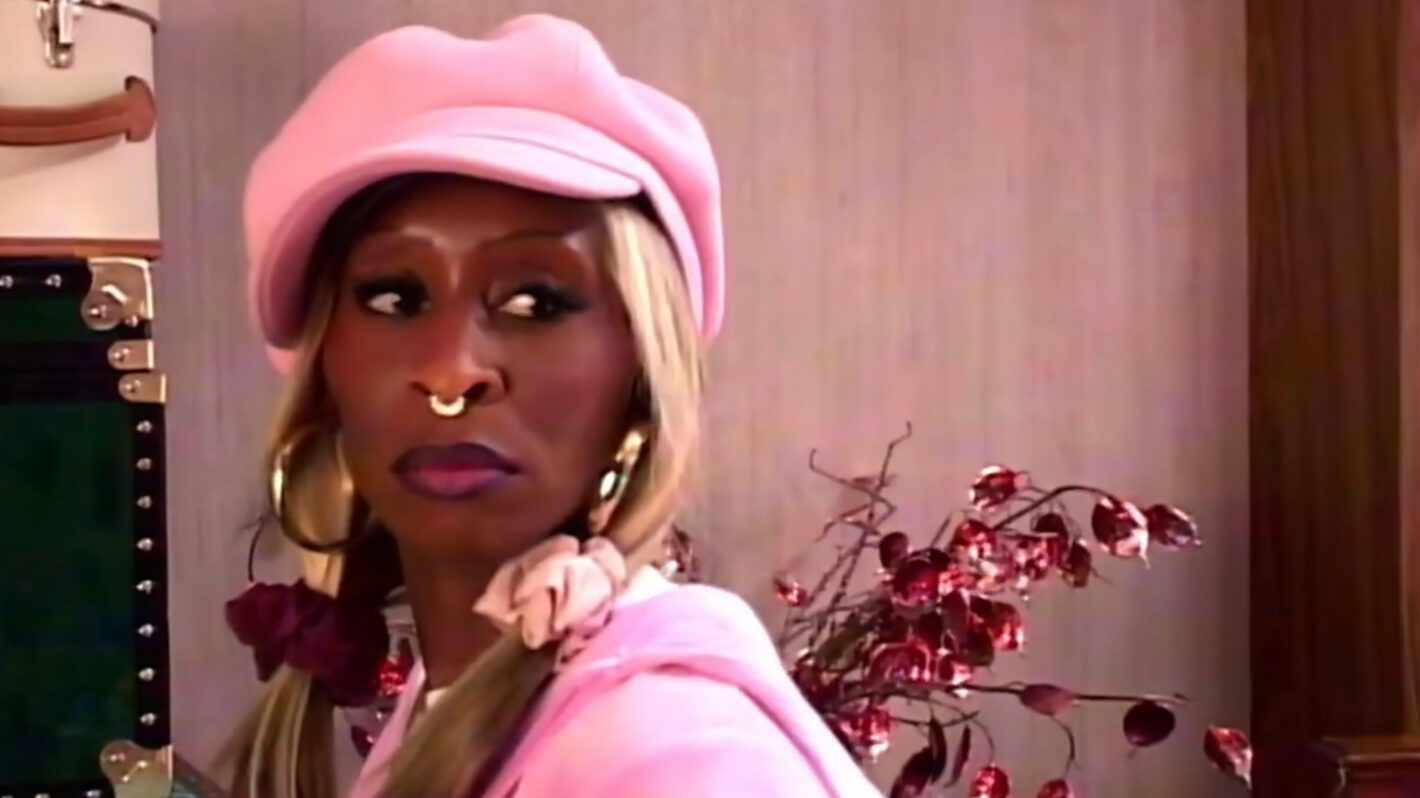
The sketch aired on October 24, 2026, during Saturday Night Live UK, where Cynthia Erivo played Glinda opposite comedian Ayoade Bamgboye as Elphaba. Hammed Animashaun voiced the Wizard in a parody inspired by the style of Nigerian films from the 1990s and early 2000s.

At one point, Glinda slaps Elphaba for being “very classless.” When the witches finally reach the Wizard, Glinda asks for a Birkin bag, while Elphaba requests a “skinny BBL.” The Wizard announces that she wants a BBL “that defies gravity,” only for the pair to discover that their supposedly powerful benefactor is broke.

The jokes are deliberately outrageous, but the casting and creative concept make the sketch particularly interesting for African entertainment.

Erivo was born in London to Nigerian parents, while Bamgboye, who wrote the sketch, is a Nigerian-born British comedian. Their involvement places Nigerian heritage and a Nigerian cinematic tradition at the centre of a production made for a British comedy show. That connection is worth noting, although neither performer’s personal motivation should be assumed from their background alone.

The parody takes familiar elements of Wicked and retells them through the melodrama, exaggerated performances and conspicuously low-budget effects associated with a particular era of Nollywood. It even borrows the colors of Nigeria’s flag for its version of the Emerald City.

That choice raises an interesting question: how did a filmmaking style associated with Nigerian popular cinema become recognizable enough to serve as the central joke in a British television production?

Nollywood is not one uniform style of filmmaking. Nigerian cinema has changed considerably across generations, budgets and genres. The sketch deliberately draws on a particular set of conventions, turning them into comedy for an audience familiar with Wicked.

The response has been substantial. By October 26, the sketch had attracted more than 4.5 million views across YouTube, Instagram and TikTok, according to UK comedy publication Chortle.

The numbers do not, by themselves, establish how audiences understand Nollywood or measure the industry’s global influence. But the sketch has created an opportunity for Nigerian cinematic references to circulate through an internationally recognised musical and a British television platform.

For African entertainment, the story is not simply that Cynthia Erivo has made people laugh. It is that a Nigerian-inspired cinematic style has become the foundation of a widely shared parody, with a Nigerian-born comedian shaping the idea and a British-Nigerian star helping bring it to life.

In LagOz, the Wizard cannot even deliver a real Rolex. The joke, however, has travelled millions of screens around the world.

Continue Reading

Entertainment

RAYE TURNED THE ROYAL ALBERT HALL INTO A FAMILY AFFAIR

Published

on

By

A live orchestra, a choir, thousands of fans and one very important grandmother who had rehearsed her line.

RAYE’s Royal Albert Hall concert on 23 October was a major musical production, but some of its most memorable moments belonged to the people who knew her long before the world did.

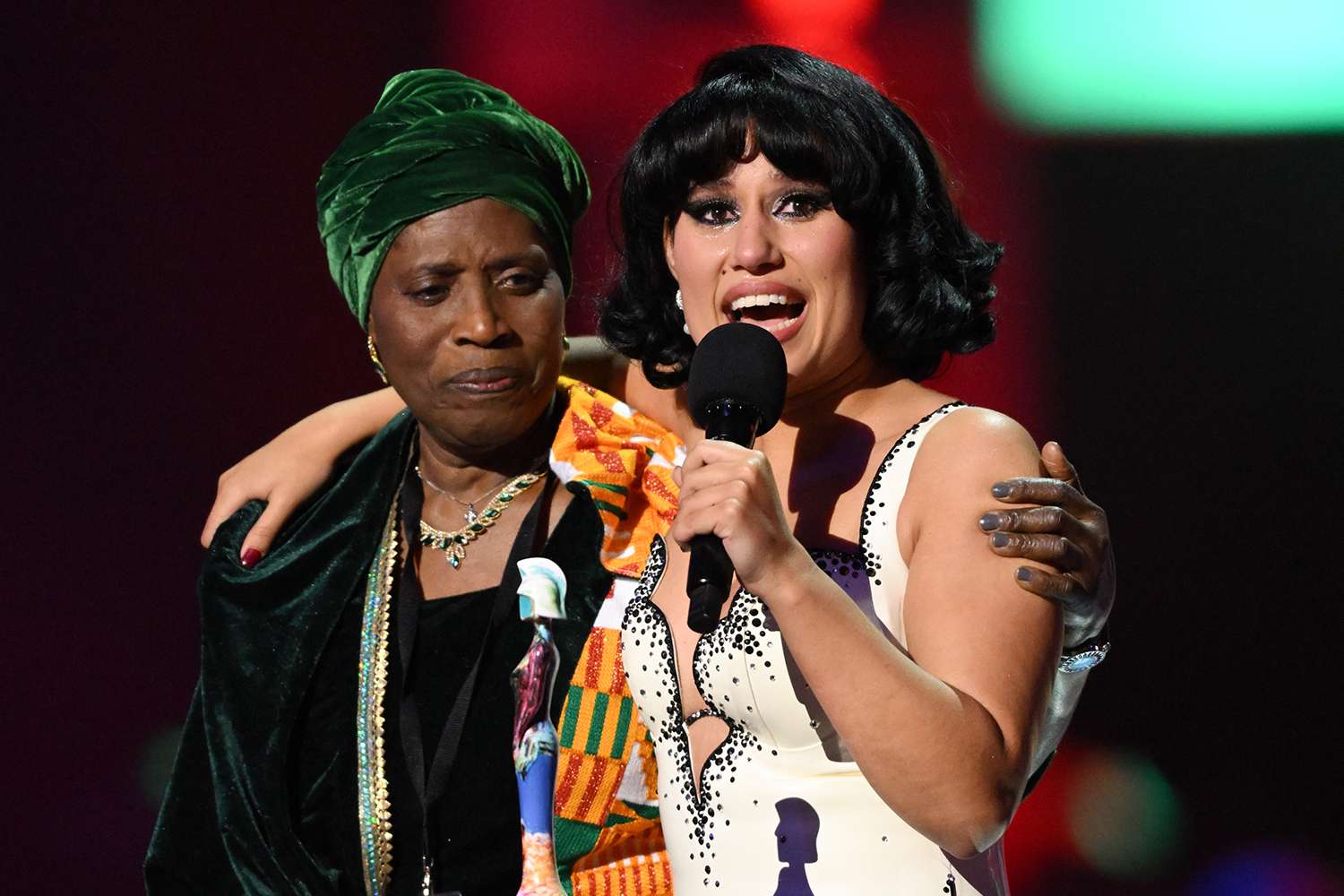
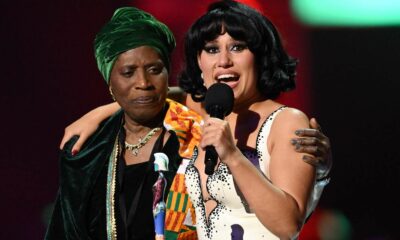
The British singer brought her Ghanaian grandmother, Agatha Dawson-Amoah, onto the stage during Where Is My Husband! Agatha arrived in a Ghanaian kente-inspired outfit, ready to perform the spoken line that has become part of the song’s identity.

“Ladies and gentlemen, I need you to erupt in this place. She’s been rehearsing her part,” RAYE announced.

The audience cheered.

“Are you nervous?” RAYE asked.

“I’m fine,” Grandma replied.

Then came the familiar line: “Your husband is coming.”

The crowd responded, but the confetti failed to go off at the right moment.

“Oh s***, girl, quickly, say it again!” RAYE called out.

Grandma delivered it again, giving the audience another chance to celebrate her.

But Agatha was not the only member of the family invited into the spotlight.

RAYE’s grandfather Michael joined her for Fields, while her sisters Absolutely and Amma performed Joy alongside her. Rather than keeping the concert’s biggest moments for herself, RAYE made room for the people who share her life away from the stage.

At one point, she explained the thinking behind the family appearances with a simple statement: “Hope is family.”

It was particularly fitting for a show built around her album This Music May Contain Hope, with its orchestral arrangements and theatrical journey through the seasons.

And the family connection runs deep. RAYE grew up in south London in a musical household. Her father is English, while her mother has Ghanaian and Swiss heritage. Her grandmother Agatha is Ghanaian, and RAYE’s middle name honors her.

Agatha’s voice was already part of Where Is My Husband! before she stepped onto the Royal Albert Hall stage. RAYE previously explained that her grandmother had wanted to redo the recording because she was caught in her “morning voice.” RAYE reassured her that she sounded great, and the recording stayed.

Now, the woman behind that voice was standing in front of thousands of fans, wearing an outfit that reflected her heritage and delivering the line in person.

The concert came just after RAYE won the 2026 Mercury Prize for This Music May Contain Hope. Yet amid the orchestral spectacle and career milestones, the family appearances gave the evening a more personal dimension.

The audience came to see RAYE perform. They also got to see her grandfather share her stage, her sisters share her music and her grandmother turn a familiar recording into a live moment of her own.

RAYE may have been the headliner, but that night, the whole family had a part to play.

Continue Reading

Trending

Copyright © 2026 Africadigitmedia.net. Website powered by ProDigit.