A few days ago, I attended a meeting where mental health was brought up. What struck me
most was how quickly the conversation centered only on depression as if it is the only mental
health struggle that exists.
Yes, depression is real. It is serious. It deserves attention.
But mental health is so much broader than that.
We Have Normalized Words Without Understanding Them.
Somehow, we have become comfortable saying:
- “I have OCD” because we like things organized.
- “I have ADHD” because our minds move fast.
- “I’m depressed” because we feel sad.
But being organized does not automatically mean you have OCD. It may simply mean you enjoy
structure and control.
Having a busy, fast-moving mind does not automatically mean you have ADHD.
These are serious clinical conditions. They affect daily functioning, relationships, and quality of life. They are not personality traits.
When we casually throw these terms around, we unintentionally minimize the lived realities of people who are truly struggling.
Mental Health Is a Wide Spectrum.
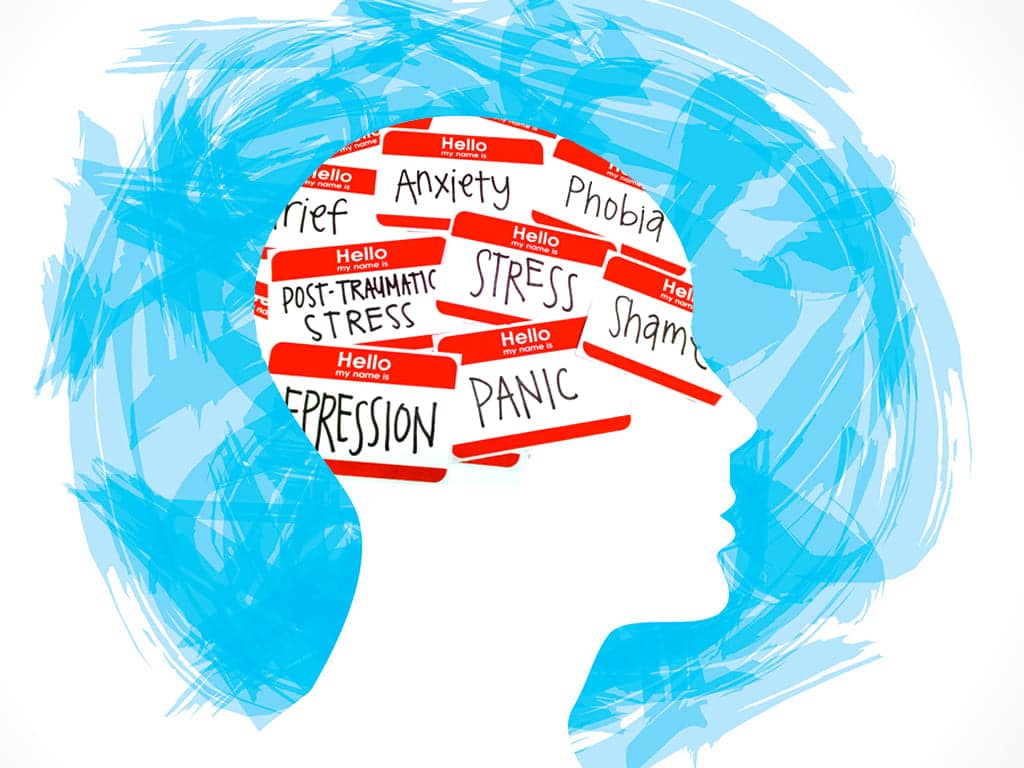
Mental health is not just depression, OCD, or ADHD.
It includes conditions such as:
- ADHD
- Autism
- Schizophrenia
- Bipolar Disorder
- Depression
- Anxiety Disorders
- OCD
- PTSD (Trauma Disorders)
- Dissociative Disorders
- Eating Disorders
- Sleep Disorders
- Addiction (Substance Abuse)
- Personality Disorders
- Dementia
- And more.
These conditions exist across all types of people: children, adults, men, women, students,
professionals.
Mental health is not a “type” of person. It is a human reality.
Rwanda’s History and Our Mental Health
As a country, we also need to acknowledge something deeper.
Our collective history has affected our mental health more than we often admit.
Among 1,271 genocide survivors interviewed in a study:
- 53.3% of women and 48.8% of men had at least one mental disorder.
- The most prevalent were major depressive episodes (35.0%), PTSD (27.9%), and panic
disorder (26.8%).
- 76.2% were aware of mental health services.
- Only 14.1% had actually used them.
That gap speaks volumes.
Awareness is not enough. Access and action matter.
Our Children Deserve Better.
In many homes and schools, when a child struggles, we quickly say:
- “He’s not working hard.”* “She’s just difficult.”
- “He’s not social.”
- “She’s stubborn.”
But what if the child is overwhelmed?
What if they are neurodivergent?
What if they are struggling silently?
As Rwandans, we need to normalize testing not as a label, but as understanding.
Getting a child assessed does not mean something is “wrong.”
It means we are trying to understand how their mind works so we can support them better.
Parents, please do not give up on your children.
Schools and institutions must also step up:
- Provide easier access to assessments.
- Offer counseling services.
- Train teachers to recognize signs early.
- Create supportive environments instead of punishment-driven ones.
Let’s Learn to Meet People Where They Are.
We often expect people with mental health conditions to adjust to society.
But what if we also adjusted?
Let’s:
- Be patient.
- Be informed.
- Be cautious with our words.
- Support families who are navigating these realities.
- Create safe spaces for conversation.
There are facilities. There are professionals. There are support systems. We just need to use
them and make them more accessible.You Are Not “Crazy.” You Might Be Tired.
If you are struggling, hear this clearly:
You are not crazy.
Your mind may simply be overwhelmed.
Your nervous system may be tired.
Your past may be unresolved.
Therapy is not weakness.
Counseling is not shameful.
Testing is not failure.
Everyone needs someone to talk to about their inner world.
Mental health is not a trend. It is not a personality aesthetic. It is a serious, layered, deeply
human topic.
And as a country as communities we need to treat it that way.
Let’s move beyond labels.
Let’s move beyond jokes.
Let’s move toward understanding.
Because mental health is not just about surviving.
It is about living well.
























 Politics8 hours ago
 Politics8 hours ago



 Politics8 hours ago
Brie
March 17, 2026 at 5:01 am
❤️❤️