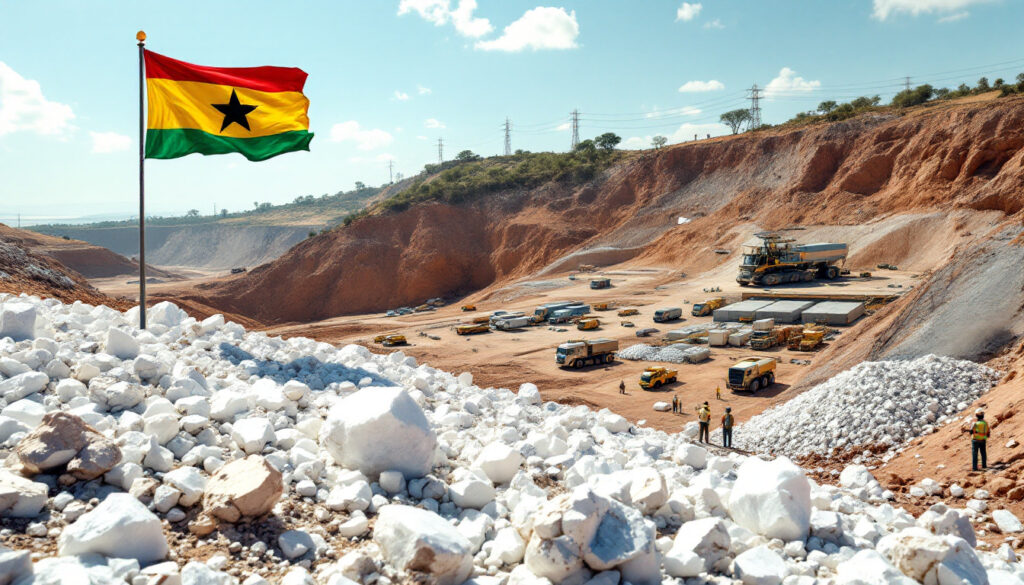
Accra, March 20, 2026 — Ghana has taken a decisive step into the future of energy, with Parliament approving a landmark lithium mining agreement with Barari DV Ghana Limited, clearing the way for commercial extraction at the Ewoyaa deposit in the Central Region. The decision places Ghana firmly within a fast-accelerating global race for lithium, a mineral now essential to electric vehicles, battery storage, and the broader transition to renewable energy.
At its core, the Ewoyaa project represents more than a new mining venture. Structured as a 15-year lease, the agreement ties royalties to international lithium prices while committing to local development, signaling an effort to align national benefit with global demand. Government officials have framed the move as a strategic shift away from dependence on traditional exports such as gold, toward a position within the high-value battery minerals supply chain. If successful, the project could generate substantial revenue, create jobs, and attract further investment into Ghana’s industrial future.
Yet the approval has not come without debate. Opposition lawmakers questioned whether the terms adequately safeguard long-term national interests, particularly in a market where lithium’s strategic importance continues to grow. Concerns around revenue-sharing, local participation, and environmental protection reflect a deeper tension, one that extends far beyond Ghana about how resource-rich countries can balance immediate economic opportunity with lasting sovereignty.
That tension is playing out across Africa, where lithium has become central to economic planning and geopolitical relevance. In the Democratic Republic of the Congo, lithium prospects in the mineral-rich Katanga region exist alongside vast cobalt reserves, even as environmental degradation and unsafe artisanal mining practices remain persistent challenges. Zimbabwe, already one of the continent’s leading lithium producers, is attracting renewed global investment in projects like Bikita and Arcadia, while debates intensify over how the benefits are distributed. In Namibia, emerging developments in Karibib and Erongo are facing scrutiny over water usage and environmental approvals, underscoring the ecological stakes tied to extraction. Mali’s Goulamina deposit continues to draw international attention despite regulatory uncertainty and security risks, while Botswana is cautiously exploring lithium potential in Sua Pan, balancing new ambitions with its established salt and soda ash industries.
Taken together, these developments point to a continent in transition. Africa is no longer simply a source of raw materials, but an increasingly important player in the global energy economy, with lithium at the center of that transformation. The challenge now lies in ensuring that this shift translates into sustainable growth, that extraction leads to industrialization, that investment builds local capacity, and that environmental and social safeguards keep pace with ambition.
For Ghana, the Ewoyaa deal is both an opportunity and a test. It marks the country’s entry into one of the world’s most competitive and consequential resource sectors, while raising fundamental questions about how that participation will be managed. The approval signals intent, but the outcome will depend on execution.
In a world rapidly reorganizing around clean energy, Ghana has made its move. What follows will determine whether it merely joins the race or helps define it.











 Politics6 hours ago
 Politics6 hours ago
 Politics6 hours ago