Society
When Foreign Capital Enters the Culture


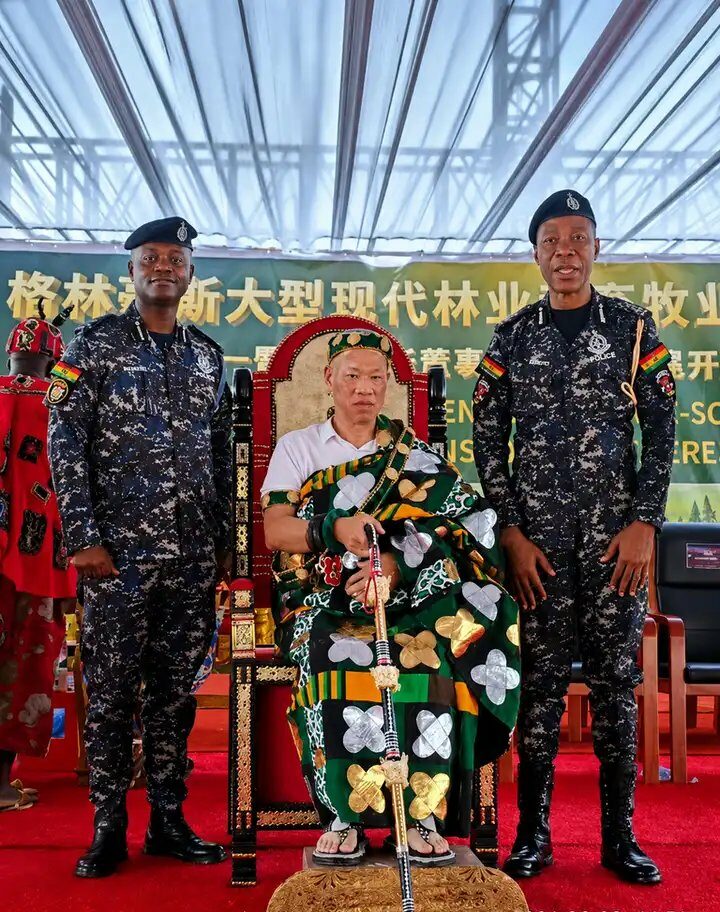
A Chinese businessman has been given a traditional title in Ghana, and the easiest way to understand the story is also the least interesting: a foreign investor created jobs, and a community decided to honor him.
But a stool is not a certificate of appreciation.
It carries memory. It carries ancestry. It tells a story about who belongs to a place and who has been accepted into its social fabric. So when a man who was not born into that history is brought into its symbols because of what he has built with his money, the moment deserves more than applause or outrage.
It deserves a question.
What exactly are we exchanging when capital begins to purchase a form of belonging?
Zheng Xiangming’s enstoolment comes within a much larger reality. Ghana wants investment. Like much of Africa, it needs capital that can build industries, employ people and turn economic potential into something tangible. Chinese investment has become an important part of that conversation.
There is nothing shameful about that.
African countries should be able to seek investment wherever it can help their people. The problem begins when the conversation stops at investment arriving.
Because foreign capital should not be judged only by what it brings through the door.
It should also be judged by what it leaves behind.
A factory can employ people. But does it create skills that remain with those people?
A large agricultural project can produce wealth. But does that wealth circulate through the communities surrounding it?
A foreign company can build an impressive operation. But does it make room for local suppliers, entrepreneurs and expertise to grow alongside it?
These questions matter because Africa has known the difference between extraction and development for a very long time.
Development is not simply having something built on African soil.
It is having the capacity to build the next thing ourselves.
That is why the symbolism of Zheng’s title matters even if the position itself does not give him the authority of a hereditary chief. It tells us something about how communities are beginning to recognise economic contribution: money can become a pathway into social honour.
Perhaps that is reasonable.
Perhaps it is even an appropriate way for a community to say: you came here as an outsider, but what you have done has made you part of our story.
But there must be a line between recognising contribution and confusing wealth with belonging.
A businessman should not become valuable to a community merely because he is wealthy. And an African community should not have to place a foreign investor on a pedestal to prove that it welcomes investment.
The relationship should be more equal than that.
Ghana needs investors. Investors need Ghana. That is a business relationship.
The deeper relationship is between the investment and the people who live with its consequences.
So perhaps the real story is not that a Chinese businessman has been made a chief.
It is that Africa is still negotiating the terms on which the world enters its economies and, increasingly, its communities.
We should welcome those who build.
We should recognize those who contribute.
But we should also ask what their contribution makes possible for everyone else.
Because the greatest measure of an investor’s success should not be how high the honor reaches.
It should be how far the opportunity travels.
And when the photographs of the ceremony are forgotten, the question will remain:
Did the investment merely create jobs, or did it help create a society capable of creating its own opportunities?