Connect with us

Business

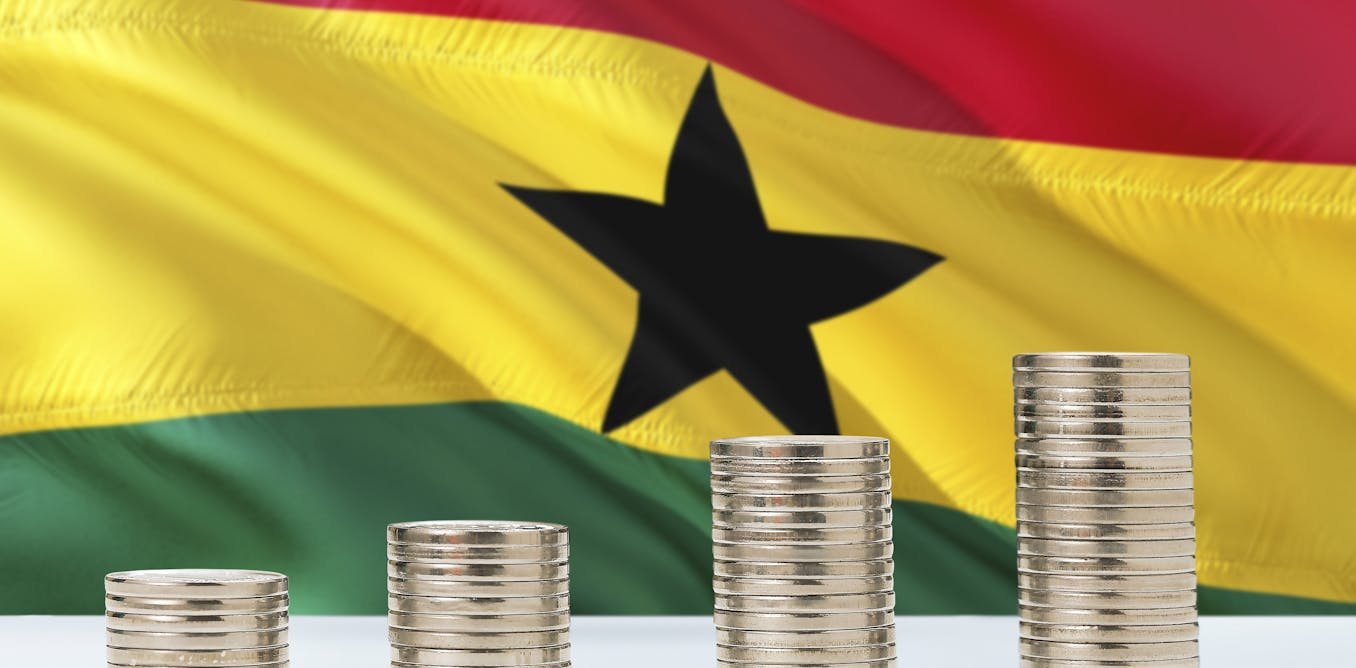
The Day Ghana Decided to Break the Cycle

Published

on

For years, the story of debt in Africa has sounded the same.
A country dreams big. It wants highways stretching across its land, electricity lighting every village, hospitals rising where once there were none. To build quickly, it borrows. The money comes from powerful institutions far beyond its borders, from the International Monetary Fund, the World Bank, foreign governments, and private investors buying government bonds in distant financial capitals.
At first, the loans feel like opportunity.
But then something shifts. Commodity prices fall. A global crisis hits. A currency weakens. Revenues shrink. Payments remain.

Soon, the same country that once borrowed to build must borrow again, this time to survive.
Across Africa, more than thirty nations have walked this road over the past four decades. Each IMF program promises stability. Each comes with conditions: reduce spending, raise taxes, reform subsidies, tighten budgets. The books begin to balance but at a cost felt in classrooms, clinics, and households.
The cycle becomes familiar.
Ghana knows this story well.

In Accra, where traffic hums beneath half-built overpasses and traders call out in crowded markets, the ambition of a growing nation is visible. Ghana has borrowed to finance infrastructure, energy projects, public wages, and development plans meant to transform its economy. When global shocks struck from financial crises to the pandemic, the strain showed. Debt climbed. Investors hesitated. The country returned to the IMF for support.

Relief came. But so did a hard realization: stability achieved through repeated rescue is not sovereignty.
And so, Ghana decided to try something different.
Instead of waiting for the next crisis, the government announced the creation of an independent fiscal council, a body designed not to govern, but to guard. Its task will be simple in theory and powerful in practice: scrutinize budgets, test revenue forecasts, question spending plans, and warn when borrowing drifts toward danger.
It will not build roads.
It will not collect taxes.
It will not negotiate loans.
It will watch.

In many countries outside Africa, such institutions quietly shape economic discipline. Their independence allows them to speak uncomfortable truths before problems spiral. Ghana is betting that such a structure, rooted at home rather than imposed from abroad can help break the rhythm of borrowing and bailout.
This is not a rejection of international lenders. Nor is it a declaration that debt itself is evil. Debt builds nations when managed wisely. But unmanaged debt builds dependence.
Ghana’s experiment is about ownership.
Ownership of numbers.
Ownership of policy.
Ownership of consequence.

If the council succeeds, budgets may become less political and more predictable. Borrowing may become more strategic and less reactive. Investors may see stability anchored in institutions rather than emergency negotiations.

And if it fails? The old road still waits.
Across the continent, governments are watching. Because Ghana’s decision is larger than one country’s reform. It asks a deeper question that echoes from Nairobi to Lusaka to Cairo:

Can African nations design systems strong enough to prevent the next crisis before it arrives?
For now, in Accra, the answer is beginning not with a loan agreement but with a council room, a set of spreadsheets, and a promise to do things differently.
The story of African debt has long been written in rescue packages.
Ghana is trying to write the next chapter in prevention.

Continue Reading
Click to comment

Leave a Reply

Your email address will not be published. Required fields are marked *

Business

Africa Is Hosting the Olympics for the First Time. Here’s What’s at Stake

Published

on

By

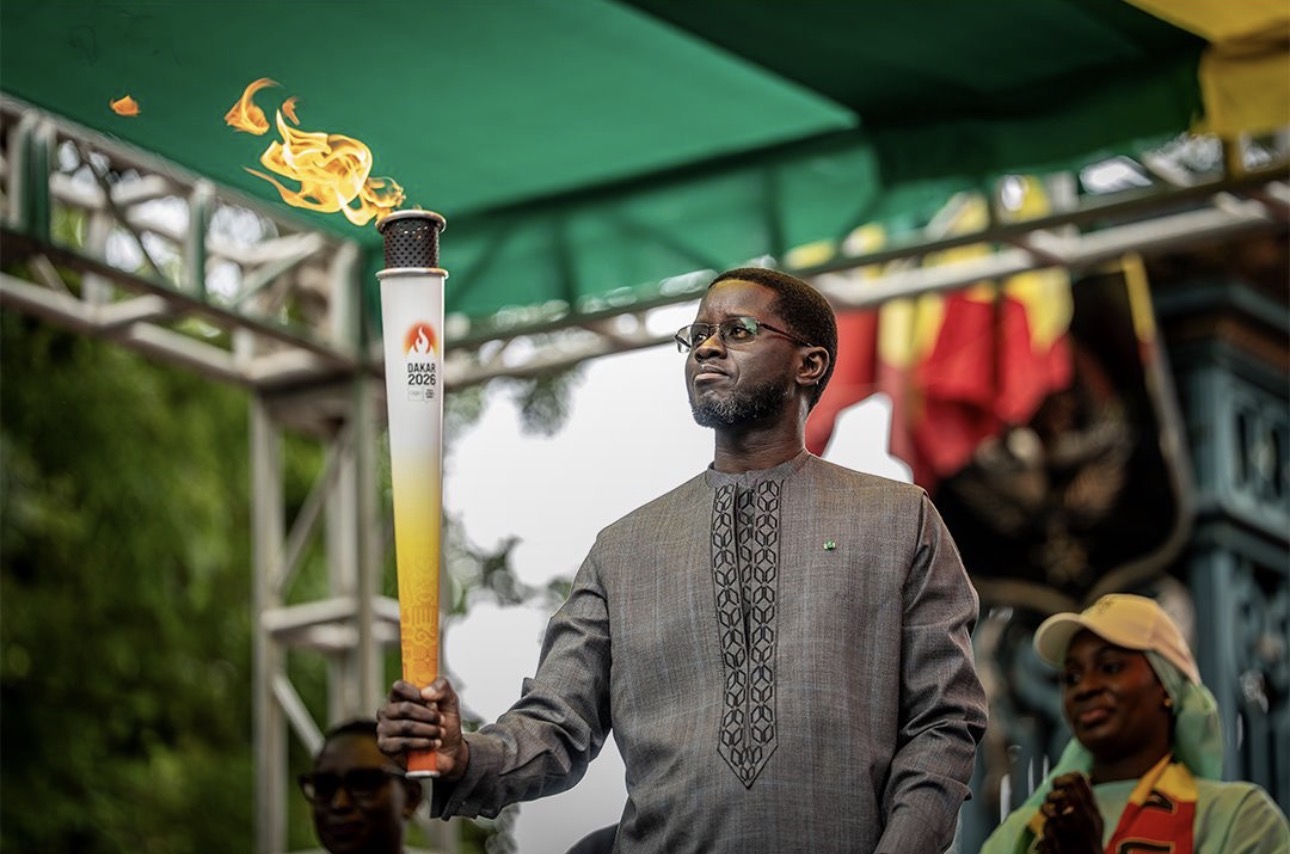
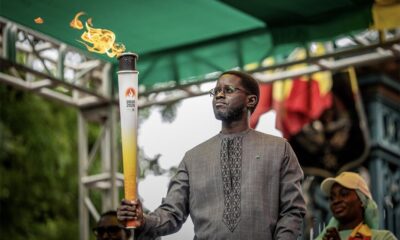
On October 31, Senegal will welcome the world to Dakar for an event no African country has hosted before: the Youth Olympic Games. For 14 days, the continent will occupy a stage usually associated with cities elsewhere. What Senegal does with that opportunity could matter long after the medals have been awarded.

The Dakar 2026 Youth Olympic Games will bring thousands of young athletes together across Dakar, Diamniadio and Saly, with competitions running until November 13. It is the first Olympic event to take place on African soil.

The distinction matters. This is not the full Summer Olympic Games, but it is a historic first for a continent whose athletes have helped shape international sport for generations.

Africa does not need an Olympic event to prove that its athletes can compete. They have been winning medals, setting records and building sporting legacies for decades. What Dakar offers is a different opportunity: to demonstrate that African countries can host an Olympic event and turn the experience into something that serves their own people.

That is where the real test begins.

For the next two weeks, international attention will fall on Senegal’s venues, its organisation and its ability to welcome athletes and visitors from around the world. The opening ceremony will provide the defining images. The competitions will produce the results. But neither will tell the complete story of what the Games have achieved.

That story will be written in the years that follow.

Will more Senegalese children gain access to sporting facilities and professional coaching? Will the infrastructure remain useful to local communities? Will the people who work on the Games acquire skills and opportunities that extend beyond the event? And will Senegal emerge with greater capacity to organise international competitions in the future?

These questions are particularly important because hosting a global sporting event requires substantial investment. The achievement of bringing the Games to Africa deserves recognition, but the value of that achievement must also be measured by what the investment delivers.

There is a continental opportunity here, too.

Senegal’s experience could provide lessons for other African countries seeking to organise major sporting events, develop their sports industries and create stronger pathways for young athletes. Hosting requires more than a stadium. It demands planning, transport, accommodation, security, trained personnel and institutions capable of coordinating an international event.

Developing those capabilities can have value beyond a single competition, provided they are maintained and used.

Dakar also brings the focus back to the generation for whom these Games were created. The Youth Olympic Games are designed around young athletes, but their potential influence extends to young people who may never compete at an elite level. Seeing international sport in their own country can introduce them to disciplines they rarely encounter and give them a closer connection to the possibilities of sport.

That opportunity will mean more if it leads to accessible programmes, local competitions and sustained investment in participation.

None of these outcomes is guaranteed simply because the Olympic rings have arrived.

Senegal has made history by becoming the first African host of an Olympic event. The next challenge is to make that history useful: for its athletes, its communities and the wider African sporting landscape.

On November 13, the Games will close. Athletes will return home, international delegations will depart, and the world’s attention will turn elsewhere.

What remains in Senegal will offer a more revealing measure of Dakar 2026 than any closing ceremony.

Africa will have hosted the Olympics. The question is whether the opportunity will help build a sporting future that lasts.

Continue Reading

Business

36.65kg of Cocaine at Lagos Airport: Following the Trail Beyond the Arrest

Published

on

By

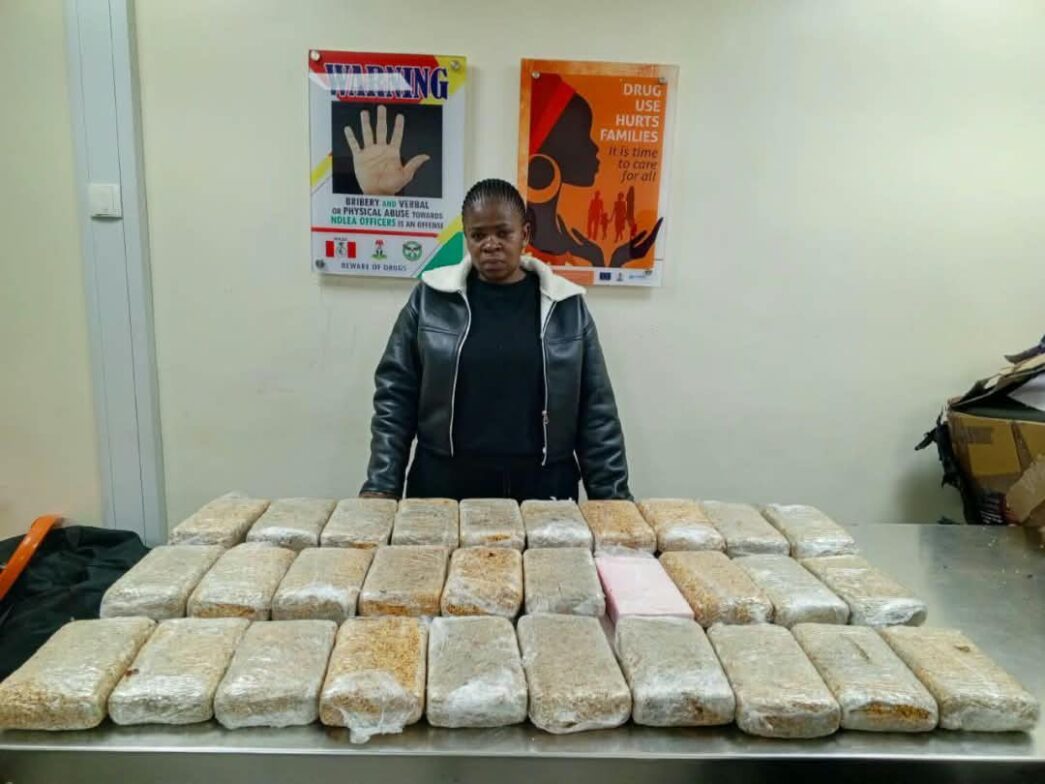
On October 7, Nigerian authorities arrested a 34-year-old South African woman at Lagos airport after allegedly finding 36.65kg of cocaine in her luggage. According to the National Drug Law Enforcement Agency (NDLEA), the drugs were packed into 30 blocks and seven parcels across two bags. She was preparing to board a Qatar Airways flight to South Africa via Doha.

The agency announced the arrest on October 25, saying the investigation had led to another suspect in Lagos. But the case is about more than what officers found at the airport: investigators are seeking to establish who arranged the shipment, who was involved and where the drugs were intended to go.

According to the NDLEA, the woman arrived in Nigeria on September 30 to collect the shipment. She allegedly told investigators that another South African woman had recruited her, offering 20,000 rand for the job.

The agency also reported identifying a US-based participant and arresting Lagos car dealer Uchenna Victor Umunnakwe, 46, on October 14. Investigators allege that he received the woman and arranged accommodation for her.

These details remain allegations reported by the agency. Publicly available accounts have not established the shipment’s source or intended recipient, or confirmed the identities and roles of everyone allegedly involved.

The Lagos seizure is not the first major cocaine case involving a passenger’s luggage at the airport. In January 2021, the NDLEA reported arresting Onyejegbu Ifesinachi Jennifer after allegedly finding approximately 26.84kg of cocaine concealed in her luggage. At the time, the agency described it as its largest single cocaine seizure from an individual in 15 years.

The earlier case provides a direct Nigerian precedent, although the two investigations are separate and there is no publicly established link between them. It also highlights a key question in the current case: whether the arrest of a person carrying drugs will lead investigators to the wider network behind the shipment.

The scale of the Lagos seizure becomes clearer when set against a different kind of operation elsewhere on the continent. In July 2026, Liberian authorities reported seizing approximately 3,971kg of cocaine at a suspected storage facility near Monrovia, with an estimated value of US$317 million. Officials said the shipment was believed to be destined for Europe.

The circumstances differ substantially. The Lagos case concerns drugs allegedly carried by an individual passenger, while the Liberian seizure involved a much larger quantity found at a suspected storage site. Neither case establishes a connection to the other. Together, however, they illustrate why drug investigations must look beyond the amount seized to the people, routes and intended markets supported by the evidence.

In the Lagos case, the woman’s planned flight route does not, by itself, establish where the cocaine originated or where it would ultimately have been delivered. Nor does an arrest prove the involvement of every person investigators identify.

As of October 26, publicly available reports have not established the shipment’s origin, its intended recipient, the identity of the alleged recruiter or the eventual legal outcome of the case.

Continue Reading

Business

The Earring the Internet Forgot

Published

on

By

The internet has a peculiar relationship with time.

A story can disappear for years, then return one morning carrying the urgency of breaking news.

The photograph is familiar. The achievement is old. But to a new audience, everything looks freshly discovered.

That is what makes the renewed attention around Bohlale Mphahlele worth examining.

The first version of her story belongs to 2020.

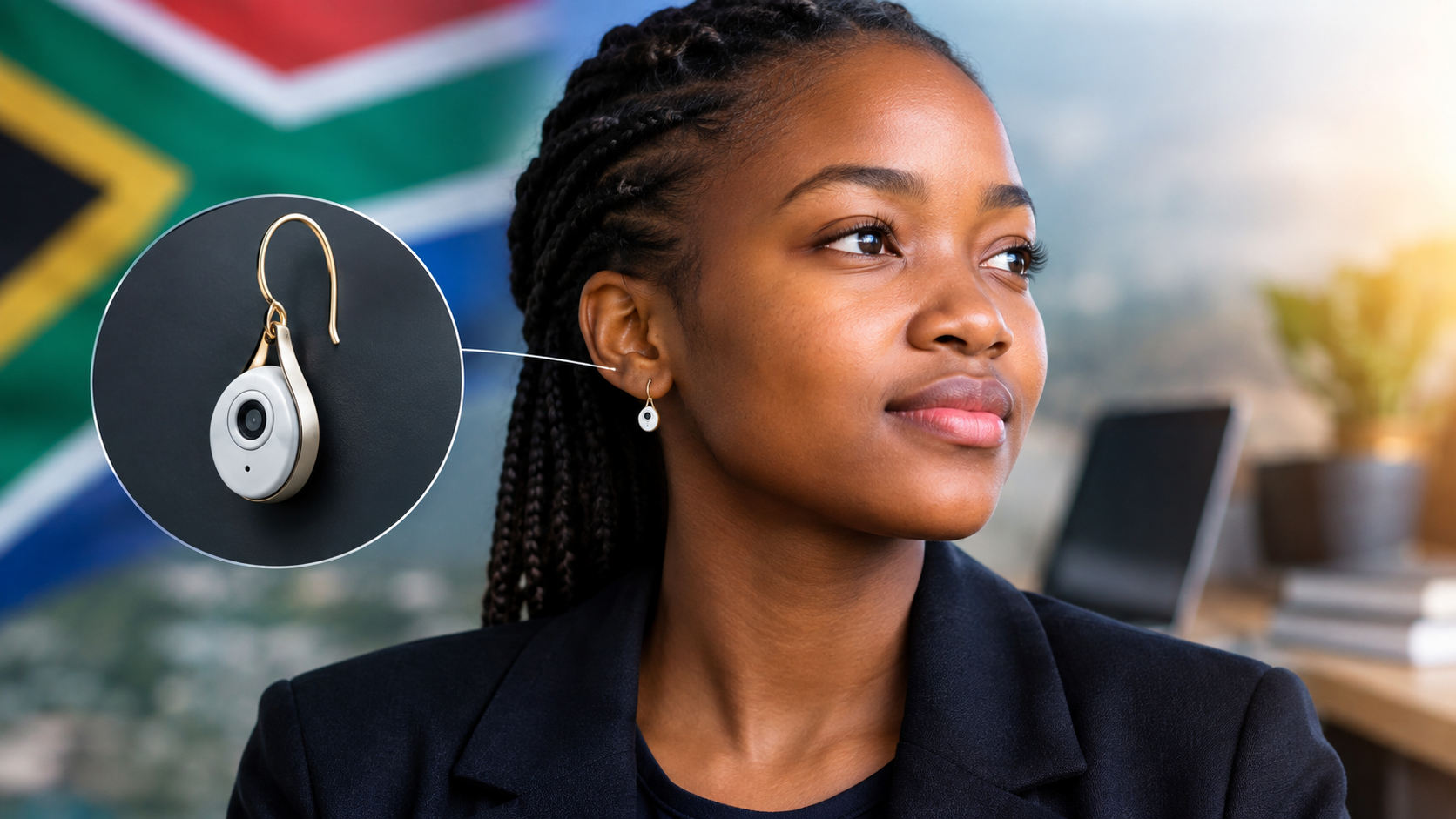
Mphahlele was 16, a Grade 11 student in Limpopo, when she developed what became known as the Alerting Earpiece. It was designed to look like an ordinary piece of jewelry while functioning as a discreet emergency device.

The idea was born from a problem that was anything but technological: violence against women and children.

The prototype was designed to allow a wearer to trigger an alert without having to reach for a phone. Its proposed functions included sending an emergency notification and location to selected contacts and capturing an image. At the Eskom Expo for Young Scientists, the project received a bronze medal in engineering and electronics.

For a teenager, it was an extraordinary achievement.

For the internet, it was an irresistible story.

And then the story largely went quiet.

That is where the conventional version usually ends.

A clever young African inventor. A clever invention. A medal. A headline. An uplifting conclusion.

But invention stories rarely end when the cameras leave.

Six years later, Mphahlele is no longer the teenager standing beside her prototype.

She is 22.

In 2026, she has again been speaking publicly about the invention and the problem that inspired it, including an appearance connected to France 24. She has also established Mphahlele Alerts

and continued her studies in Information Technology.The distinction matters.

Because the question in 2020 was: Can a teenager build an ingenious response to a frightening problem?

The question now is harder:

Can that idea actually become something people can use?

There is a vast distance between a prototype and a product.

A prototype proves that an idea can exist.

A product has to prove that it can survive.

It has to be engineered, tested, manufactured, maintained and made affordable. It has to work when the person wearing it needs it to work not merely when it is being demonstrated.

And there is another uncomfortable question that viral retellings tend to avoid: Has the earpiece actually reached ordinary users?

The evidence available publicly does not establish that it has been widely deployed or used in real-life emergencies.

That is not a failure of the invention.

But it is an important fact about where the story stands.

Mphahlele’s creation remains, at its heart, an attempt to turn technology into a little more control in a moment when someone might otherwise have very little.

That idea began long before the earpiece existed.

In 2020, Mphahlele told the Sowetan that she had been thinking about the concept since primary school. Her motivation came from seeing reports of violence and wondering whether technology could offer another form of protection.

There is something revealing in that instinct.

Most people encounter a social crisis and ask who should fix it.

A young inventor asked what she could build.

The object she came up with was small enough to sit beside the face. The problem behind it was enormous.

That contrast is probably why the story continues to travel.But it is also why the story deserves more than another round of inspirational reposts.

Gender-based violence cannot be engineered away. An earpiece cannot replace justice,

prevention, accountable institutions or safer communities. Technology can provide a tool; it cannot repair the conditions that make the tool necessary.

What technology can sometimes do is narrow the distance between danger and assistance.

That is what Mphahlele was trying to explore.

And perhaps the most interesting part of her story is no longer the ingenuity of a 16-year-old.

It is the persistence of the idea after the attention disappeared.

South Africa’s Parliament was still discussing and recognizing her work in 2025, with calls for support to help advance the invention.

The teenager became an adult.

The school project became a company.

And an old photograph became new again.

That is the peculiar thing about viral stories: they often make the moment of invention look like the destination.

It isn’t.

The medal is not the destination.

The headline is not the destination.

Even going viral is not the destination.

The difficult part comes afterward, when nobody is watching.

For Bohlale Mphahlele, that part has lasted six years.

So perhaps the story resurfacing in 2026 is not really a story about an earring at all.

It is a story about what happens after the applause.

About whether an idea can survive its first moment of attention.

And about a young woman who, at 16, imagined that something as ordinary as an earring might give someone in danger one more way to be heard.

Six years later, the internet has remembered the invention.The more important question is whether it will remember to follow the inventor.

Continue Reading

Trending

Copyright © 2026 Africadigitmedia.net. Website powered by ProDigit.