Connect with us

Politics

Tshisekedi and Ramaphosa Meet in Chicago During Jesse Jackson Funeral

Published

on

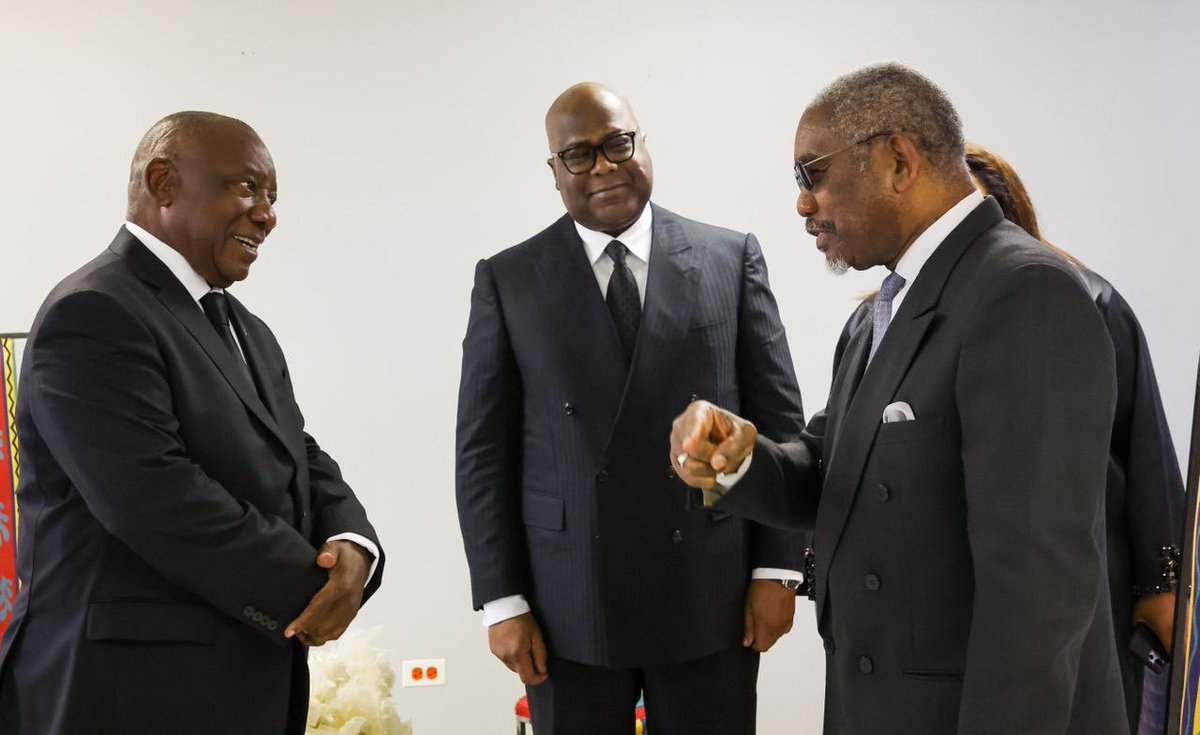
African leaders President Félix Tshisekedi of the Democratic Republic of the Congo and President Cyril Ramaphosa of South Africa met in Chicago, Illinois, this week while attending the funeral of civil rights leader Rev. Jesse Jackson.

The funeral services honored Jackson’s life-long dedication to civil rights, justice, and global peace. Jackson, who passed away on February 17, 2026, was celebrated as a tireless advocate for human rights in the United States and across the world. His work against apartheid in South Africa and his support for democratic movements in Africa earned him admiration from leaders across the continent.

During the memorial events, Presidents Tshisekedi and Ramaphosa held a brief bilateral meeting on the sidelines. The discussion focused on key issues affecting Africa, including security challenges in eastern DRC, regional development initiatives, and broader cooperation between African nations.

Both leaders also paid tribute to Jackson’s legacy. President Tshisekedi highlighted Jackson’s impact on global democracy and peace, while President Ramaphosa emphasized the late civil rights leader’s role as a friend of South Africa and his enduring slogan, “Keep hope alive.”

The meeting between Tshisekedi and Ramaphosa, though brief, underscored the continuing relevance of international solidarity in addressing Africa’s political and social challenges. It also reflected the personal and historical connections many African leaders maintain with the civil rights movement and its icons.

The funeral in Chicago brought together international leaders, U.S. political figures, and civil rights advocates, providing a platform not only to honor Jackson’s legacy but also to strengthen diplomatic ties among attendees.

Continue Reading
Click to comment

Leave a Reply

Your email address will not be published. Required fields are marked *

Politics

Kenya Pays KSh 3.9 Billion to Lock in AFCON 2027 Hosting

Published

on

By

Kenya has officially secured its spot as a co-host for the 2027 Africa Cup of Nations (AFCON) after paying the required KSh 3.9 billion (approximately $30 million) hosting fee to the Confederation of African Football (CAF).

The payment, completed in late March 2026, comes after weeks of scrutiny and pressure from CAF, which had set strict deadlines for co-host nations. Uganda and Tanzania had already fulfilled their financial obligations, leaving Kenya as the final piece in the tri-nation hosting puzzle. Sports Cabinet Secretary Salim Mvurya confirmed the government had met the full financial requirement, removing any uncertainty about Kenya’s participation.

This historic 36th edition of AFCON will run from 19 June to 18 July 2027, marking the first time the tournament will be jointly hosted by three countries. The competition will feature an expanded 28-team format, promising more matches and greater fan engagement across East Africa.

By settling the hosting fee, Kenya not only guarantees its involvement but also unlocks preparations for stadium upgrades, logistics, and promotional activities ahead of the continent’s premier football event.

Continue Reading

Politics

Uganda Launches First National Migration Policy

Published

on

By

Uganda unveiled its first-ever National Migration Policy, marking a significant milestone in the country’s approach to managing human movement. The policy provides a unified framework for regulating migration, protecting migrant rights, and linking migration with national development priorities.

The policy, approved by Cabinet in August 2025 and formally launched in March 2026 by Vice President Jessica Alupo, comes in response to increasing migration challenges in the country. Uganda hosts nearly two million refugees and experiences growing labor migration, particularly to the Middle East, highlighting the need for clearer guidelines and stronger institutional coordination.

Government officials say the policy aims to create a predictable and secure environment for the legal movement of people while maximizing the social and economic benefits of migration. It emphasizes the protection of vulnerable groups, including women, children, the elderly, and persons with disabilities, and seeks to integrate the Ugandan diaspora into national development planning through remittances and knowledge exchange.

The policy also addresses broader regional considerations. Uganda is part of multiple regional agreements, including the East African Community (EAC) and the Intergovernmental Authority on Development (IGAD), and the policy is designed to harmonize domestic migration governance with these frameworks. Officials hope this will enhance regional cooperation and ensure that Uganda continues to play a constructive role in managing migration across borders.

Implementation will focus on strengthening institutional capacity, improving migration data systems, and coordinating across government agencies. Authorities have noted that while the policy does not replace existing refugee or labor laws, it provides a cohesive structure that brings together all aspects of migration management, from border control to labor mobility.

Analysts say the new policy positions Uganda to better respond to the challenges of modern migration, including irregular movement, human trafficking, and refugee integration, while also leveraging migration as an engine for economic growth. By establishing clear guidelines and enhancing coordination, Uganda aims to create a system that balances security, rights, and development benefits.

Continue Reading

Politics

France Aligns with Spain and Italy on US Military Flight Restrictions

Published

on

By

France has moved to restrict United States military aircraft movements over its territory, joining Spain and Italy in tightening control over airspace access amid escalating tensions surrounding the Iran war.

The decision does not amount to a total ban, but signals a shift in Europe’s posture toward the conflict and Washington’s military operations. French authorities are now reviewing requests for US military overflights on a case-by-case basis, with reports indicating that some flights, particularly those linked to weapons transport, have been denied clearance.

Spain has taken the strongest stance among the three countries, fully blocking US military use of its airspace and bases for operations connected to the conflict. The move marks a clear refusal to support missions tied to the war.

Italy, while stopping short of a full airspace closure, has also pushed back by denying access to a key US-operated base in Sicily. Officials cited procedural and authorization concerns, signaling reluctance to facilitate direct involvement.

The coordinated though not identical actions by the three European nations reflect growing unease over the trajectory of the conflict and the risk of deeper regional escalation. Leaders in parts of Europe have raised concerns about the legality and broader implications of the military campaign, choosing to limit their level of participation.

These developments highlight emerging divisions among Western allies, particularly within NATO, as countries weigh their strategic partnerships against domestic political pressure and the potential consequences of the war.

While the United States continues to rely on European infrastructure for military logistics, the evolving restrictions suggest that support from key allies may no longer be guaranteed as the conflict intensifies.

Continue Reading

Trending

Copyright © 2026 Africadigitmedia.net. Website powered by ProDigit.