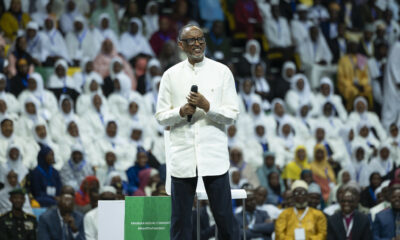
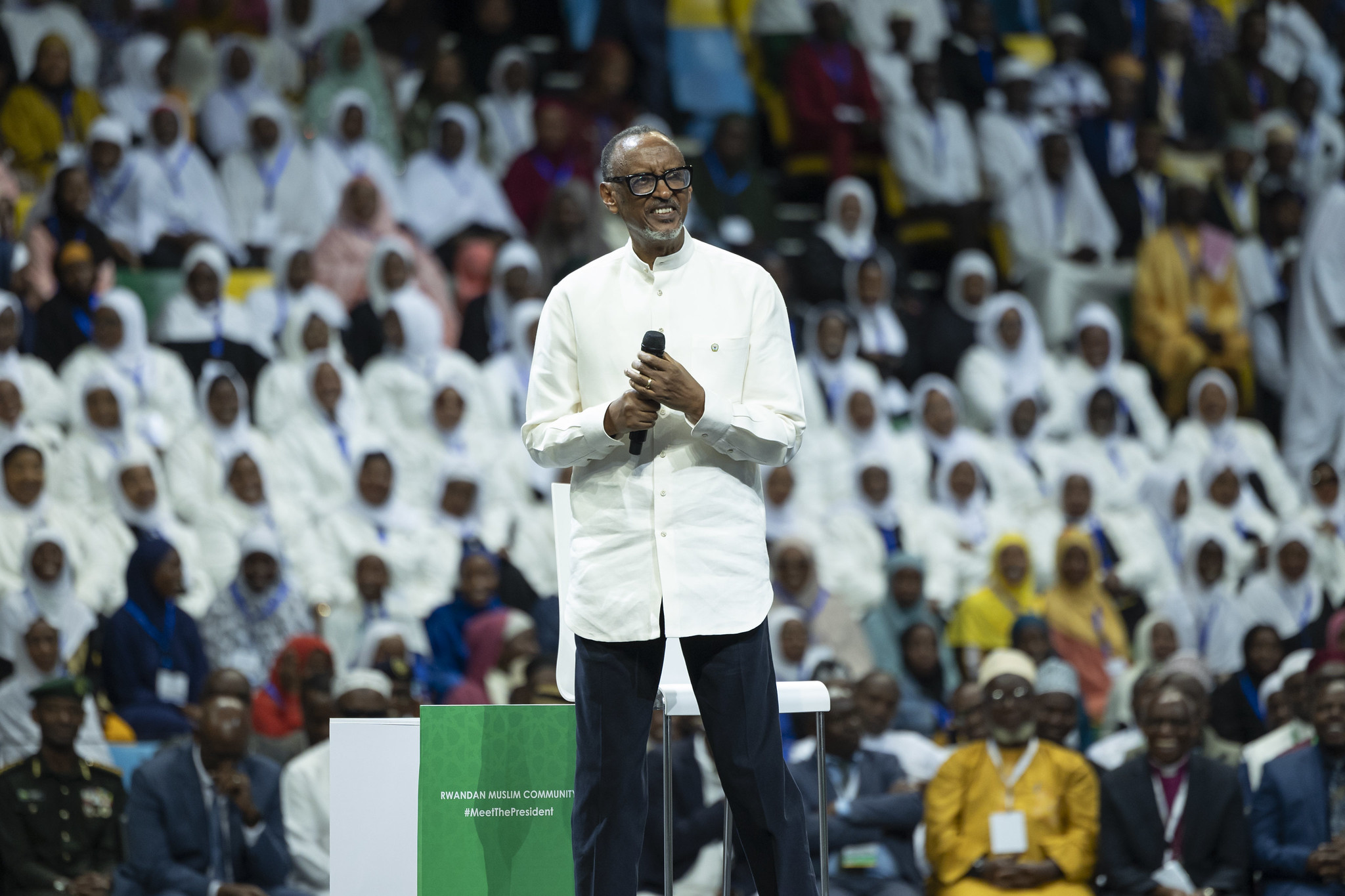
On 25 March 2026, thousands gathered at BK Arena in Kigali for a landmark engagement between President Paul Kagame and Rwanda’s Muslim community. The “Meet the President” session was not a ceremonial event, it was a candid, two-way dialogue that brought real concerns, direct responses, and clear expectations to the forefront.
From the outset, President Kagame set the tone by clarifying that while religion plays an important role in people’s lives, his responsibility as a leader is to ensure unity, fairness, and national development. His message was consistent throughout: faith must go beyond belief and translate into discipline, responsibility, and tangible contributions to society.
One of the most significant exchanges came when a community member raised concerns about restrictions on the early morning call to prayer (Adhan). The issue, described as deeply felt within the Muslim community, was addressed directly by the President. Kagame acknowledged its importance and expressed support for restoring the practice while emphasizing the need to balance religious freedom with public order. This response stood out as a clear and immediate policy signal.
Another key concern came from Muslim leaders regarding delays in securing land for a national headquarters. In response, President Kagame committed that the matter would be resolved within the year, reinforcing the government’s willingness to support institutional development within the community.
Beyond these specific issues, Kagame used the platform to deliver a broader message about unity and responsibility. He acknowledged the historical marginalization of Muslims in Rwanda, contrasting it with their current position as fully recognized and active participants in national life. However, he challenged the community to manage its internal differences and remain cohesive, stressing that progress brings responsibility.
The President also spoke firmly about the role of religion in society. He urged religious leaders and followers alike to ensure that faith leads to ethical behavior, strong values, and solutions to real-life challenges. Religion, he emphasized, should uplift communities not divide them or remain disconnected from everyday realities.
A recurring theme throughout the dialogue was self-reliance. Kagame encouraged the Muslim community to actively participate in Rwanda’s development, reminding attendees that progress depends not only on government support but also on individual and collective effort.
The atmosphere of the event was open and engaged. Community members voiced concerns honestly, and the President responded without evasion combining immediate answers with long-term expectations.
Faith, unity, and responsibility, this was the message that defined the conversation.















 Politics6 hours ago
 Politics6 hours ago
 Politics6 hours ago