Connect with us

Opinion

Paid for it

Published

on

A simple KSh 1,500 transfer meant to fund a trip to Eldoret has officially entered its villain arc. After the journey allegedly never happened—and the refund never came—the situation skipped all normal stages like “remind me” and “are you around?” and went straight to lawyer mode.

Within no time, a full legal demand letter dropped like a plot twist nobody asked for. The original KSh 1,500? Still there. But now it has company: a bold KSh 10,000 in legal fees, bringing the grand total to KSh 11,500. Yes, the fees said “we refuse to be smaller than the problem.”

To make it spicier, there’s a 48-hour deadline, court threats, 14% interest, and enough serious legal wording to make it sound like a billion-shilling scandal.
Somewhere along the way, “send fare” turned into “see you in court.”

Moral of the story?

That KSh 1,500 might just be the most expensive ride that never happened.

Continue Reading
Click to comment

Leave a Reply

Your email address will not be published. Required fields are marked *

Opinion

Rwanda’s ‘Meet the President’ Puts Responsibility, Accountability and Youth at the Centre of National Progress

Published

on

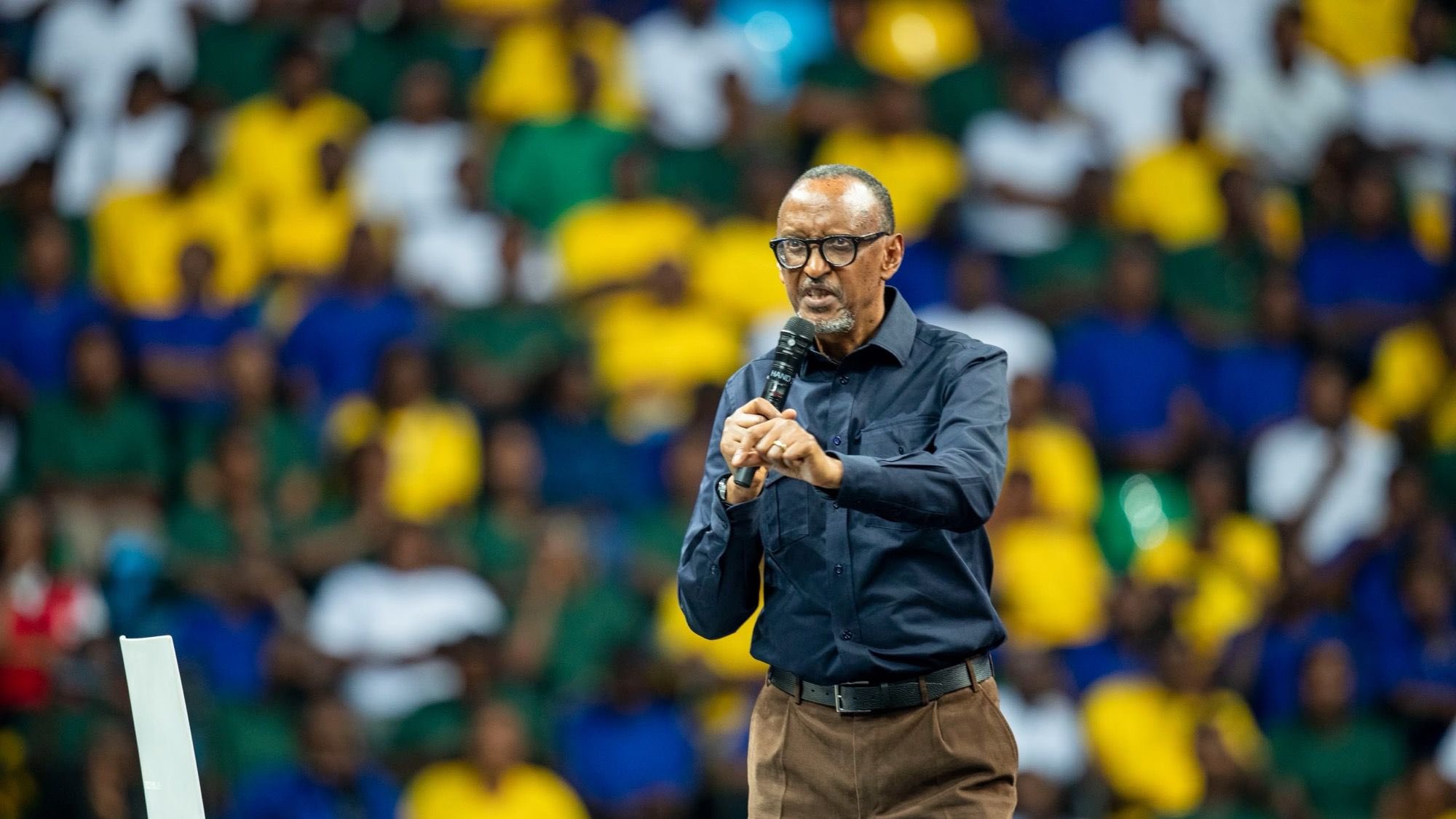
The atmosphere at BK Arena in Kigali on Wednesday was one of engagement and national reflection as more than 10,000 young people gathered for the latest edition of Meet the President, an interactive dialogue with President Paul Kagame. Yet beyond the scale of attendance and the significance of a presidential encounter, the meeting raised a more important question: what does it truly mean to build a better Rwanda?

The gathering brought together young people from different backgrounds, alongside government officials and representatives from various sectors. Discussions covered personal discipline, drug and alcohol abuse, technological opportunities, public service delivery and the responsibilities shared by citizens and leaders in shaping the country’s future.

While the event offered young people an opportunity to engage directly with the Head of State, its greatest significance lay in the issues raised and the expectations they placed on both the younger generation and those entrusted with public responsibility.

A generation challenged to take responsibility

One of the central messages of the meeting was that Rwanda’s development cannot depend on government action alone. Young people must also take responsibility for their decisions, conduct and contribution to society.

President Kagame emphasized the importance of discipline, continuous learning, hard work and the ability to distinguish right from wrong. Drawing on lessons from his own childhood, he illustrated how knowledge acquired early in life can prove valuable many years later.

The message was clear; ambition without discipline is insufficient, and opportunity without action produces little change.

However, personal responsibility should not be interpreted as placing the entire burden of progress on young people. A generation can be encouraged to work hard and make responsible choices, but it must also have access to quality education, meaningful employment, healthcare and fair opportunities.

Young people cannot build their futures through determination alone if the institutions around them fail to provide the conditions necessary for success.

The difficult conversation about public services

An important moment in the dialogue came when a young participant raised concerns about delays in public healthcare and the quality of education in government schools. The concerns reflected frustrations about the gap that can exist between national development ambitions and the everyday experiences of citizens.

The discussion also included an appeal from siblings seeking help over a disputed family home, despite their claim that they had already won a court case.

These issues deserve attention because national progress is ultimately experienced in ordinary places; in a hospital waiting room, in a classroom, at a government office or in a family home where citizens expect justice.

President Kagame acknowledged the need to address poor service delivery and called for action rather than discussion alone. The concerns raised during the meeting nevertheless point to a broader principle: public institutions must be judged by the quality, fairness and reliability of the services they provide.

A country’s achievements should not make its shortcomings impossible to discuss. Instead, progress should create greater confidence that problems can be identified openly and corrected effectively.

Leadership must listen and institutions must respond

The value of an event such as Meet the President lies partly in the opportunity it gives citizens to bring concerns directly to the country’s leadership. But the measure of its success cannot end when the microphone is switched off or the audience leaves the arena.

The real test begins afterward.

When citizens report poor service, officials must investigate. When families seek justice, the relevant institutions must establish the facts and follow lawful procedures. When young people identify weaknesses in public systems, their concerns should lead to practical improvements rather than remain part of a public conversation.

The same principle applies to accountability within law enforcement. Public trust depends on ensuring that authority is exercised lawfully and that misconduct is addressed fairly, regardless of who is involved.

Direct engagement between citizens and the President can help bring problems into view. Strong institutions, however, are needed to ensure that those problems are resolved consistently and transparently.

The warning behind the conversation on alcohol and drugs

Another major theme was the impact of alcohol and drug abuse on young people’s health, decisions and future prospects.

President Kagame and government officials urged young people to avoid harmful habits and develop greater self-control. Health Minister Dr Sabin Nsanzimana also stressed the importance of protecting one’s health and turning personal ambitions into practical goals.

The concern is significant. Substance abuse can undermine education, family relationships, productivity and personal wellbeing. Yet effective responses must extend beyond warnings. Prevention requires accessible health information, supportive families, appropriate treatment services and communities in which people can seek help without being reduced to their mistakes.

The strongest message is not simply that young people should avoid destructive behaviour. It is that they deserve the knowledge, support and opportunities needed to make healthier choices and recover when they struggle.

Technology and the responsibility to keep learning

The meeting also highlighted the opportunities technology continues to create. Minister of ICT and Innovation Paula Ingabire encouraged young people to develop their skills, adapt to changes in the job market and use digital platforms as tools for learning.

This is particularly important in a world where employment opportunities and professional expectations are changing rapidly.

For Rwanda’s young population, digital knowledge can open pathways to entrepreneurship, innovation and work beyond traditional boundaries. But access to technology alone is not enough. Young people need practical skills, critical thinking, creativity and the ability to turn information into useful solutions.

Social media, too, can either support personal growth or encourage unhealthy comparisons with others. Its value depends largely on how it is used.

The challenge is therefore to build a generation that does not merely consume technology but understands how to use it to solve problems, create opportunities and contribute to society.

The position Rwanda must be willing to defend

The central lesson of the meeting extends beyond any single speech or exchange. Rwanda’s future requires responsibility from its citizens, but it also demands accountability from its institutions.

These obligations must go together.

It would be unfair to demand discipline from young people while overlooking failures in the systems that serve them. Equally, it would be unrealistic to expect government institutions to carry the entire responsibility for national development while citizens disregard their own obligations.

The country needs both responsible citizens and responsive institutions. It needs ambitious plans, but it also needs honest assessments of what is working and what is not. Above all, it needs a culture in which criticism can become a starting point for improvement rather than a conversation that ends without consequences.

This is not an argument against national pride. It is an argument for a stronger foundation for that pride.

A nation should be confident enough to celebrate its achievements and honest enough to confront the problems that remain.

As the young participants left BK Arena, the significance of Meet the President rested not simply in the opportunity to see or hear the Head of State, but in what the dialogue might inspire leaders, institutions and citizens to do next.

For young people, the challenge is to translate ambition into discipline, learning and meaningful action. For public officials, it is to ensure that the concerns raised by citizens receive serious attention and measurable follow-through. For the country as a whole, it is to make national development visible in the everyday lives of its people.

The gathering offered an important platform for conversation. Its lasting value will depend on whether that conversation produces change.

Because the strength of a nation is not measured only by the size of its ambitions or the number of people gathered to hear its leaders. It is measured by whether its people can see, feel and trust the progress those ambitions promise.

Continue Reading

Opinion

When Protecting Girls Becomes Preparing Them for Men

Published

on

By

There is a sentence that can stop a conversation before it even begins.

“Isi irimo abagabo ni isi y’akaga.”

A world with men is a dangerous world.

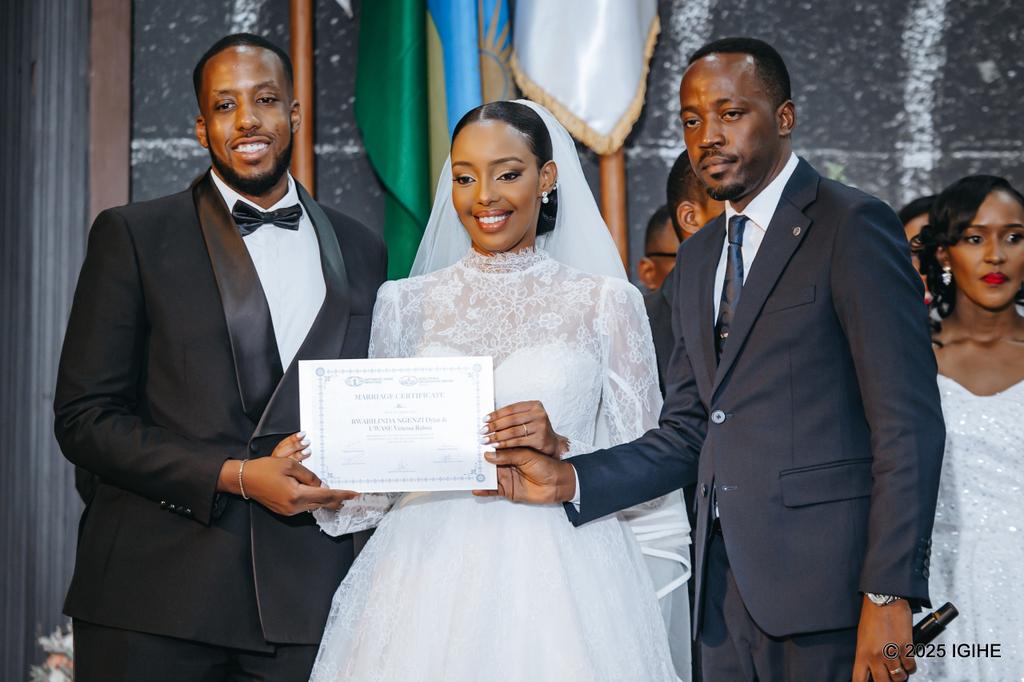
That is what Miss Uwase Raissa Vanessa told her audience this week, before going further: parents should teach their daughters from an early age how to protect and defend themselves against what she called “inyamanswa”; animals.

The words were severe. They were also almost impossible to ignore.

Vanessa was not merely telling parents to enrol their daughters in self-defence classes. Her warning went much further. She argued that a girl cannot automatically be considered safe simply because the man around her is familiar, naming fathers, brothers, uncles, cousins and family friends among those who should not be trusted blindly.

That is a much bigger proposition than teaching a child how to protect herself.

It is a proposition about trust.

And perhaps that is where the conversation should begin.

Because behind the outrage over one word; inyamanswa, is a question that is considerably harder to answer:

What kind of world are we preparing our daughters to enter?

The girl who is taught to be ready

There is an understandable appeal in telling a girl that she should know how to protect herself.

Give her confidence. Teach her to recognise uncomfortable situations. Teach her that she can say no. Teach her where to seek help. Teach her that being young does not mean she has to tolerate behaviour that makes her uncomfortable.

Those are valuable lessons.

But Vanessa’s argument pushes the idea further.

She is effectively saying that girls should be prepared for the possibility that danger may come from men, including men already inside the circle of trust.

That is what makes her message uncomfortable.

Because a child’s world is built around trust.

A father is supposed to be safe. A brother is supposed to be safe. An uncle is supposed to be safe. A family friend is supposed to be safe.

If we tell children that familiarity cannot guarantee safety, we are teaching them an important lesson about boundaries.

But if we tell girls that the presence of men itself represents danger, we risk teaching something else entirely:

fear.

The distinction matters.

The burden placed on the girl

There is another question hiding underneath the self-defence argument.

Why is the solution so often to prepare the girl?

Teach her to be careful.

Teach her not to trust too easily.

Teach her to recognise warning signs.

Teach her to defend herself.

Teach her to get away.

All of that may help a child navigate an unsafe situation.

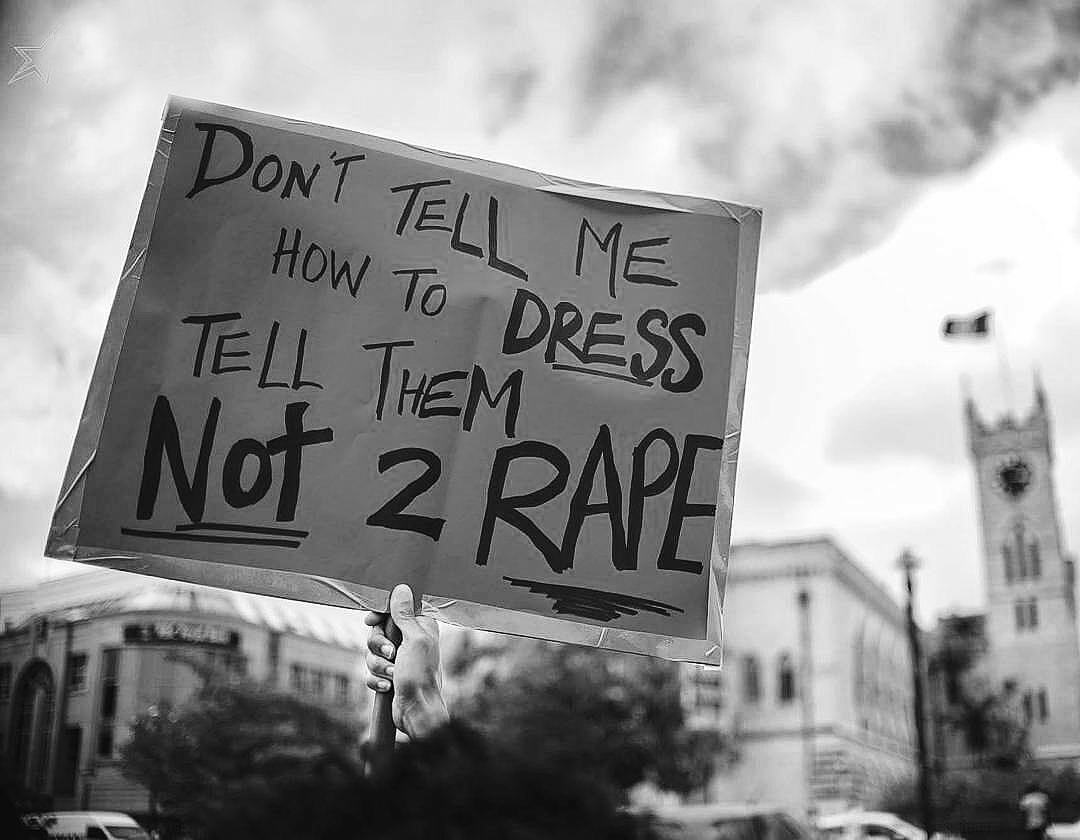
But there is a strange imbalance in a society where the person potentially facing harm is repeatedly given instructions on how to avoid the person capable of causing it.

At some point, the question has to turn around.

What are we teaching boys?

Not just how to protect themselves.

Not just how to become strong.

But how to understand boundaries.

How to recognize discomfort.

How to respect another person’s refusal.

How to understand that being someone’s father, brother, boyfriend, husband, uncle, teacher or friend does not give them ownership over that person.

And, perhaps most importantly, how to understand that strength without restraint is not strength at all.

Vanessa’s warning is bigger than Vanessa

It would be easy to reduce this entire episode to a familiar social-media argument:

Women versus men.

One side says she went too far.

Another says people are deliberately ignoring what she meant.

Then everyone picks a camp.

The argument ends where it started.

That would be a shame.

Because Vanessa has raised an issue that deserves to survive the controversy surrounding her language.

She is a public figure who became known nationally after finishing as first runner-up in Miss Rwanda 2015. She is also now a mother. Her argument is therefore being made not only as a public statement about women, but in the context of raising a daughter herself.

But motherhood does not automatically make her conclusion correct.

Nor does criticism of her language automatically make the concern underneath it meaningless.

Both things can be true.

A person can raise a legitimate concern about girls’ safety while expressing that concern in a way that many people consider unfair or unnecessarily sweeping.

And a person can object to the generalisation without dismissing the very real question of how children are protected.

That is the conversation worth having.

But what made her say it?

This may be the most important unanswered question.

Was there a particular story?

A particular case?

Something she had witnessed?

Something someone had told her?

Or did years of hearing stories about women and girls simply reach a point where she felt compelled to speak?

We do not know.

Reports following her original statement say journalists attempted to reach her to ask what prompted her to describe men this way, but did not get an answer.

That gap matters.

Because without it, everyone else is left interpreting her words.

And interpretation is exactly how a complicated conversation becomes a social-media fight.

She isn’t taking the words back

If this were simply an angry sentence posted and deleted, perhaps the story would already be over.

But Vanessa has since doubled down.

On September 23, she said she did not make the statement impulsively. She said she was willing to take criticism because she believed she was speaking for girls and women who struggle to say certain things publicly.

That changes the story.

She is no longer merely being quoted.

She is defending the argument behind the quote.

And the reaction has grown accordingly. Other public figures have entered the discussion, including singer and writer Kibasumba Confience, who publicly defended Vanessa, while dancer Titi Brown said the comments had made him question whether there is still peace and love within families and relationships.

The debate is therefore no longer really about one Instagram post.

It has become a conversation about men, women, marriage, family, trust and fear.

The question we should ask our sons

Perhaps the most revealing part of this entire controversy is what is missing.

We hear constantly about what girls need to learn.

Be careful.

Don’t go there.

Don’t trust him.

Don’t walk alone.

Learn to defend yourself.

Tell someone.

Leave.

All useful advice.

But somewhere alongside those lessons, boys need their own education.

Not an education built around the idea that every boy is a potential threat.

An education built around responsibility.

You do not get to cross someone’s boundary because you are stronger.

You do not get to interpret silence as permission.

You do not get to use familiarity as entitlement.

You do not get to turn someone’s trust into vulnerability.

Those lessons do not make boys enemies of girls.

They make boys accountable human beings.

A daughter should not have to inherit our fear

Perhaps this is the uncomfortable truth underneath Vanessa’s controversial words.

A mother looking at her daughter may reasonably want that girl to be prepared for a world that is not always kind.

There is nothing wrong with preparation.

But preparation and fear are not the same thing.

We should want girls who can recognize danger without believing that danger is everywhere.

We should want boys who understand boundaries before they ever need to be confronted about breaking them.

We should want families where children know they can speak.

We should want adults who listen when they do.

And we should want a society where protecting girls does not become synonymous with teaching girls that men are something to fear.

Vanessa’s words have created an argument.

Perhaps the more useful question is what we do with it.

Because the goal cannot simply be to raise girls who are better at surviving dangerous situations.

It should be to raise a generation that has fewer dangerous situations to survive.

Continue Reading

Opinion

What We Choose to Call Decent

Published

on

There is a strange moment that comes when a society begins to argue about clothes.

It appears to be a small argument. A hemline. A neckline. A pair of shorts. A dress considered too short, too tight, too open, too foreign.

People begin by discussing fabric and end by discussing morality. They say they are protecting culture, protecting children, protecting dignity, protecting the country itself.

And perhaps they are.

But whenever a society becomes deeply concerned with what people put on their bodies, it is worth asking what it is really afraid of.

Clothes have never been merely clothes.

Every society uses them to tell its people something about belonging. What we wear to church is different from what we wear to a wedding. What is acceptable at home may be unacceptable at school.

A soldier wears one thing, a judge another, a child another. Clothing tells us where we are, who we are expected to be, and what kind of behavior belongs to a particular space.

There is nothing uniquely Rwandan about this.

What is uniquely important is deciding where cultural expectation ends and legal authority begins.

A society has every right to have standards.

But standards and laws are not the same thing.

A community may look at an outfit and think it is inappropriate. A parent may dislike it. A school may prohibit it.

A church may establish its own expectations. An organizer may create a dress code for an event.

These are social rules.

The state is something else.

The moment the state enters the conversation, the language must become more precise. What exactly is prohibited? Where is it prohibited? Who has the authority to determine it? What happens when reasonable people disagree? And can an ordinary citizen know, before leaving their home, whether what they are wearing may suddenly be interpreted as unlawful?

These questions matter because law is supposed to be clearer than disapproval. Rwanda already has laws concerning public indecency and public morality. But the existence of such laws does not magically turn every disagreement over clothing into a legal question.

There is a distance between something being considered distasteful and something being criminal.

That distance is where a society demonstrates its maturity.

Rwanda is changing rapidly. Kigali does not dress exactly as it did twenty years ago. Rwandans travel. They watch Nigerian films, American films, Korean dramas and African music videos.

They live on Instagram and TikTok. They encounter fashion from Lagos, Johannesburg, London, Paris, Nairobi and Los Angeles before they have even crossed the border.

Culture therefore becomes complicated.

The young person wearing something their parents consider inappropriate may not believe they are rejecting Rwanda.

They may simply be living in a Rwanda that their parents did not grow up in.

And the parent objecting may not be backward.

They may simply be trying to preserve something they fear is disappearing.

Both things can be true.

This is where the conversation becomes difficult and therefore worthwhile.

Because it is easy to say that Rwanda must preserve its culture.

It is much harder to define what that means.

Which culture?

The culture of our grandparents?

The culture before colonialism?

The culture created after independence?

The culture of today’s Kigali?

The culture of rural Rwanda?

The culture presented to tourists?

The culture young Rwandans are creating themselves?Culture is not a museum piece. It changes whether we permit it to or not.

The question is whether we change deliberately or simply allow everything around us to change us.

There is also something dangerous in believing that morality can be measured entirely by appearance.

A person can dress conservatively and behave terribly.

A person can dress unconventionally and behave with extraordinary dignity.

Clothing can communicate values, but it cannot tell us everything about a person’s character.

This does not mean that anything should be acceptable anywhere.

It means that context matters.

A school can have a uniform.

A workplace can have professional standards.

A religious institution can have expectations.

A private event can establish a dress code.

A public institution can require appropriate clothing for its proceedings.

These rules make sense because their boundaries are understandable.

The difficulty begins when an undefined idea of “decency” becomes broad enough to follow a

person everywhere.

Then morality becomes dependent on whoever happens to be standing in front of you.

And that is a dangerous place for any society to stand.

Not because Rwanda should have no values.

Precisely because Rwanda should have values.

Values should be strong enough to survive disagreement.

If Rwandan culture is worth preserving, then it should be possible to explain its values without reducing them to the length of a dress.

It should be possible to teach young people why dignity matters without teaching them that dignity is something an officer can measure. It should be possible to say that certain behavior does not belong in certain spaces without pretending that every unconventional appearance represents the collapse of society.

And perhaps most importantly, it should be possible to disagree about morality without immediately turning disagreement into punishment.

There is a temptation, whenever society feels itself changing too quickly, to reach for prohibition.

It is understandable.

Prohibition feels like control.

But control is not the same thing as conviction.

A society that wants its young people to value something must eventually answer the harder

question:

Why should they value it?

If the answer is only because the law says so, then the moment the law disappears, so does the value.

But if the answer comes from history, identity, dignity, community and a genuine understanding of why certain boundaries exist, then the value can survive without a police officer standing beside it.

Perhaps this is the conversation Rwanda needs.

Not whether a particular dress is too short.

Not whether one generation is morally superior to another.

Not whether modernity is good or bad.

But what we mean when we say decency.

And who gets to define it.

Because the clothes on our bodies tell a story about the society we are becoming.

The laws we write about those clothes tell an even deeper story about the society we choose to be.

Continue Reading

Trending

Copyright © 2026 Africadigitmedia.net. Website powered by ProDigit.