There are photographs and videos that become news because they are unusual. Then there are those that become news because, almost accidentally, they reveal something about the time in which we are living.
A Nigerian pilot and engineer known as Ola has given us one of the latter.
He flew himself across the Atlantic to Atlanta to see Nigerian Afrobeats star Asake perform live.
The concert was held on August 30 at State Farm Arena as part of Asake’s In God We Trust World Tour.
The image is almost too neat: a Nigerian pilot, his own aircraft, an American city, and a Nigerian musician waiting on the other side of the journey.
But the interesting part is not the plane.
It is the choice.
Ola described the trip simply as using his “free will” to fly to the concert. That line has the casualness of somebody describing an ordinary weekend plan. Yet there is something distinctly modern about it.
For decades, the African story in global entertainment was largely one of departure and arrival: artists leaving the continent in search of audiences, recognition and opportunity abroad.
Afrobeats has changed that geography.
Today, Nigerian music does not merely travel with its artists. It travels through arenas, streaming platforms, festivals and diaspora communities, increasingly becoming something people make deliberate journeys to experience.
Asake’s Atlanta concert was another stop in that expanding world.
The venue was not a small African cultural outpost. It was one of the major arenas of an American city, hosting a Nigerian artist whose music has become part of the global Afrobeats movement.
And there, in the audience, was a Nigerian who had crossed the Atlantic to be part of it.
That is why the story resonates beyond the novelty of a private aircraft.
Asake, Afrobeats and a Changing African Cultural Footprint
Ola’s own story also speaks to a generation less interested in being defined by a single professional identity.
He is presented as both an engineer and a pilot, two demanding disciplines and, in this particular moment, simply a fan who wanted to see an artist he admired.
There is a certain confidence in that.
Not the loud confidence of wealth displayed for its own sake, but the quieter confidence of having built enough freedom into one’s life to say: I want to go, and I can.
Of course, one man’s journey cannot be turned into a statistic about an entire continent. Nor should a viral video be mistaken for evidence that Africa’s inequalities have disappeared. They have not.
But journalism is sometimes about noticing the small scenes through which larger changes become visible.
This is one of them.
The Bigger Story Behind the Journey
The airplane is the spectacle.
Asake is the soundtrack.
Atlanta is the stage.
The deeper story is an African professional exercising a kind of mobility that previous generations could scarcely take for granted and doing so for African music playing at the centre of global culture.
Perhaps that is the most revealing part of the video.
He did not fly to America to discover something foreign.
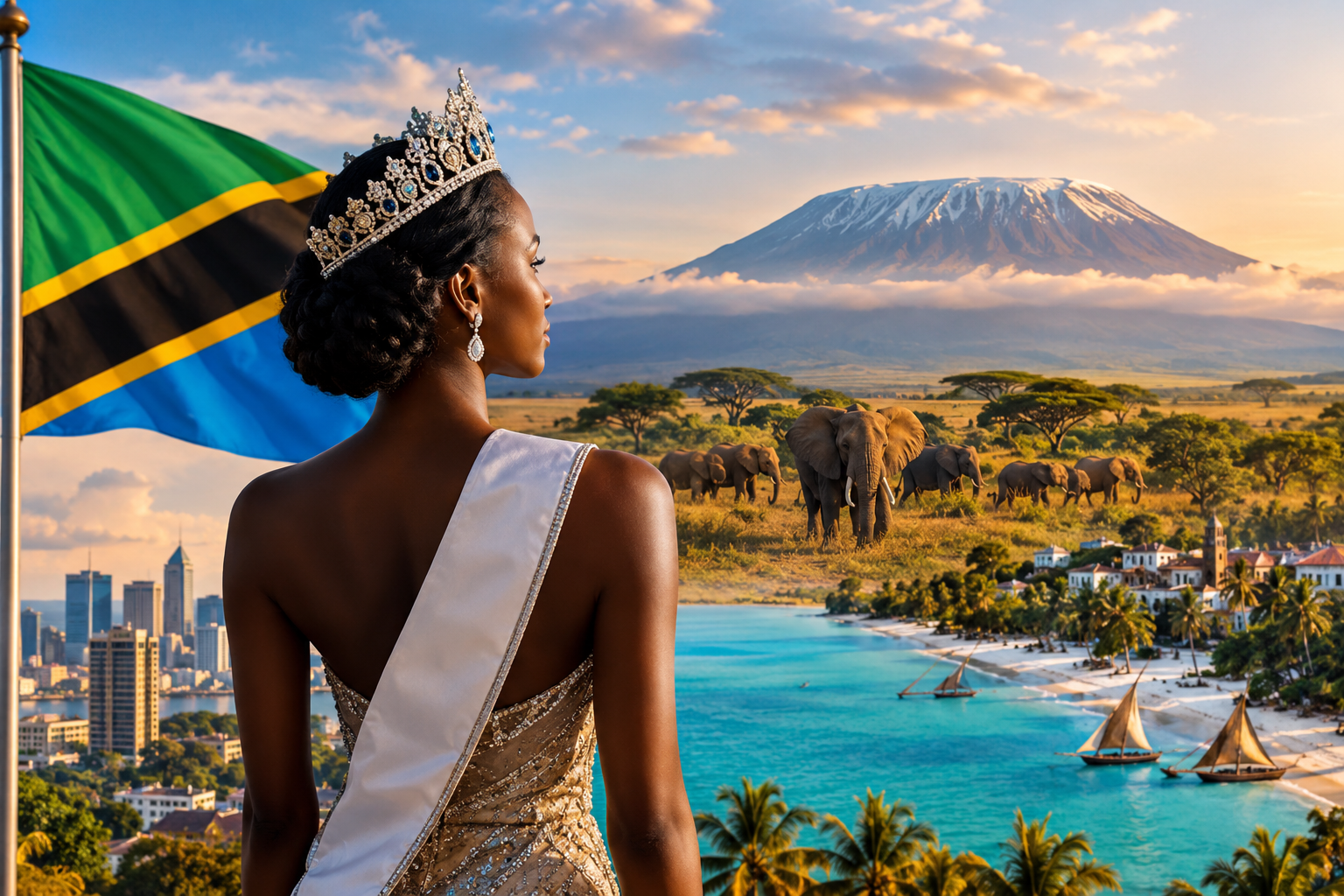
When Tanzania hosts the Miss World Festival in 2027, the country will be doing more than putting a crown on a winner.
For several weeks, Tanzania will become the meeting point for contestants, organisers, international media and audiences watching from around the world. That makes the pageant an unusual platform for a country that has spent decades building its international identity around wildlife, beaches and adventure.
The opportunity is therefore bigger than the competition itself.
Tanzania can use the attention to sell a fuller picture of the country: its cities, culture, fashion, hospitality and creative industries, alongside the Serengeti, Zanzibar and Mount Kilimanjaro that already dominate its tourism image.
There is also a quieter form of power at work.
Countries spend considerable effort attracting international events because visibility matters. Hosting allows Tanzania to decide what the world sees and how it sees it. A successful festival can demonstrate organizational capacity, create connections with international businesses and strengthen the country’s position as a destination for future events.
The commercial possibilities stretch beyond hotels and tourism operators. Airlines, restaurants, designers, photographers, broadcasters, event companies and other parts of the creative economy can benefit from the activity surrounding the festival.
But the real measure of success will come after the cameras leave.
A month of international attention can disappear quickly if it produces little beyond photographs and headlines. The stronger outcome would be for Tanzania to turn that attention into visitors who return, businesses that invest, and a more durable international interest in the country.
That is what makes Tanzania’s Miss World moment worth watching.
The crown will belong to one woman.
The larger prize is whether Tanzania can turn the world’s gaze into something that lasts.
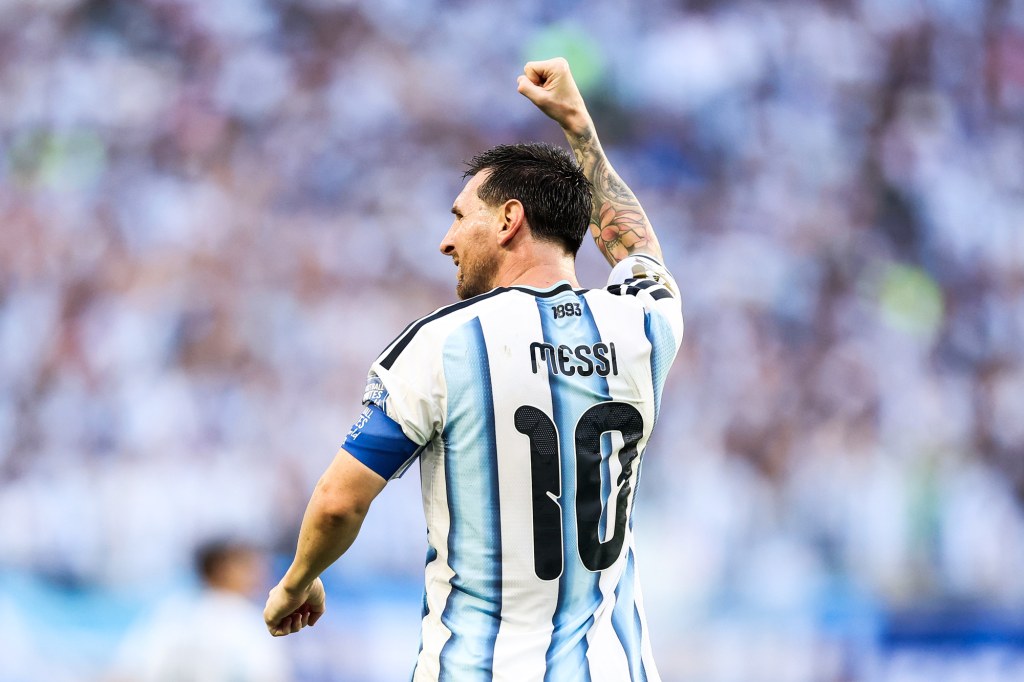
Lionel Messi has called time on his international career.
At 39, the Argentina captain has closed the door on the national team after more than two decades in the blue and white, ending a journey that took him from early heartbreak to World Cup glory and, ultimately, one final World Cup final.
Messi announced the decision on Monday, saying the time had come and that he had given everything he had to Argentina.
His final appearance came in the 2026 FIFA World Cup final against Spain. Argentina lost 1–0 in extra time, leaving Messi with a second World Cup final defeat, after the loss to Germany in 2014.
But the disappointment of the final does little to change what came before it.
Messi leaves Argentina as the country’s record appearance-maker and leading scorer, with 207 caps and 125 goals. He won the Copa América in 2021, lifted the World Cup in Qatar in 2022 and added another Copa América title in 2024.
There was a time when international football with Argentina seemed to bring him more pain than celebration. Finals were lost, criticism followed and, in 2016, Messi briefly announced his retirement before returning to the national team.
The return changed everything.
The player who had spent years being asked when he would deliver a major international trophy eventually delivered three.
Africa has had its own moments with Messi along the way.
Nigeria became one of his most familiar World Cup opponents, while the 2026 tournament brought another memorable African chapter. Cape Verde, making its World Cup debut, pushed Argentina all the way to extra time in the round of 32 before losing 3–2.
Messi scored in that match, and his corner helped create Argentina’s decisive late goal.
For Cape Verde, it was the end of a historic debut. For Messi, it was another page in what would become his final World Cup campaign.
And now the international chapter is over.
There will be no more Messi in Argentina’s number 10 shirt, no more waiting for the next World Cup appearance, and no more wondering whether he will return for one more tournament. The boy from Rosario leaves the stage as a world champion, a record-holder and the man who finally brought Argentina back to the top of world football.
Twenty-one years after his Argentina debut, Lionel Messi has played his last game for the country.
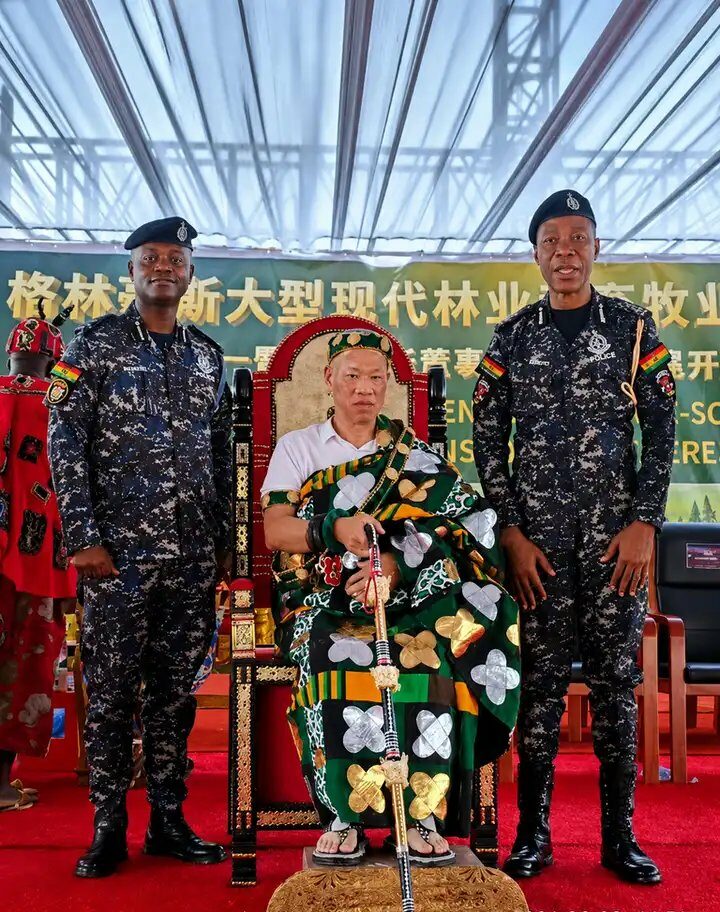
A Chinese businessman has been given a traditional title in Ghana, and the easiest way to understand the story is also the least interesting: a foreign investor created jobs, and a community decided to honor him.
But a stool is not a certificate of appreciation.
It carries memory. It carries ancestry. It tells a story about who belongs to a place and who has been accepted into its social fabric. So when a man who was not born into that history is brought into its symbols because of what he has built with his money, the moment deserves more than applause or outrage.
It deserves a question.
What exactly are we exchanging when capital begins to purchase a form of belonging?
Zheng Xiangming’s enstoolment comes within a much larger reality. Ghana wants investment. Like much of Africa, it needs capital that can build industries, employ people and turn economic potential into something tangible. Chinese investment has become an important part of that conversation.
There is nothing shameful about that.
African countries should be able to seek investment wherever it can help their people. The problem begins when the conversation stops at investment arriving.
Because foreign capital should not be judged only by what it brings through the door.
It should also be judged by what it leaves behind.
A factory can employ people. But does it create skills that remain with those people?
A large agricultural project can produce wealth. But does that wealth circulate through the communities surrounding it?
A foreign company can build an impressive operation. But does it make room for local suppliers, entrepreneurs and expertise to grow alongside it?
These questions matter because Africa has known the difference between extraction and development for a very long time.
Development is not simply having something built on African soil.
It is having the capacity to build the next thing ourselves.
That is why the symbolism of Zheng’s title matters even if the position itself does not give him the authority of a hereditary chief. It tells us something about how communities are beginning to recognise economic contribution: money can become a pathway into social honour.
Perhaps that is reasonable.
Perhaps it is even an appropriate way for a community to say: you came here as an outsider, but what you have done has made you part of our story.
But there must be a line between recognising contribution and confusing wealth with belonging.
A businessman should not become valuable to a community merely because he is wealthy. And an African community should not have to place a foreign investor on a pedestal to prove that it welcomes investment.
The relationship should be more equal than that.
Ghana needs investors. Investors need Ghana. That is a business relationship.
The deeper relationship is between the investment and the people who live with its consequences.
So perhaps the real story is not that a Chinese businessman has been made a chief.
It is that Africa is still negotiating the terms on which the world enters its economies and, increasingly, its communities.
We should welcome those who build.
We should recognize those who contribute.
But we should also ask what their contribution makes possible for everyone else.
Because the greatest measure of an investor’s success should not be how high the honor reaches.
It should be how far the opportunity travels.
And when the photographs of the ceremony are forgotten, the question will remain:
Did the investment merely create jobs, or did it help create a society capable of creating its own opportunities?