Connect with us

Society

Woman Gifts Maid a Car to Appreciate Her Work

Published

on

A woman’s decision to give her maid a car has captured attention online, turning an act of appreciation between an employer and her domestic worker into a much wider conversation about work, dignity and generosity.

The moment is striking not simply because a car is an expensive gift, but because of who received it. Domestic workers are central to the functioning of many households, yet their contribution often happens away from public view. When that contribution is recognized through a gift as significant as a vehicle, it inevitably invites questions about how domestic work is valued and what employers owe the people who help keep their homes running.

The images of the presentation have given social media audiences a glimpse of a relationship that would otherwise have remained private. But beyond the celebration surrounding the gift lies a more complicated story about the relationship between employers and domestic workers, and about what it means to show appreciation in a profession that is frequently taken for granted.

The Gift That Got Everyone Talking

The reaction to the gesture has been driven partly by its sheer scale. Gifts exchanged between employers and domestic workers are not unusual, but a vehicle represents a substantial financial commitment and can have practical value far beyond the moment in which it is presented.

Unlike a conventional gift, a car can become part of a person’s everyday life. It can make transportation easier, expand mobility and, depending on how it is used, potentially create new opportunities for its owner.

That is why the moment has resonated beyond the two people involved. For many viewers, it represents an unusually visible form of gratitude toward someone whose work is normally performed behind closed doors.

The emotional reaction surrounding the presentation has also contributed to the story’s appeal. Social media tends to amplify moments that are immediately understandable: a surprise, a gift, a reaction and a clear relationship between the giver and recipient. Within that format, the car becomes more than a possession. It becomes a symbol of recognition.

But the attention also raises a more important question: why does recognition of domestic labour become especially newsworthy when it takes the form of an extraordinary gift?

Beyond a Car: The Value of Domestic Work

Domestic work is often described in simple terms; cleaning, cooking, laundry, childcare and other household responsibilities. In reality, these tasks can require considerable time, physical effort, organization and responsibility.

For families that depend on domestic workers, this labour can determine how smoothly an entire household functions. Parents can work, children can be cared for, meals can be prepared and homes can be maintained because someone is performing the work necessary to make those things possible.

Yet the work is frequently invisible precisely because it is done inside private homes.

A clean room does not reveal who cleaned it. A prepared meal does not show the hours spent preparing it. A child arriving home safely does not always reveal the person who spent the day looking after them.

This creates a particular challenge for domestic workers. Their contribution can be essential while remaining socially under-recognized.

The car changes that dynamic because it makes appreciation visible. It gives the public something tangible around which to build a story.

That visibility, however, should not lead to the conclusion that extraordinary gifts are the standard by which domestic workers should be valued.

When Appreciation Becomes a Public Story

There was a time when an employer giving a significant gift to a worker might have remained a private matter between the two people involved. Social media has changed that.

A single video can transform a private celebration into a public event. Viewers who know nothing about the people involved can quickly form opinions about the employer, the worker and the nature of their relationship.

That can be positive. Stories of generosity can challenge the assumption that relationships between employers and domestic workers are necessarily defined by distance or inequality. They can also encourage people to recognise the contribution of workers whose labour is often overlooked.

But public attention can simplify complicated relationships.

A few seconds of video cannot show the full history between an employer and employee. It cannot tell audiences what their working conditions are, how long they have known each other or what happens when the cameras are gone.

The internet sees the gift.

It does not necessarily see the employment relationship behind it.

That distinction matters because a viral moment can easily become a measure of generosity based on the size of the gift rather than the quality of the relationship.

Generosity and Fair Employment Are Not the Same

There is nothing wrong with celebrating generosity. A life-changing gift can be meaningful, and the person receiving it may remember it for years.

But generosity should not be confused with fair employment.

A domestic worker’s dignity should not depend on whether an employer is wealthy enough to provide an extraordinary gift. Fair treatment begins with the ordinary conditions of work: appropriate pay, reasonable working arrangements, adequate rest, respect and clear expectations.

Those things rarely go viral.

There is no dramatic video of an employer paying someone on time. There is no trending sound for a worker receiving a fair day off. Respectful treatment is rarely considered extraordinary enough to become a headline.

Yet those ordinary things may matter more to the long-term wellbeing and security of workers than any single public gesture.

That does not make the car less generous. It puts it in perspective.

The strongest employer-employee relationships should not require spectacular gifts to demonstrate mutual respect. A gift can be an expression of appreciation, but it should sit alongside, not replace, the basic standards that make employment dignified.

What the Moment Really Tells Us

The story is ultimately about more than a woman receiving a car from her employer.

It is about visibility.

For a brief moment, the work of someone who normally operates in the background has become the centre of public attention. The car has made people stop and ask questions about the person receiving it, the work she does and the relationship that exists between her and her employer.

That is perhaps the most useful part of the story.

Extraordinary generosity will always attract attention. But the attention it creates can also be used to examine the less visible realities behind the moment.

Domestic workers are not simply people who clean houses or care for children. They are workers whose labour supports households and economies, often in ways that are easy to overlook precisely because the work happens in private.

The car may be the reason people clicked on the story.

The bigger story is what happens when society finally looks at the person standing beside it.

A spectacular gift can make domestic labour visible for a day. The greater challenge is making sure that the people who perform that labour are valued long after the cameras are gone.

Continue Reading
Click to comment

Leave a Reply

Your email address will not be published. Required fields are marked *

Business

Africa Is Hosting the Olympics for the First Time. Here’s What’s at Stake

Published

on

By

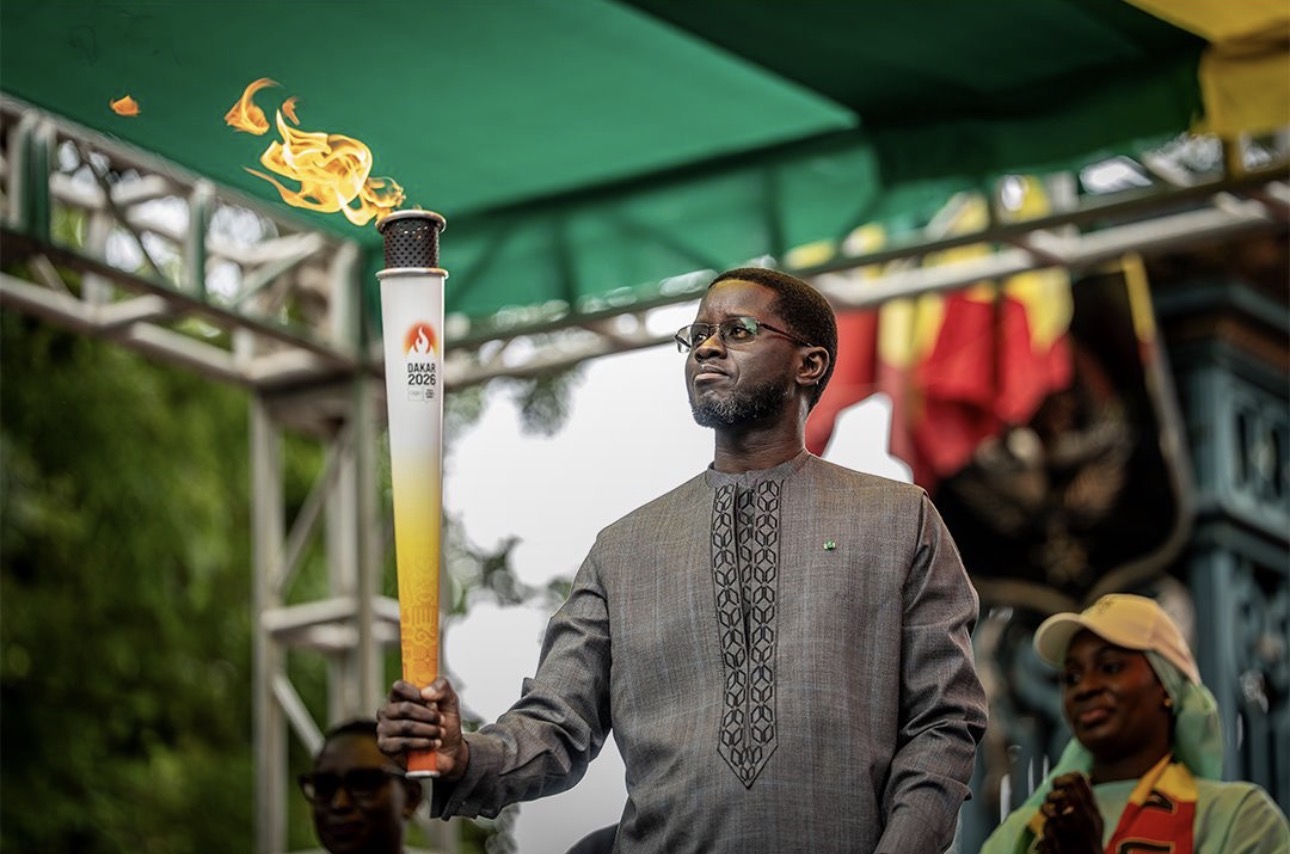
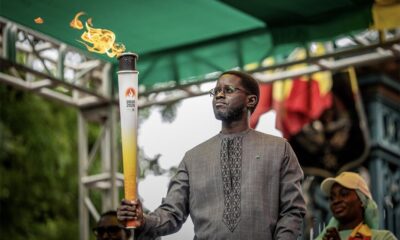
On October 31, Senegal will welcome the world to Dakar for an event no African country has hosted before: the Youth Olympic Games. For 14 days, the continent will occupy a stage usually associated with cities elsewhere. What Senegal does with that opportunity could matter long after the medals have been awarded.

The Dakar 2026 Youth Olympic Games will bring thousands of young athletes together across Dakar, Diamniadio and Saly, with competitions running until November 13. It is the first Olympic event to take place on African soil.

The distinction matters. This is not the full Summer Olympic Games, but it is a historic first for a continent whose athletes have helped shape international sport for generations.

Africa does not need an Olympic event to prove that its athletes can compete. They have been winning medals, setting records and building sporting legacies for decades. What Dakar offers is a different opportunity: to demonstrate that African countries can host an Olympic event and turn the experience into something that serves their own people.

That is where the real test begins.

For the next two weeks, international attention will fall on Senegal’s venues, its organisation and its ability to welcome athletes and visitors from around the world. The opening ceremony will provide the defining images. The competitions will produce the results. But neither will tell the complete story of what the Games have achieved.

That story will be written in the years that follow.

Will more Senegalese children gain access to sporting facilities and professional coaching? Will the infrastructure remain useful to local communities? Will the people who work on the Games acquire skills and opportunities that extend beyond the event? And will Senegal emerge with greater capacity to organise international competitions in the future?

These questions are particularly important because hosting a global sporting event requires substantial investment. The achievement of bringing the Games to Africa deserves recognition, but the value of that achievement must also be measured by what the investment delivers.

There is a continental opportunity here, too.

Senegal’s experience could provide lessons for other African countries seeking to organise major sporting events, develop their sports industries and create stronger pathways for young athletes. Hosting requires more than a stadium. It demands planning, transport, accommodation, security, trained personnel and institutions capable of coordinating an international event.

Developing those capabilities can have value beyond a single competition, provided they are maintained and used.

Dakar also brings the focus back to the generation for whom these Games were created. The Youth Olympic Games are designed around young athletes, but their potential influence extends to young people who may never compete at an elite level. Seeing international sport in their own country can introduce them to disciplines they rarely encounter and give them a closer connection to the possibilities of sport.

That opportunity will mean more if it leads to accessible programmes, local competitions and sustained investment in participation.

None of these outcomes is guaranteed simply because the Olympic rings have arrived.

Senegal has made history by becoming the first African host of an Olympic event. The next challenge is to make that history useful: for its athletes, its communities and the wider African sporting landscape.

On November 13, the Games will close. Athletes will return home, international delegations will depart, and the world’s attention will turn elsewhere.

What remains in Senegal will offer a more revealing measure of Dakar 2026 than any closing ceremony.

Africa will have hosted the Olympics. The question is whether the opportunity will help build a sporting future that lasts.

Continue Reading

Entertainment

Africa Was in the Room at the Ballon d’Or. The Question Is What the World Saw.

Published

on

By

From a Nigerian musician’s ambitions for football to a Rwandan boy’s restored eyesight, the 2026 Ballon d’Or offered several ways to understand Africa’s place in the global game.

Africa’s presence at the 2026 Ballon d’Or ceremony in London was visible in several forms: through Burna Boy’s cultural influence, Bukayo Saka’s humanitarian work, the story of a Rwandan child who regained his eyesight and the African players included among the nominees.

These moments were connected by the ceremony, but they represented different realities. Together, they showed both the reach of African talent and the distance between visibility and influence in global football.

A Nigerian ambition on a European stage

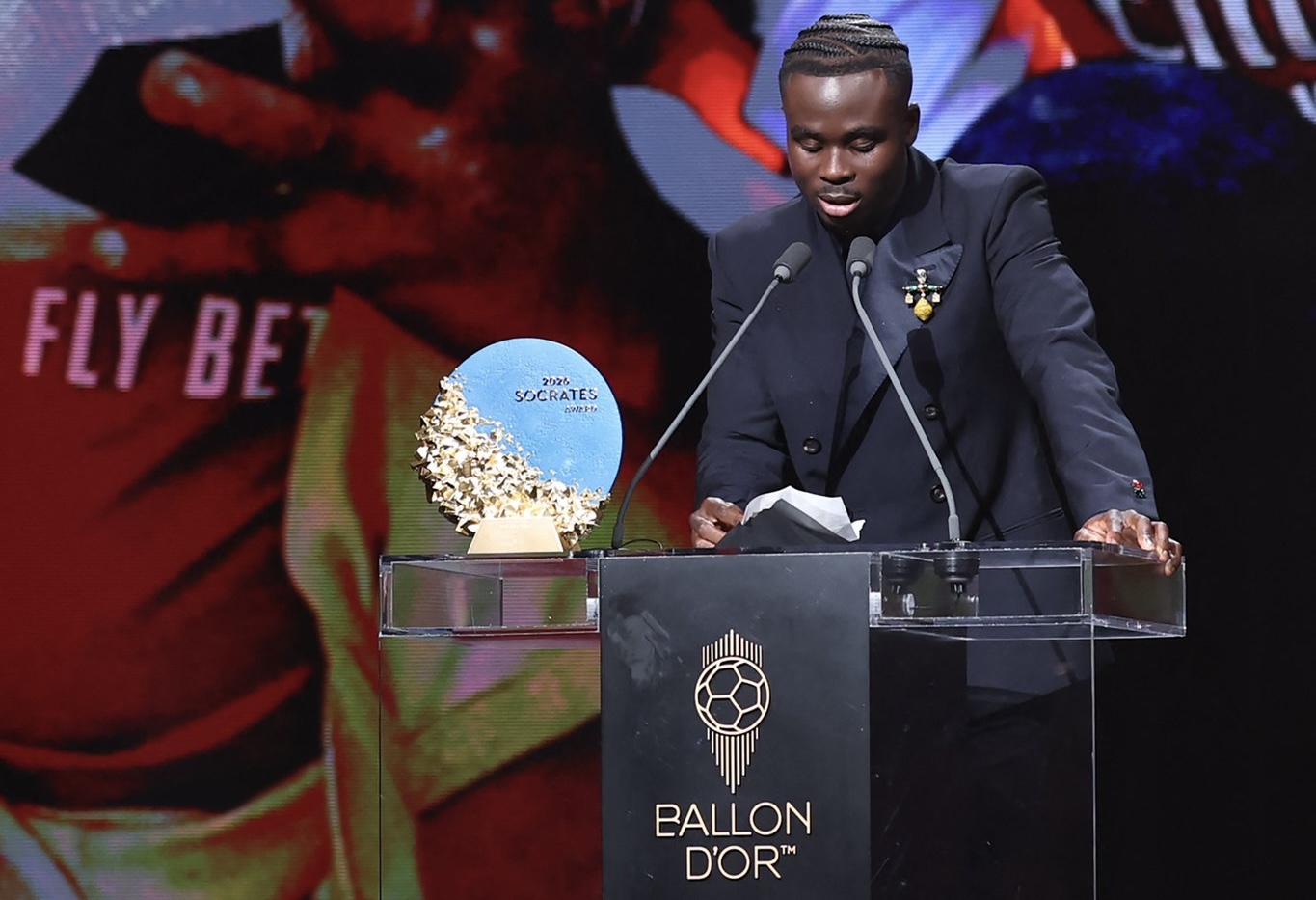
Before presenting the Socrates Award, Burna Boy spoke about the football academy he established in Nigeria. He said he hoped to return to the Ballon d’Or one day and see a player from his country receive the sport’s most coveted individual prize.

That ambition points to a longstanding reality. Africa has produced players who have shaped European football, won major competitions and become global stars. Yet Liberia’s George Weah remains the only African winner of the men’s Ballon d’Or, having received the award in 1995.

The gap between Africa’s supply of talent and its representation among football’s highest individual honours remains difficult to ignore. Burna Boy’s remarks focused attention on the work required to close it, particularly through investment in youth development and stronger football structures at home.

His presence also reflected the global reach of African culture. A Nigerian musician stood at a ceremony centred on European football and spoke not only as an entertainer, but as someone investing in the sport’s future in Nigeria.

A boy in Rwanda enters the conversation

Saka’s acceptance speech brought the ceremony’s humanitarian dimension into sharper focus. He read a letter from Byiringiro, a boy from Rwanda who had begun losing his eyesight at the age of 12.

Byiringiro described living in a village without electricity and struggling as his vision deteriorated. In the classroom, he could no longer read the blackboard clearly.

Medical care facilitated by BigShoe helped restore his eyesight. He could read again, play with his friends and pursue his ambition of becoming an English teacher.

The significance of that story lies in its ordinariness. Byiringiro wanted to learn, play and choose a profession. Medical treatment helped return those possibilities to him.

Saka’s humanitarian work has supported medical treatment for children in Africa, including operations for 120 children in Kano, Nigeria, in 2022 and support for another 100 children in Rwanda, Kenya and Tanzania in 2023. The Socrates Award recognised that work, while Biringiro’s letter showed its impact through one child’s experience.

His story also raises a broader issue. International attention can bring visibility to a child’s circumstances, but it does not resolve the wider shortage of accessible healthcare. Many other children still face preventable conditions without the treatment they need.

Byiringiro’s recovery is hopeful. It also shows how access to healthcare can determine the future a child is able to imagine.

The players whose names carried African flags

Africa’s presence extended across the ceremony’s football categories.

Morocco’s Achraf Hakimi and Senegal’s Sadio Mané were nominated for the men’s Ballon d’Or. Zambia’s Barbra Banda and Malawi’s Temwa Chawinga featured in the women’s race. Morocco’s Ayyoub Bouaddi, Côte d’Ivoire’s Yan Diomandé and Algeria’s Ibrahim Maza were nominated for the men’s young-player award. Morocco’s Yassine Bounou, Senegal’s Édouard Mendy and Cape Verde’s Vozinha were among the goalkeeper nominees.

Their inclusion reflected different aspects of African football. Hakimi and Mané represent established careers at the highest level. Banda and Chawinga brought African women’s football into a global conversation that has historically focused more heavily on men. The young-player nominees represented a generation whose careers will develop across national, continental and international competitions.

Nominations, however, are not victories, and representation is not the same as equal recognition. Harry Kane won the men’s Ballon d’Or, while the African players competed in their respective categories.

The significance of these nominations does not depend on presenting them as proof that African football has finally arrived. African football has long been part of the global game. The more important questions concern how its achievements are recognised and whether the structures supporting its next generation are strong enough.

The ceremony brought together several distinct stories: Burna Boy’s vision for Nigerian football, Saka’s support for children needing medical care, Byiringiro’s recovery in Rwanda and the presence of African players across the nominees’ lists.

Together, they showed Africa’s place in global football as more than a single narrative. The continent appeared through cultural influence, sporting ambition, humanitarian work and the lives affected by that work.

But visibility does not automatically create influence. African music has achieved global reach, and African players compete at the highest levels. African children can also benefit from international charitable partnerships. Sustaining those achievements requires long-term investment in local football, stronger opportunities for young players, wider access to healthcare and recognition that reflects the quality of African talent.

The Ballon d’Or cannot resolve those issues. It can make them visible.

For one evening in London, Africa was represented by a Nigerian musician, a footballer with Nigerian roots, nominees from across the continent and a Rwandan schoolboy whose eyesight had been restored.

Byiringiro wants to become an English teacher. He does not need to become famous for that ambition to matter. He needed medical care, received it and can now see the blackboard again.

That may be one of the clearest measures of football’s influence: not only the trophies won on stage, but the opportunities made possible for people who will never stand there.

Continue Reading

Politics

MAX VERSTAPPEN WEIGHS IN AS RWANDA PREPARES TO BRING FORMULA 1 BACK TO AFRICA

Published

on

By

The four-time world champion has addressed the controversy surrounding Rwanda’s Grand Prix deal, as the country prepares for Formula 1’s return to the continent after more than three decades.

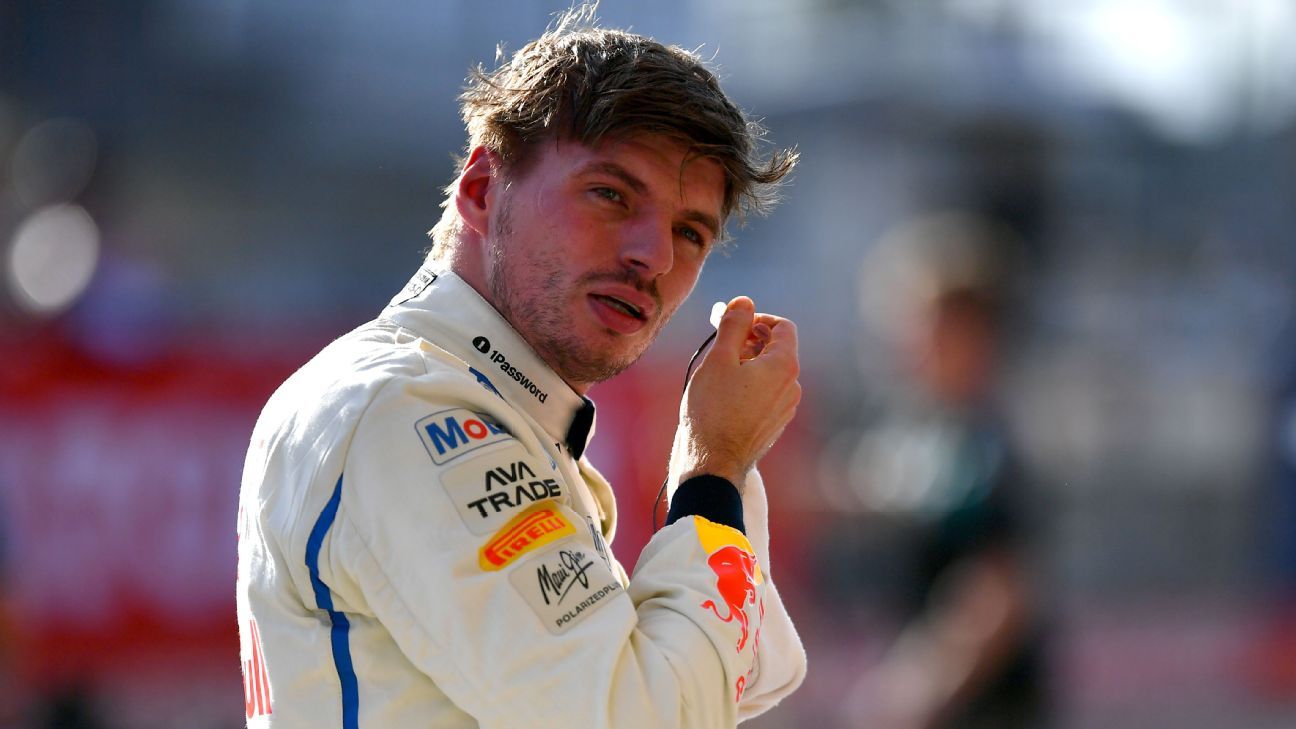
Max Verstappen is not ruling out racing in Rwanda. But the four-time Formula 1 world champion is not making promises about it either.

Speaking to Dutch journalists after qualifying for the United States Grand Prix in Austin on October 25, Verstappen was asked about the controversy surrounding Rwanda’s planned Grand Prix, including concerns over the country’s political situation and regional tensions with the Democratic Republic of Congo.

His response was brief: such concerns, he argued, could be raised about many countries around the world.

Asked about the possibility of competing in Rwanda, the Red Bull driver remained noncommittal. He said they would see when the time came, adding that he had visited the country before and considered it a nice place.

The comments put one of Formula 1’s biggest names into a conversation that will follow Rwanda as it prepares to host the sport in the early 2030s. They do not amount to an unconditional endorsement of the project, but they reflect a willingness to leave the question of racing there open.

A return that has taken more than 30 years

On October 13, Formula 1 announced a 10-year agreement to bring the championship back to Africa, with Rwanda set to host the Formula 1 African Grand Prix.

The sport last raced on the continent in 1993, when South Africa hosted the Grand Prix at Kyalami. Since then, Africa has remained absent from a championship that has expanded across Europe, Asia, the Americas and the Middle East.

Rwanda’s proposed circuit will be built in Bugesera, around 40 kilometres south of Kigali and near the new Kigali International Airport. The project is part of a wider ambition to attract international events, investment and tourism.

The inaugural race is expected in the early 2030s, although the precise date and further development milestones are yet to be announced.

Verstappen is already familiar with Rwanda. He visited Kigali in December 2024 for the FIA Awards ceremony, where he received his fourth consecutive drivers’ world championship trophy. Before the Grand Prix agreement was announced, he had also expressed enthusiasm about the possibility of Formula 1 returning to Africa.

The opportunity comes with scrutiny

Rwanda’s agreement is a significant development for African motorsport. But securing a place on the calendar is only the beginning.

The country faces questions over human rights and its role in the conflict in eastern Democratic Republic of Congo. Human rights organizations have documented allegations of repression and abuses, while Rwanda has faced international accusations over its support for M23 rebels. The Rwandan government has disputed aspects of the allegations against it.

These issues form part of the wider debate surrounding the Grand Prix, alongside questions about the project’s costs, infrastructure and the economic benefits it could deliver.

Verstappen’s observation that similar concerns can be raised about other countries does not resolve those questions. Nor does the arrival of Formula 1 make them irrelevant.

The challenge for Rwanda will be to demonstrate that the event can deliver lasting value, including local employment, business opportunities, tourism and pathways for African talent into motorsport.

What does this mean for Africa?

Formula 1’s return matters because the continent has spent decades outside a championship watched and followed by audiences across the world.

The question now is not simply whether Rwanda can stage a successful race. It is whether the event can help create a stronger African presence in a sport whose highest levels remain difficult to access for many young people on the continent.

That means looking beyond the race weekend to opportunities in engineering, mechanics, logistics, broadcasting, sponsorship and driver development. It also means asking how much of the investment and expertise will remain in Africa after the cars leave the circuit.

Verstappen has left open the possibility of racing in Rwanda. The larger story is that Formula 1 has committed to returning to Africa, with Rwanda chosen to lead that return.

The milestone is real. So is the work required to turn it into a lasting continental opportunity.

For Africa, the finish line should not be hosting a Grand Prix. It should be building a future in the sport.

Continue Reading

Trending

Copyright © 2026 Africadigitmedia.net. Website powered by ProDigit.