Connect with us

Society

Ethiopia Captures Notorious Syndicate Leader

Published

on

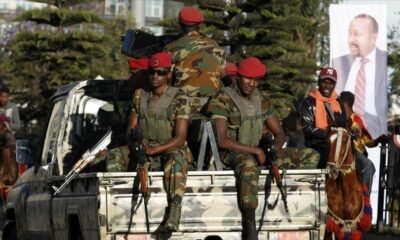
Ethiopian authorities have arrested Yetbarek (Yitbarek) Dawit, the alleged leader of a sprawling human trafficking network that smuggled thousands of East Africans to Libya, where many endured torture, sexual abuse, and ransom extortion. Nine key accomplices were also detained in a coordinated operation in Tigray’s Shire region.

Active since at least 2018, the network is accused of moving over 3,000 migrants from Ethiopia, Eritrea, Sudan, Kenya, Somalia, and Djibouti toward Libya, a known gateway to Europe. Survivors describe “concentration warehouses” where captives were beaten, starved, and forced to call relatives to pay ransoms. Investigations indicate more than 100 deaths and the sexual assault of 50 women linked to the operation.
Authorities say Dawit used multiple aliases to evade law enforcement across East Africa and Europe. Financial investigations reveal the network generated millions of dollars, prompting authorities to freeze associated assets and bank accounts.

The arrest is part of a broader crackdown on human trafficking in the Horn of Africa. Officials emphasized the importance of regional cooperation, crediting intelligence-sharing through the Khartoum Process and support from Ethiopia’s National Intelligence and Security Service.

“This operation is a decisive blow against human trafficking networks exploiting vulnerable migrants,” said police spokesperson Lieutenant Colonel Tewodros Mengistu. “We remain committed to bringing all those involved to justice.”

The case highlights the ongoing risks faced by migrants using Libya as a transit hub, where instability allows traffickers to operate with impunity. Ethiopian authorities are now moving to prosecute Dawit and his accomplices, while continuing efforts to identify and dismantle remaining elements of the network.

Continue Reading
Click to comment

Leave a Reply

Your email address will not be published. Required fields are marked *

Society

Pope Leo XIV Urges Christian–Muslim Coexistence During Landmark Algeria Trip

Published

on

By

Pope Leo XIV concluded a landmark three-day visit to Algeria on Wednesday, marking the first time a pope has visited the predominantly Muslim nation. The trip, part of a broader African tour, underscored themes of interfaith dialogue, coexistence, and the growing importance of Africa within the Catholic Church.

During his stay, the pontiff delivered a series of messages centered on peace, calling for stronger bonds between Christians and Muslims. “The future belongs to people of peace,” he said in one address, urging mutual respect and understanding among religions.

In a symbolic gesture of cultural respect, the pope also addressed Algerians briefly in Arabic, greeting crowds with “As-salāmu ʿalaykum” (“Peace be upon you”) and expressing gratitude with “Shukran” (“Thank you”). Though most of his speeches were delivered in Italian and French, the use of Arabic resonated strongly with local audiences.

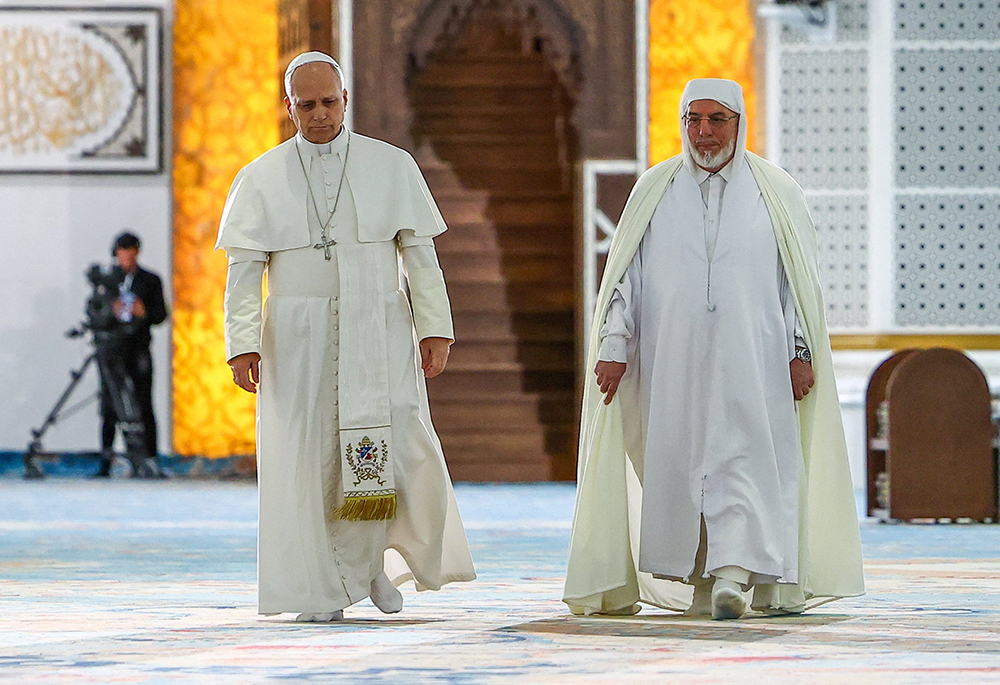
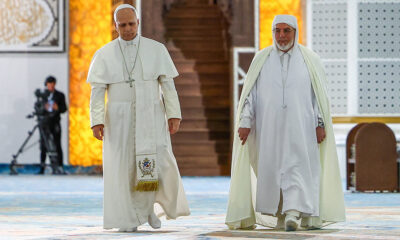
A key highlight of the visit was his stop at the Great Mosque of Algiers, where he met Islamic leaders and emphasized dialogue as a path toward peace. He also visited the Maqam Echahid memorial, paying tribute to those who died during Algeria’s war of independence.

The pope’s itinerary included a pilgrimage to Annaba, home to the legacy of Saint Augustine of Hippo, one of Christianity’s most influential thinkers. There, he highlighted Augustine as a unifying figure whose teachings continue to bridge cultures and faiths.

Despite the largely peaceful nature of the visit, security concerns briefly surfaced following reports of two minor suicide attacks near Blida. Algerian authorities moved quickly to contain the situation, and the incidents caused limited disruption to the papal program.

The pope also met with local Catholic communities, government officials, and charitable organizations, including a Church-run orphanage, before departing the country.

Leaving Algeria on April 15, Pope Leo XIV described the visit as a “special blessing” and reaffirmed his belief that Christians and Muslims can live together in harmony. He has now continued his journey to Cameroon, the next stop in an 11-day tour that will also include Angola and Equatorial Guinea.

The visit is widely seen as a significant step in strengthening interreligious ties and highlighting Africa’s increasing role in shaping the future of global Christianity.

Continue Reading

Society

Police Use Tear Gas to Disperse Protesters Over Bojang Siblings’ Rearrest in Gambia

Demonstrators demand release after acquittal sparks legal controversy
Published

on

By

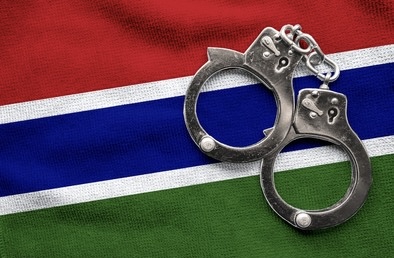
Police in The Gambia used tear gas and water cannons to disperse protesters in Brufut who had taken to the streets demanding the release of siblings, Amie and Ousainou Bojang, following their controversial rearrest.

The two had earlier been acquitted by the High Court in connection with the 2023 killing of two police officers, after judges ruled that the prosecution failed to provide sufficient evidence to secure a conviction.

However, shortly after their release, the siblings were taken back into custody, with authorities indicating plans to appeal the ruling. The move triggered outrage among residents and activists, who questioned the legality of detaining individuals after a court acquittal.

Protests quickly erupted in Brufut, with demonstrators blocking roads and confronting anti-riot police. Security forces responded by firing tear gas and deploying water cannons in an effort to restore order. Some businesses temporarily closed as tensions escalated in the area.

Rights groups and members of the public raised concerns over what they described as a disregard for judicial decisions and potential violations of due process.

Later in the day, police confirmed that Amie and Ousainou Bojang had been released from custody once again, a move that helped to calm the situation after hours of unrest.

The incident has sparked wider debate in The Gambia over the independence of the judiciary and the handling of high-profile criminal cases.

Continue Reading

Society

Rwanda’s Volcanoes National Park Featured in Global Documentary on Gorilla Conservation

Published

on

By

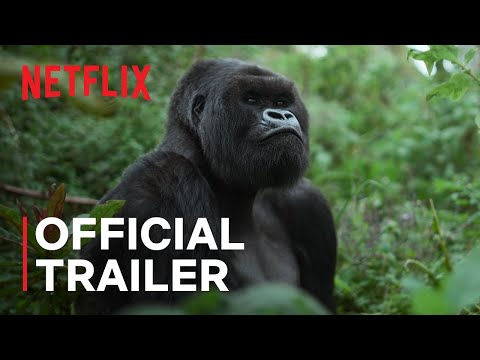
When A Gorilla Story: Told by David Attenborough premieres on Netflix on April 17, 2026, it will not simply be another wildlife documentary, it will be a deeply symbolic moment for conservation, storytelling, and Rwanda itself. Narrated by David Attenborough, the film traces the life of a mountain gorilla named Pablo, from infancy to becoming a dominant silverback, while also following the legacy of his descendants.

What makes this documentary especially powerful is its connection to Volcanoes National Park, one of the most conservation areas in Africa and home to Rwanda’s famous mountain gorillas. For Rwanda, this is more than a backdrop, it is a national symbol. The park represents one of the world’s most successful conservation stories, where careful protection, community involvement, and sustainable tourism have helped bring mountain gorillas back from the brink of extinction. By focusing on a single gorilla family within this landscape, the film personalizes a global environmental issue, turning statistics into a story people can feel.

From a broader perspective, the documentary arrives at a crucial time. Climate change, habitat loss, and biodiversity decline are no longer distant concerns, they are urgent global realities. By revisiting a relationship that began decades ago, Attenborough offers something rare: a long-term view of nature. This continuity allows audiences to see not just survival, but legacy, how one gorilla’s life connects generations and reflects the impact of conservation efforts over time.

Compared to Attenborough’s earlier works, such as Planet Earth and Our Planet, this film appears far more intimate. While those series showcased the grandeur and diversity of ecosystems across the globe, A Gorilla Story narrows its focus to a single narrative thread. This shift from sweeping global exploration to deeply personal storytelling mirrors a broader evolution in environmental filmmaking, one that emphasizes emotional connection as a catalyst for action. Instead of overwhelming viewers with scale, it draws them in through empathy.

Ultimately, the importance of this documentary lies in its ability to bridge worlds: past and present, global audiences and local realities, human stories and animal lives. For Rwanda, it reinforces its position as a leader in conservation. For the world, it is a reminder that protecting nature is not just about saving species, it is about preserving stories, relationships, and futures.

Continue Reading

Trending

Copyright © 2026 Africadigitmedia.net. Website powered by ProDigit.