Connect with us

Sports

African Referees Earn Spots at Historic 2026 FIFA World Cup

Published

on

FIFA formally announced the list of match officials for the 2026 FIFA World Cup, confirming the inclusion of six referees from Africa in what will be the largest edition of the tournament in history. Scheduled to take place across the United States, Canada and Mexico, the competition will feature an expanded 48-team format, placing greater operational demands on officiating teams and widening opportunities for global representation.

The selected referees drawn from Somalia, Mauritania, Algeria, Egypt, South Africa and Gabon have emerged through a competitive and highly scrutinized selection process, underpinned by consistent performances in continental competitions and FIFA-sanctioned tournaments. Their appointment signals a continued shift in the standing of African referees within the global football ecosystem, where credibility is increasingly tied to technical precision, physical readiness and the ability to manage high-pressure matches.

Historically, African referees have maintained a presence at the World Cup but have faced structural and perceptual barriers that limited their influence at the highest levels of the tournament. During earlier editions such as the 2010 FIFA World Cup and the 2018 FIFA World Cup, representation from the continent was comparatively modest, with fewer appointments in decisive fixtures. However, that trajectory has evolved significantly over the past decade.

At the 2022 FIFA World Cup, African officials were entrusted with more complex assignments, including knockout-stage matches, an indicator of growing institutional trust in their capabilities. This progression reflects both individual merit and systemic improvements in referee development structures across the continent.

Central to this advancement has been the role of the Confederation of African Football, which has intensified its focus on professionalizing refereeing through targeted investment. Enhanced training modules, rigorous fitness assessment protocols and the integration of performance analytics have contributed to raising officiating standards. Continental competitions, notably the Africa Cup of Nations, have served as key platforms for testing and refining elite referees under competitive conditions.

The adoption and mastery of Video Assistant Referee (VAR) technology has also been instrumental. Since its introduction at the 2018 FIFA World Cup, VAR has reshaped modern officiating, requiring referees to combine on-field authority with technological fluency. African officials have increasingly demonstrated competence in this domain, narrowing the gap with traditionally dominant refereeing regions such as Europe and South America.

The expanded format of the 2026 FIFA World Cup further contextualizes the importance of these appointments. With more matches, venues and logistical complexity, FIFA’s selection reflects a deliberate effort to diversify its officiating pool while maintaining elite standards. For Africa, this represents both an opportunity and a responsibility to consolidate recent gains and deliver performances that reinforce confidence in the continent’s refereeing framework.

Beyond the technical dimension, the geographic spread of the selected referees underscores a broader evolution within African football. The representation of six different nations illustrates the diffusion of refereeing excellence beyond traditional strongholds, pointing to a more balanced and competitive continental landscape.

As preparations for 2026 intensify, the performance of these officials will carry significance beyond individual matches. Their decisions, consistency and command of the game will contribute to shaping perceptions of African refereeing at the highest level. In this context, their selection stands not only as recognition of progress achieved, but also as a benchmark for the next phase of development in African football governance and officiating.

Continue Reading
Click to comment

Leave a Reply

Your email address will not be published. Required fields are marked *

Sports

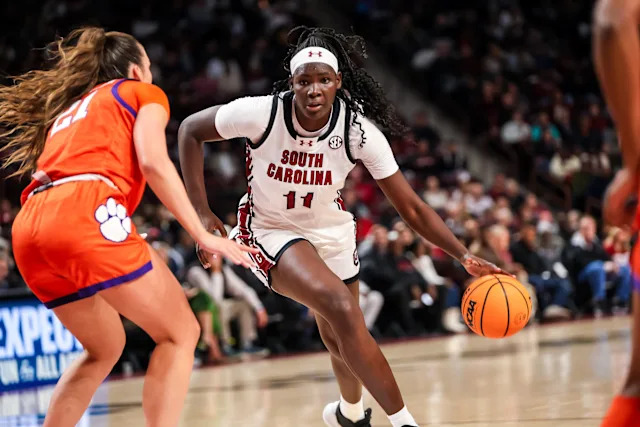
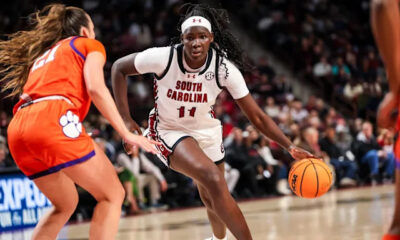
Madina Okot Drafted Into the WNBA

Published

on

By

In a sport where most stars begin their journey before they can even tie their shoes, Madina Okot’s story stands out as something entirely different. It is not just a tale of talent, but of timing, opportunity, and an extraordinary rise that defies the traditional path to professional basketball.

Born in Kenya, Okot did not grow up immersed in basketball culture. In fact, she only began playing the sport around 2020, an age when many elite players are already years into structured training. Yet what she lacked in early exposure, she made up for with natural athleticism, height, and an ability to learn at an unusually fast pace.

Her introduction to basketball came through local programs and competitions, where her raw potential quickly became impossible to ignore. Coaches and scouts noticed her presence on the court, particularly her defensive instincts and physical dominance near the basket. It wasn’t long before opportunities beyond Kenya began to open up.

Transitioning to the United States marked a pivotal chapter in her journey. Like many international players, Okot had to adapt not only to a higher level of competition but also to a completely different basketball system and culture. The learning curve was steep, but she embraced it. Through discipline and rapid development, she evolved from a raw prospect into a reliable and impactful center.

At the collegiate level, she refined her game against some of the best young talent in the world. Known for her shot-blocking ability, rebounding strength, and interior scoring, Okot became a defensive anchor and a consistent presence in the paint. More importantly, her improvement trajectory remained steep, something that caught the attention of professional scouts.

What makes her story remarkable is not just where she arrived, but how quickly she got there. In a matter of just a few years, she went from picking up a basketball for the first time to competing at an elite level and entering the professional draft conversation.

That journey reached a defining moment when she was selected in the WNBA Draft, marking her official entry into professional basketball and cementing her place among the sport’s rising global talents.

Beyond her individual success, Okot represents something larger. She is part of a growing wave of African athletes breaking into international basketball, fueled by increased scouting, development programs, and global investment in the sport. Her journey highlights how untapped potential in regions like East Africa is beginning to find its way onto the world stage.

For young athletes watching from similar backgrounds, her story carries a powerful message: the path to success is not always linear, and starting late does not mean starting behind. With the right combination of opportunity, resilience, and growth mindset, it is still possible to reach the highest levels.

Madina Okot’s rise is still unfolding. But already, it serves as a reminder that greatness in sport is not always about when you begin, it is about how far and how fast you are willing to go.

Continue Reading

Sports

Houston to Host DR Congo Base Camp for 2026 World Cup

Published

on

By

The city of Houston has been selected to host the training base camp for the DR Congo national football team during the 2026 FIFA World Cup, a decision local organizers are celebrating as a major win for the city.
This means that when DR Congo arrives in the United States for the World Cup, Houston will become their temporary “home.” The team will live, train, and prepare for their matches there throughout the tournament.
A base camp is where a national team stays during the competition. It includes their hotel, training pitches, medical support, and recovery facilities. From this location, the team travels to different stadiums for their matches, then returns to continue training and preparing.

Houston officials say hosting DR Congo is a big honor and a boost for the city. Local organizers described the selection as “icing on the cake,” meaning it is an exciting bonus on top of already strong preparations for the World Cup. They expect the team’s presence to bring international attention, tourism, and economic activity to the city.

For DR Congo, the choice of Houston provides stability and comfort during the tournament. Having a fixed base allows the team to focus fully on football without worrying about travel or logistics. Everything from training schedules to recovery routines will be organized in one place.

The 2026 World Cup will be held across the United States, Canada, and Mexico, and each participating team is assigned a base camp city. Houston’s selection reflects its strong sports infrastructure and readiness to host international teams.

For fans in Houston, it also means they may get a chance to see DR Congo training up close ahead of their World Cup matches, adding excitement to the city’s buildup to the global event.

Continue Reading

Politics

Kenya Pays KSh 3.9 Billion to Lock in AFCON 2027 Hosting

Published

on

By

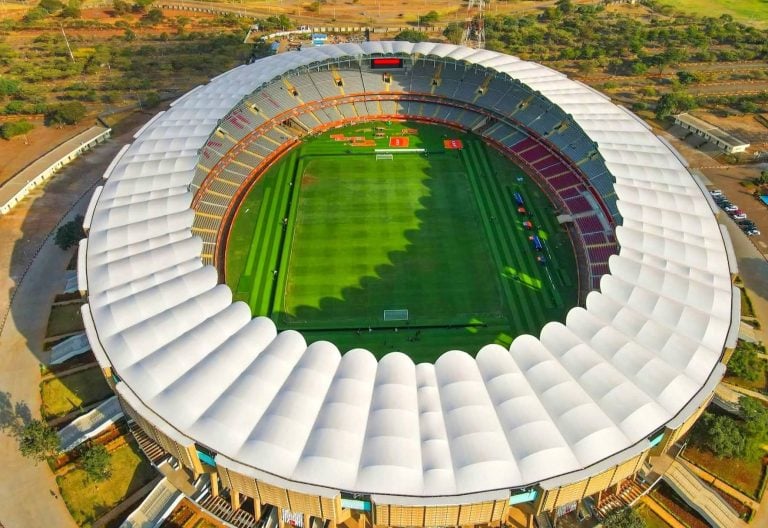
Kenya has officially secured its spot as a co-host for the 2027 Africa Cup of Nations (AFCON) after paying the required KSh 3.9 billion (approximately $30 million) hosting fee to the Confederation of African Football (CAF).

The payment, completed in late March 2026, comes after weeks of scrutiny and pressure from CAF, which had set strict deadlines for co-host nations. Uganda and Tanzania had already fulfilled their financial obligations, leaving Kenya as the final piece in the tri-nation hosting puzzle. Sports Cabinet Secretary Salim Mvurya confirmed the government had met the full financial requirement, removing any uncertainty about Kenya’s participation.

This historic 36th edition of AFCON will run from 19 June to 18 July 2027, marking the first time the tournament will be jointly hosted by three countries. The competition will feature an expanded 28-team format, promising more matches and greater fan engagement across East Africa.

By settling the hosting fee, Kenya not only guarantees its involvement but also unlocks preparations for stadium upgrades, logistics, and promotional activities ahead of the continent’s premier football event.

Continue Reading

Trending

Copyright © 2026 Africadigitmedia.net. Website powered by ProDigit.